
Taking a wall down does not resize the split that was fitted for the old kitchen. The same indoor unit now faces a larger volume, the cooking, and often a run of new glass. It can still run. It will not hold the new room just because it used to hold the old one. Setting it colder does not add kilowatts.
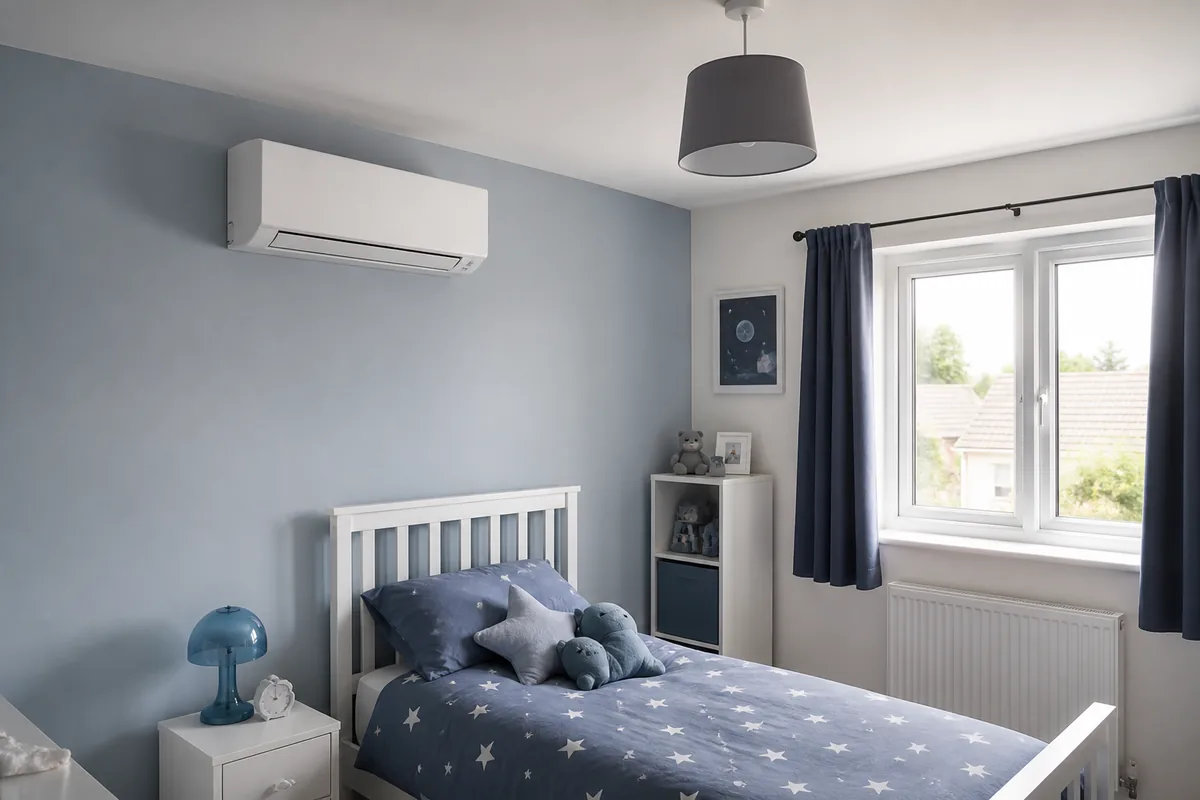
The unit is still on the pier you did not remove
Knock-throughs leave the indoor unit stranded on a pier, aimed at where a door used to be. The throw that was acceptable in a closed kitchen now dumps on a dining table or misses the far end entirely. Stand where people sit and look back at the unit before you ask anyone to reuse it. Height, aim and the new opening matter as much as the badge on the casing.
Glass and cooking arrived in the same summer
The old room had a window and a door. The new room has bi-fold or sliding glass, plus the hob, plus the diner. Those gains stack in the late afternoon if the glass faces the sun. The original kilowatt choice was for a different envelope. Quoting that old figure back at the installer as proof it is fine is how you spend August annoyed. Energy Saving Trust expects an air-to-air system to be chosen from a survey of the rooms you have, not the rooms you demolished.
The pipes may now cross the opening
Copper that ran inside the old wall is sometimes left in a bulkhead across the new opening, or it ends up in the only place left to hide it, which is a boxing at head height over the table. That boxing can work if it is planned. It is a failure if it is an afterthought that collects condensate and looks like a beam nobody meant. Photograph the pipe route before the plaster comes off. Once the wall is gone, nobody remembers which side the drain fell.
Sliding the indoor unit along is refrigerant work
Moving the head to the new wall opens the refrigerant circuit. That is F-gas work for a certified company, with a proper recovery, not a longer flare nut and a hopeful top-up. There is no universal maximum pipe length on this page, because the manufacturer of that pairing states what that pair can do. If the new position exceeds it, the honest answer is a new pair or a different wall, not a guess.
A second unit is a new survey
Adding a head for the diner can be right. Copying the kitchen unit as a twin is not a survey. The diner may need less, or more, once you count glass and ignore the hob. Two indoor units can share an outdoor unit only if that outdoor unit is the right type and has the capacity and the ports. Many single splits cannot grow a second room. If the original outdoor unit is a single-split pair, budget for that fact instead of discovering it when the wall is already down.
Frequently asked questions
Can we just set it colder until the new room catches up?
No. A lower setpoint does not increase capacity. The unit delivers the kilowatts it has. 16C on an undersized machine means a long run and a disappointed table, not a bigger coil.
The old quote said 2.5 kW suits most kitchens. Does that include the diner now?
It included the kitchen they surveyed then. The diner, the new glass and the missing wall were not in that sentence. Ask for a fresh look at the room you have.
Do we have to throw the old unit away?
Not by default. It may still serve a closed room, or it may be reused if the maker's pipe limits and the new load allow it. That is a survey outcome. It is not something to decide from the original brochure.
Core buying guides
Start with these high-intent guides, then dig into the rest of the library.
Related guides
Sources and further reading
How this guide was prepared
This guide was written by the Local AC Installers Editorial Team. We compare official guidance, legislation and established consumer information, separate general information from project-specific advice, and show publication dates and sources. We do not accept installer accreditation claims at face value.