
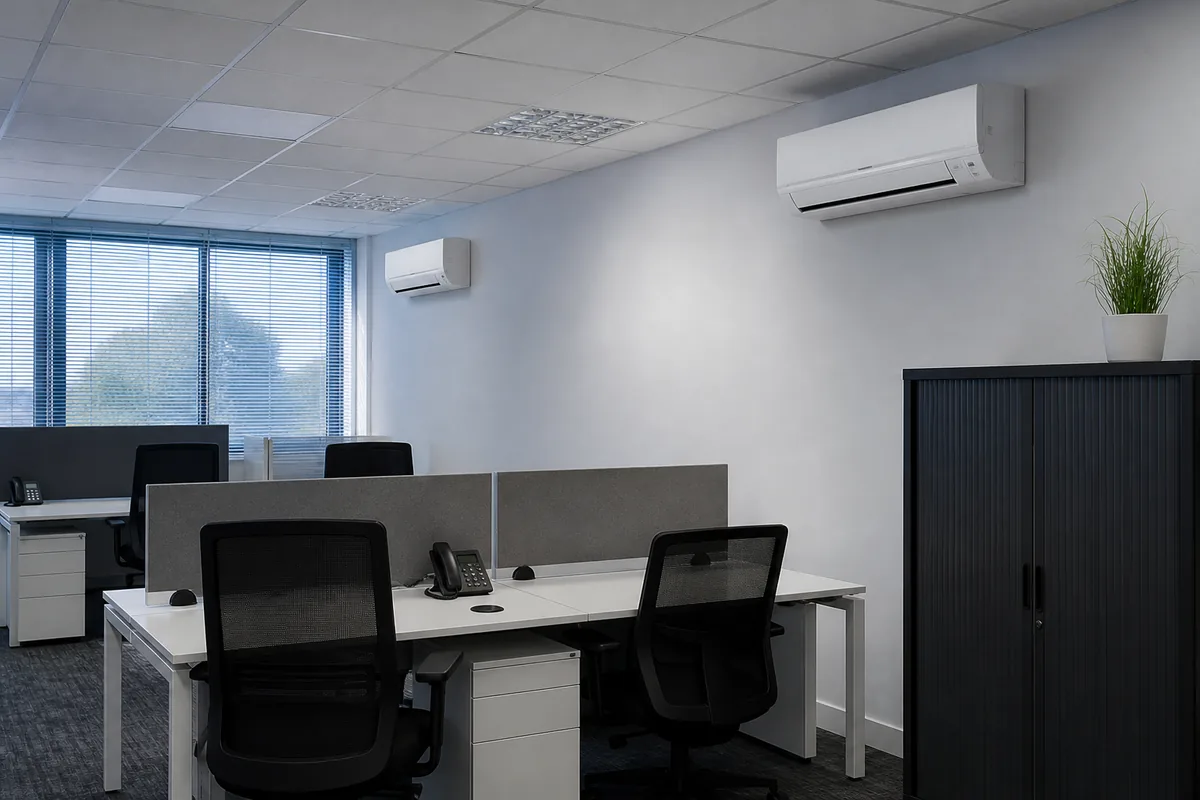
A nail bar is often a row of small rooms or a shallow salon where solvents, acrylic liquid and filing dust sit close to the technician and the client. Comfort cooling can make those rooms tolerable. It recirculates room air across a coil. It is not the extract for nail vapour. Local extract or a proper ventilation path has to deal with the vapour. The split should be quiet, small enough for the room, and installed by an F-gas certified company.
Solvent vapour in a shut manicure room
Acetone, primers and acrylic liquid evaporate at the desk. In a box room with the door shut, that vapour has nowhere to go if the only moving air is a wall split. The coil will cool the room and leave the vapour in it. Fit extract or a ventilated desk arrangement that the salon already relies on, and keep that path out of the comfort unit. A split will not remove nail fumes, and it must not be used as that extract.
Filing dust is fine and sticky. It loads a filter quickly. A domestic rinse-once-a-season habit will not do. The indoor unit needs a filter you can reach between appointments without climbing over a client. A desk behind a closed door needs its own indoor unit. One large cassette in the corridor will not hold a closed treatment room.
A multi-split can serve a manicure room, a pedicure room and a short corridor from one condenser, if each indoor is sized for that box and the pipe runs stay inside the manufacturer's limits. Pedicure chairs and lamps take the wall a unit might have used. Measure the free wall above head height with the chair reclined. A draught on wet nails is a comfort complaint and a finish complaint. Aim along the ceiling.
Quiet nail rooms, pumps and the yard
These rooms are quiet by trade. An indoor unit that only behaves on high fan will talk over the appointment. Compare low-fan sound, and keep the outdoor unit off the wall of the treatment room if a neighbour or a flat is the other side.
Condensate from cooling a small occupied room all day adds up. A pump is common where there is no fall to a waste. Staff need to know what a pump alarm means, because a drip onto the floor of a treatment room is a slip. HSE guidance expects reasonable comfort for the people working. It does not set a maximum temperature, and it does not turn a split into a fume cupboard.
The refrigerant work needs an F-gas certified company. The extract fan does not, and it still needs a competent electrical supply and a discharge that is lawful for the neighbours. Comfort cooling and vapour extract stay as separate jobs.
Core buying guides
Start with these high-intent guides, then dig into the rest of the library.
Related guides
Sources and further reading
How this guide was prepared
This guide was written by the Local AC Installers Editorial Team. We compare official guidance, legislation and established consumer information, separate general information from project-specific advice, and show publication dates and sources. We do not accept installer accreditation claims at face value.