
Cool an off licence as a small shop: bottles on shelves, a glazed front, fridges for chilled drinks, and a door that opens all evening. Do not design it as a wine cellar. Cellaring is a different temperature, a different humidity and a different room. The gantry should not be blasted as if it were stock to be held at a cellar line. Staff comfort follows HSE guidance. There is no legal maximum temperature. Chilled cabinets already have their own job. The split looks after the people, and condensate must not run down a stack of cases.
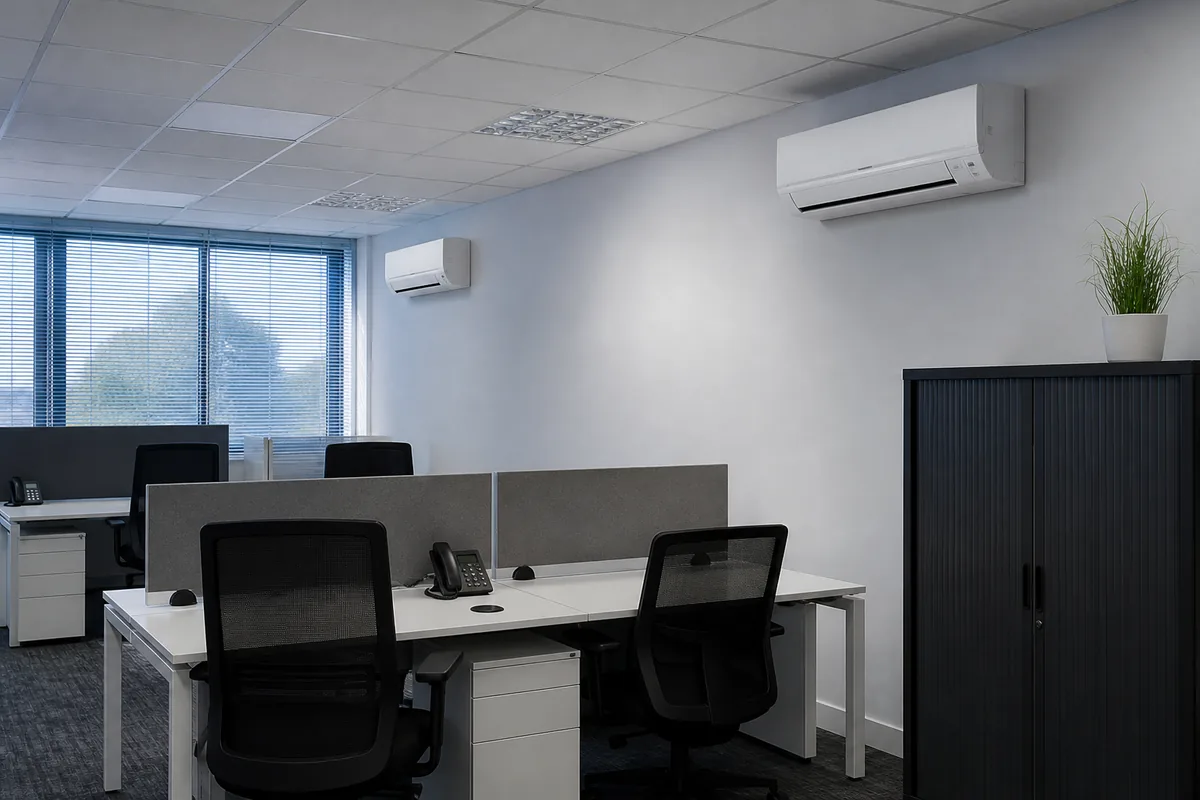
Browsing bottles, not storing them for a decade
Customers browse and leave. They do not store wine for a decade in the aisle. A normal shop setpoint is the aim. Overcooling makes packaging sweat when warm parcels of air come in with the door, and it wastes the unit. 16C on the remote is the wrong answer to a sunny frontage. If you truly have a separate cellar for fine wine, that is its own design and it is not this shop. Say so only to keep it out of the shop quote. The shop survey is glass, door, lighting and staff. HSE guidance covers staff comfort. There is no legal maximum temperature.
Evening doors, fridge heat and the roller shutter
Evening trade can mean the door never quite shuts. Size for the pattern you admit to. A unit chosen as if the shop were a closed office will run flat out and still feel warm at the threshold. Aim cooling at the counter and the aisle where people linger, and accept that the mat follows the street.
Bottle fridges reject heat into the shop or out the back. Count them. Do not add a second cold stream onto the gantry because the fridges made the counter chilly. You may need less cooling than a cafe of the same size, once the cabinets are allowed for, or more if the glass is huge. Measure. A single wall unit or a small cassette, clear of the shelves so a leak cannot soak labels, is the usual machine. Service access has to exist without moving a pallet of beer. The outdoor unit shares a yard with deliveries. Keep it out of the roller door.
F-gas rules apply. Check air conditioning inspection duties on GOV.UK if this shop is part of a bigger system. Planning and the landlord decide the outdoor face. A domestic heat-pump leaflet is not permission for a parade. Name how many people work the counter. If a cellar exists, keep it out of scope unless it is a separate note.
Condensate kept off the stacks
Keep the drain run clear of the bottle stacks so a leak cannot soak labels or cardboard. Leave chilled-drink cabinets to do their own job. The gantry is not a cold room.
Frequently asked questions
Should the shop be kept at wine storage temperature?
No. That is a cellar question and a different room. The shop is for staff and browsing customers at a normal comfort setpoint.
The door is open at weekends. Will a bigger unit fix it?
Only if you are honest that the door is open and you still want the aisle cooler than the street. A bigger unit with the door propped still has a limit. Say the trading habit first.
Can condensate wet the cardboard cases?
It must not. Route and test the drain away from the stacks. A pump over the gantry is a leak waiting for a Saturday night.
Should the gantry be blasted like a cold room?
No. The gantry should not be blasted as if it were stock to be held at a cellar line. Chilled cabinets already have their own job. The split looks after the people.
Core buying guides
Start with these high-intent guides, then dig into the rest of the library.
Related guides
Sources and further reading
How this guide was prepared
This guide was written by the Local AC Installers Editorial Team. We compare official guidance, legislation and established consumer information, separate general information from project-specific advice, and show publication dates and sources. We do not accept installer accreditation claims at face value.