
A coworking space is an open desk floor plus phone rooms, meeting rooms and a kitchenette, occupied for long hours by people and laptops. The heat is density, screens and glass, not a shop display. Meeting rooms peak and then empty. Phone rooms are small closed boxes. A split recirculates, so fresh air stays a separate ventilation design. If the effective rated output is more than 12 kW, the operator has an inspection duty under GOV.UK air conditioning inspections guidance, including a TM44 report. Installation is F-gas work.
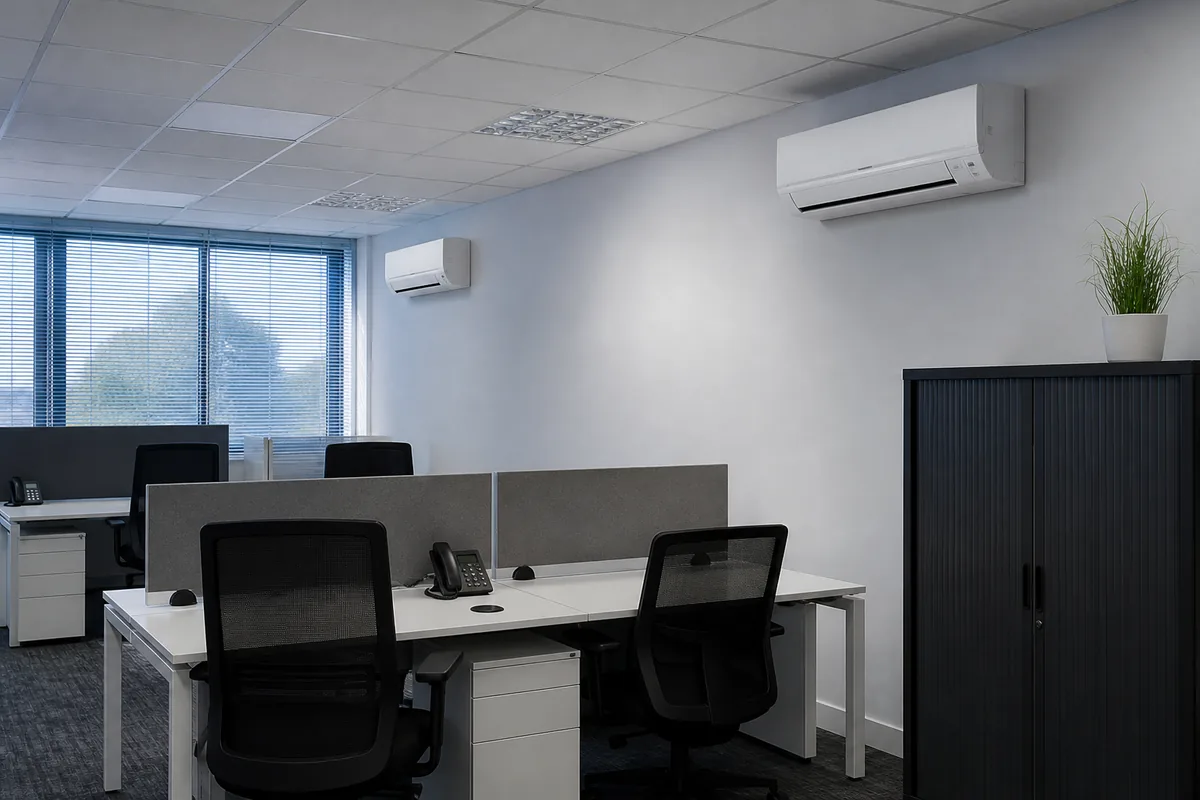
Desks, screens and a long occupied day
Count people and screens at the busiest membership hour, not the floor area on the brochure. A sunny glazed end and a packed Tuesday matter more than a neat watts-per-metre guess from an empty shell.
Members are on calls. A roaring cassette above a quiet desk will be switched off, and then the room overheats. Ask for indoor sound at the speed that holds the setpoint, and for controls the community manager can lock. HSE workplace temperature guidance applies to anyone employed there, and it is the right comfort language for a room people sit in all day: reasonable thermal comfort, no legal maximum temperature.
Rafts, a shared roof and the first-floor annex
Coworking fit-outs fill the ceiling with lights, acoustic panels and cables. A cassette or a ducted indoor unit needs a real void, a filter path and a drain. Agree that before the acoustic rafts are ordered.
The outdoor unit may be on a roof shared with other tenants. Structure, landlord consent, crane access and noise towards flats are the constraints. A long pipe run from roof to a first-floor annex has to stay inside the equipment limits. Three-phase power is a question to ask early on anything beyond a couple of small indoors.
Frequently asked questions
Can one cassette cool desks and meeting rooms?
It can help an open desk area. A meeting room or phone room with a door needs its own indoor unit. Otherwise it peaks and goes stale on its own.
Does the split bring in fresh air for a coworking floor?
Ordinary splits recirculate. Fresh air for a dense floor is a ventilation design. Put it in the scope deliberately or name it as excluded.
Why specify phone rooms separately?
A phone room with a door is a small closed box. The open-floor unit will not hold it, and it is often the room members complain about first.
Should the kitchenette sit on the main return?
No. The kitchenette has a fridge, a dishwasher and lunchtime crowds. It is a different dirt and moisture load. Do not point the only return at the toaster.
What does a sunlit thermostat by the door do?
A thermostat by the door in the sun will short-cycle the floor. Put the sensor where the desks actually are, and zone a sunny glazed end if that bank is the complaint.
What if a condensate pump sits over a desk?
Condensate pumps over a desk need an alarm. A drip onto a workstation is a failed drain, not a small housekeeping item.
Core buying guides
Start with these high-intent guides, then dig into the rest of the library.
Related guides
Sources and further reading
How this guide was prepared
This guide was written by the Local AC Installers Editorial Team. We compare official guidance, legislation and established consumer information, separate general information from project-specific advice, and show publication dates and sources. We do not accept installer accreditation claims at face value.