
An opticians is two problems in one shop. The sales floor has glass, display lighting and people browsing frames. The test room is small, dim and quiet, with a patient looking through lenses who should not have air in their eyes. Cool them as separate zones. Lighting heat on the shop floor belongs in the load. The test room wants a low fan and a still face position. An F-gas certified company should install the system.
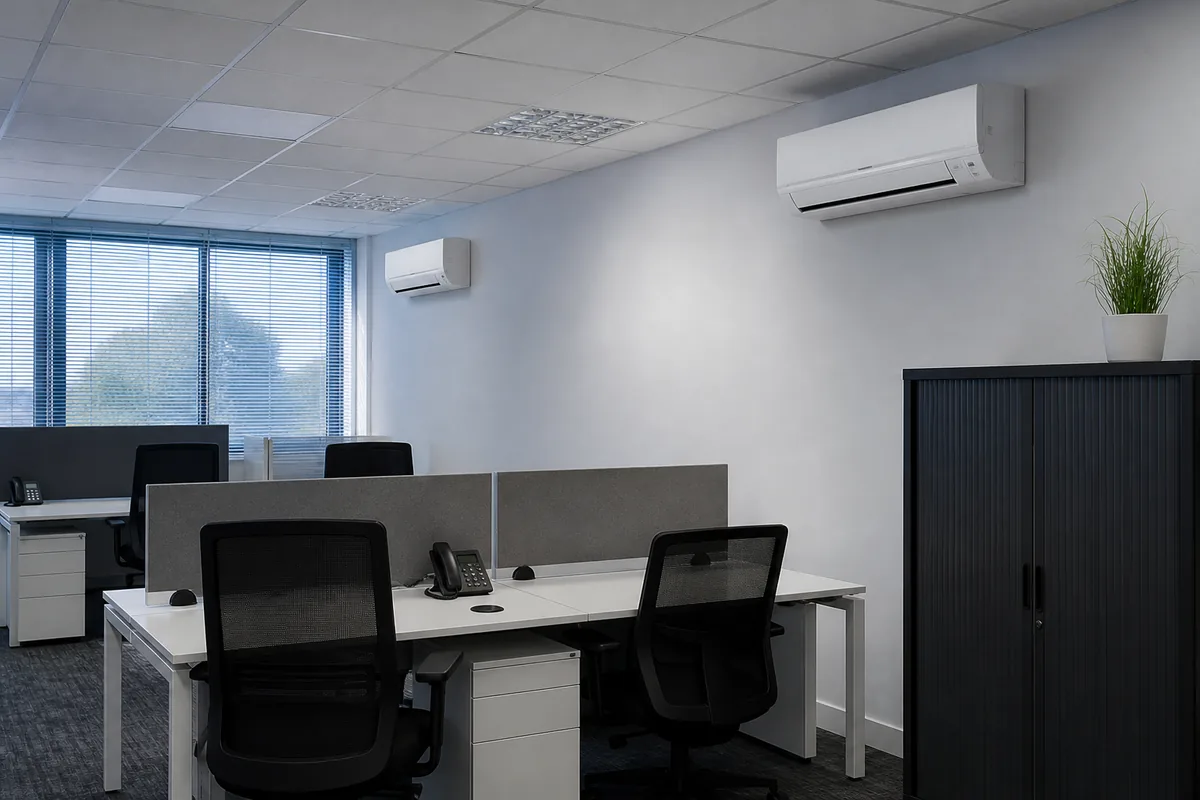
The dark test room and the bright frame floor
The patient sits at a fixed chair, often in the dark, while the optometrist moves between instruments. A fan that fills the pauses in a hearing test or a quiet refraction is part of the problem. Use a small indoor unit, high throw and a low fan. Instrument heat is modest but constant, and the room is small, so it warms quickly with two people and a closed door. Do not size it by copying the shop floor unit.
Illuminated frame bars and a glazed front are the sales-floor load, plus the door as people come in from the street. A cassette or wall unit should serve the staff at the desk and the browsing area you can actually hold. The square metre inside the door will track the street if the door stands open. Lighting that stays on all day enters the load.
Mirrors, the test-room wall and a mid 20s shop floor
Staff comfort sits with HSE workplace temperature guidance: reasonable comfort for the work, no legal maximum temperature. A setpoint in the mid 20s on the shop floor is easier to live with than a cold target beside a glass front.
Mirror walls and frame cabinets steal mounting space. A ceiling void, if it exists, may already carry the shop lighting transformers and trunking. Check the void before you specify a cassette. Filter access has to be possible without emptying a display. The outdoor unit needs a position that does not hum through the test room and does not sit in a service yard with no airflow. Lease consent, condensate to a real waste, and a circuit that is not shared with a random socket on the test desk are the practical limits. Two zones need two controls, and the test-room vane has to miss the chair. An F-gas certified company commissions the kit.
Frequently asked questions
Can the shop unit also cool the eye test room?
Not reliably once the door is shut. The test room is a small closed zone and needs its own indoor unit and a quieter throw.
Why does the shop floor stay warm under the lights?
Display lighting and the glass front are heat. They have to be in the survey. A unit sized as an empty room will not hold a bright shop.
Will a draught affect an eye test?
Air across the patient's face will. Place the unit so the chair sits outside the throw, on a low fan the optometrist can leave alone.
Core buying guides
Start with these high-intent guides, then dig into the rest of the library.
Related guides
Sources and further reading
How this guide was prepared
This guide was written by the Local AC Installers Editorial Team. We compare official guidance, legislation and established consumer information, separate general information from project-specific advice, and show publication dates and sources. We do not accept installer accreditation claims at face value.