
Panasonic's TZ is the ultra-compact wall indoor for places a standard chassis will not fit: a short pier, a bay, a bulkhead, or the wall between a door and a corner. It is still a 230 V reverse-cycle split with an outdoor unit, not a smaller duty by magic. Etherea is the longer premium range with nanoe X. Buy TZ for the wall length, then confirm the kW and the real width on the datasheet for the model quoted.
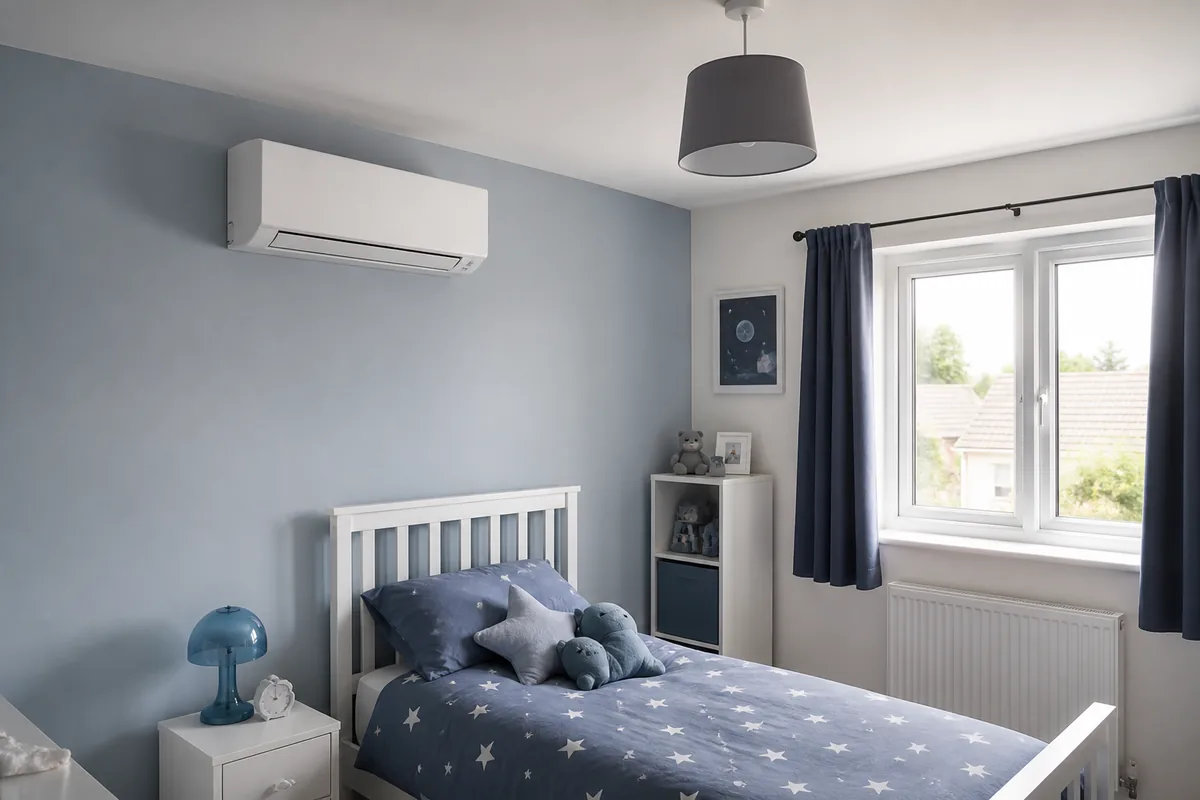
A shorter body for a pier or a bay
Most wall indoors are around 800 mm wide or more. Current TZ compact indoors are often around 780 mm wide and shallower in the places that matter on a tight wall, but model years change, so measure the wall and read the sheet rather than trusting a photo. The pipe exit and the drain side still need a route. A shorter fascia does not remove the need for fall on the condensate or a pump.
Buy it for the tape measure
Use TZ when the tape measure fails for a standard indoor. Do not use it as a way to squeeze cooling into a room that has no lawful outdoor unit. Choose it when the wall is too short or too obstructed for a standard indoor, and the TZ model's kW matches the survey.
Width, curtains and the drain side
Confirm the current width on the datasheet, and keep the kW decision separate from the fascia length.
- Measure the clear wall, including curtains and door swings.
- Confirm width, height and depth on the quoted model.
- Check which side the pipes and drain leave.
TZ is not Etherea
Etherea is Panasonic's premium wall indoor, aimed at filtration and a higher specification, and it is a longer body. TZ is the compact style for awkward walls and straightforward rooms. If you want nanoe X and the wall is long enough, price Etherea. If the wall is the constraint, TZ is the Panasonic answer and you should compare its sound and efficiency at that smaller chassis. Both still need a matched Panasonic outdoor unit or a compatible multi-split outdoor. Mixing brands is not an option.
A short wall can still need 5 kW
A box room that can only take a compact indoor is often a 2.0 or 2.5 kW room as well, which lines up neatly. A large glazed room that happens to have one short piece of wall may need 3.5 or 5 kW. Check that the TZ size you can physically fit is the size the heat gain needs. If the only compact model is too small, the answer may be a different wall, a floor console, or two indoors, not a hopeful TZ. Heating output, SEER and SCOP should be read for that exact pair. The UK energy label applies. A US SEER2 figure does not.
Pencil the chassis before install day
Service access to the filter, a straight drain, and pipe insulation still need room behind and beside the unit. On a bay, the chassis must sit flat, not twisted across angled mullions. Outdoor siting, F-gas commissioning and planning rules are identical to any other split. Ask the installer to mark the chassis on the wall in pencil, with the drain direction, before you agree. Compact units are chosen because the margin is small. Finding out on install day is how furniture and curtains lose.
Frequently asked questions
Is the TZ quieter because it is smaller?
Not automatically. Read the sound data for the capacity you are buying. A compact body can still be loud if it is working flat out.
Core buying guides
Start with these high-intent guides, then dig into the rest of the library.
Related guides
Sources and further reading
How this guide was prepared
This guide was written by the Local AC Installers Editorial Team. We compare official guidance, legislation and established consumer information, separate general information from project-specific advice, and show publication dates and sources. We do not accept installer accreditation claims at face value.