
 vs

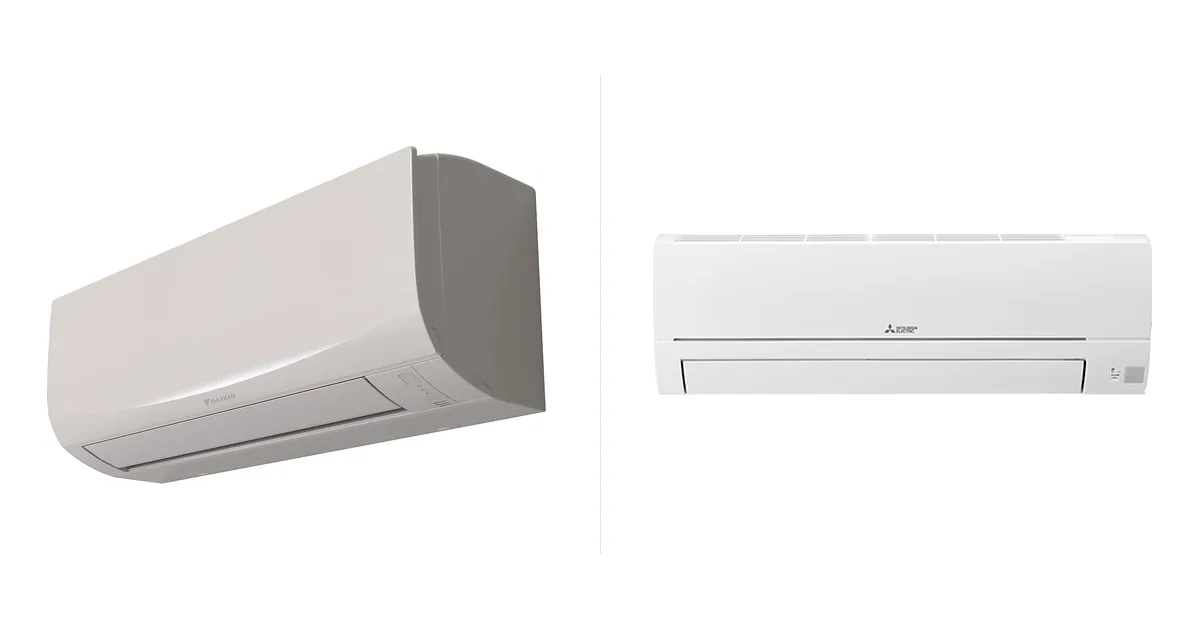
Two budget units, rated almost the same: SEER 6.50 against 6.20 and SCOP 4.20 against 4.30, both A+ for heating. Mitsubishi publishes a 21 dB(A) lowest setting. Pick whichever your installer services; the difference on the bill is small.
Sensira and MSZ-HR as the two value wall pairs
Sensira is Daikin's value residential wall unit: cooling and heating, fewer sensors and air-treatment extras than Comfora or Perfera. MSZ-HR is Mitsubishi Electric's cost-controlled M Series indoor, below AY and well below LN. If a quote only says Daikin or Mitsubishi, you are not looking at these models yet. Ask for the indoor code before you treat a price gap as a discount.
A survey still comes first. West glass, a loft bedroom or an open kitchen can outgrow either value indoor. Both brands have deep UK parts networks compared with budget badges. That is why these two keep winning spare-room quotes. It does not excuse a condenser under a neighbour's window. Outdoor siting and isolation still decide the complaint.
Sensira vs MSZ-HR at 2.5 kW
Figures are the manufacturers' published seasonal ratings for single-split pairs, checked 21 November 2026. SCOP is for the average climate. Multi-split pairings rate lower.
| Daikin Sensira | Mitsubishi MSZ-HR | |
|---|---|---|
| Model compared | Sensira FTXF25F | MSZ-HR25VF2 |
| SEER / cooling class | 6.50 / A++ | 6.20 / A++ |
| SCOP / heating class | 4.20 / A+ | 4.30 / A+ |
| Quietest published indoor setting | Not published on the sheet we used | 21 dB(A) |
| Buy it if | Slightly better cooling rating | Slightly better heating rating and a published quiet figure |
Same kilowatts, then the 2026 invoice
Put both quotes on the same nominal cooling capacity, and ask for heating output at a stated outdoor temperature if the unit will heat. Then ask for indoor sound at the lowest fan speed on those exact codes. Seasonal efficiency moves with capacity. Energy Saving Trust describes air-to-air heat pumps as machines that heat as well as cool, which is the product both of these are. Name the room, say whether heating matters, and ask each firm to write Sensira or HR plus the outdoor model, pipe length and condensate method.
As a 2026 illustration, a straightforward single-split house job on either badge still commonly sits in the high hundreds to a few thousand pounds including VAT. The equipment gap between Sensira and HR is often smaller than a condensate pump, a long pipe run or awkward access. A much cheaper PDF usually hides a shorter pipe allowance, no pump, a different kW, or a firm that has not registered a warranty. GOV.UK company certification is what the refrigerant circuit requires.
Frequently asked questions
Is Sensira or HR the better bedroom unit?
For the room you sleep in every hot night, many surveys step up to Perfera or AY because of fan sound and extras. Sensira or HR can still be right for a spare room once the kW and the outdoor position are right. Compare sound data for the exact codes.
Can I compare a 2.5 kW Sensira with a 3.5 kW HR?
Only as two different duties. The smaller unit is not a cheaper version of the larger one. Match nominal cooling kW, then compare features and who will maintain the system.
Do both need an F-gas installer?
Yes. Opening and charging the refrigerant circuit is certified work. The value indoor does not create a DIY exception.
Does stepping from Sensira to Perfera, or from HR to AY, add kilowatts?
No. That step changes sensors, fan behaviour and extras. Only a larger matched outdoor adds cooling duty. The survey still has to name the kilowatts.
Can I paste a SEER from a smaller sample onto this job?
No. Do not import a SEER from a brochure for a different size. A forum figure for a 2.0 kW sample is not your 3.5 kW job.
What if the firm only stocks one of these badges?
That is a fair limit. Do not mix a Daikin indoor with a Mitsubishi outdoor. Ask for photos of the indoor wall and the proposed outdoor spot so both prices describe one job.
Core buying guides
Start with these high-intent guides, then dig into the rest of the library.
Related guides
More homes guides
Sources and further reading
How this guide was prepared
This guide was written by the Local AC Installers Editorial Team. We compare official guidance, legislation and established consumer information, separate general information from project-specific advice, and show publication dates and sources. We do not accept installer accreditation claims at face value.