
A print shop's heat is the equipment: digital presses, copiers and finishing machines running for hours, often in a room with little glass and a lot of internal gain. Paper dust and toner are fine and constant. Comfort cooling can make the operator's standing position livable. It should not be the extract for process heat or dust. Keep the return out of the delivery end of the press, and clean filters on a print-shop interval. An F-gas certified company installs the refrigerant circuit.
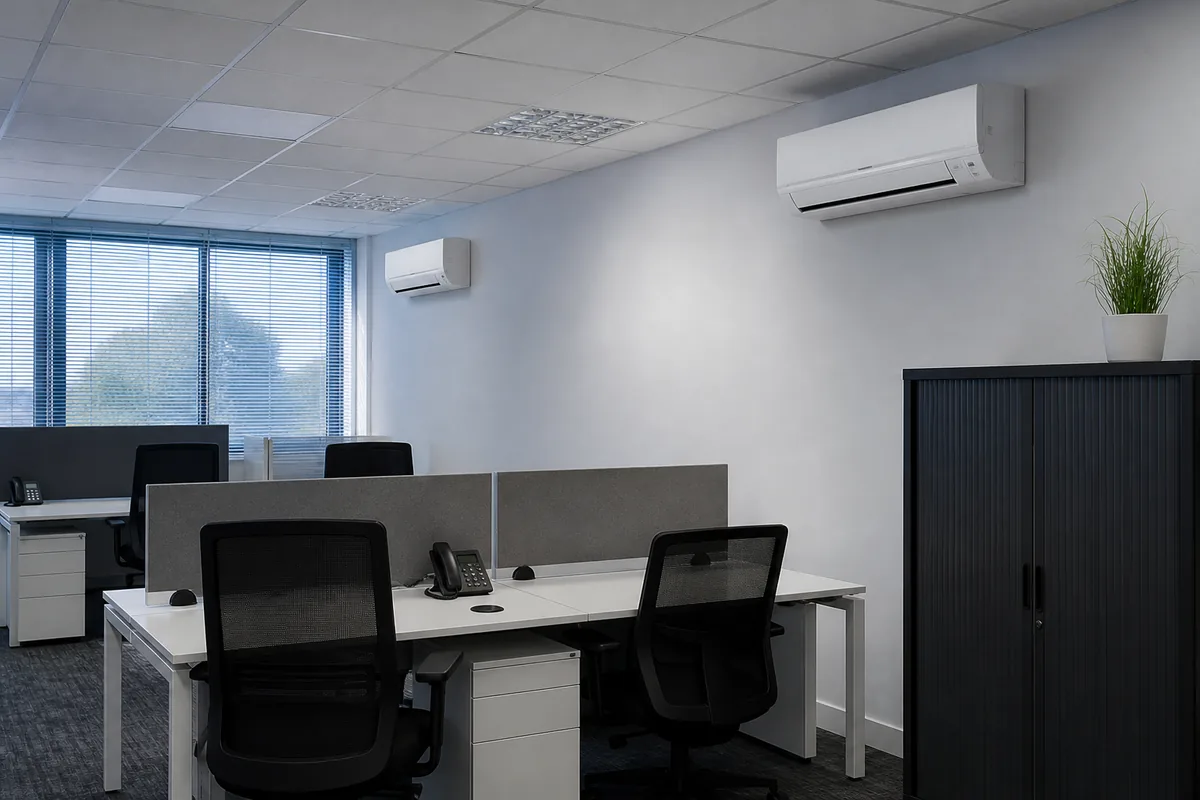
Machine heat at the operator's standing spot
Ask for the heat the press maker quotes, then see how the room is actually run. Several machines on together, plus a laminator, will overwhelm a unit sized for a retail counter. The operator stands in one hot spot. That spot is the comfort target.
Print rooms are electrically heavy. The air conditioning supply has to be agreed with an electrician who can see the board. A hot print room also makes a lot of condensate when you finally cool it. The drain has to be sized for that, not for a bedroom. Outdoor plant must sit where paper store doors and van racks do not choke it. Landlord consent and noise towards any flat above still apply. Staff comfort is an HSE workplace temperature question: reasonable comfort for the work, no legal maximum, with hot machines described honestly.
A ceiling already full of tray and extract duct
Toner and paper dust blind filters and settle on coils. A comfort unit in the print room needs access and a short service interval. It does not replace any extract or filtration the press itself requires. Those stay with the machine supplier.
Do not site the indoor unit where a pallet or a delivery table will block the filter for the next five years. Production days that run longer than the counter are the hours that matter. Name the machines that run together. Press extract and any process cooling the manufacturer already requires stay outside the comfort job.
Frequently asked questions
Can one shop unit cool the presses and the counter?
Only if they are truly one open room and the load has been counted. A closed print room needs its own indoor unit. A front counter with a door to the street is a cleaner, leakier zone and may want its own small indoor unit.
Will air conditioning extract toner dust?
No. It recirculates and will load its own filter. Process extract stays with the press design. The comfort filter is a maintenance item, not a dust-control system.
Why does the room still feel hot beside the machine?
The press surface is radiant heat. Cooling the air helps the person and does not make the casing cool. The survey should say that plainly.
Why keep the return off the press delivery?
Paper dust and toner are fine and constant at the delivery end. The comfort return should sit out of that stream, or the coil becomes the dust store.
Can the counter unit draw air through the print-room hatch?
Do not pull print-room air into the counter unit through an open hatch if the hatch is full of toner smell. Keep that path shut or treat the rooms as separate zones.
What if the print-shop ceiling is already full?
Ceiling grids in print shops are often already full of cable tray and extract duct from the equipment. Measure what is left before a cassette is promised, and keep filter access clear of pallets.
Core buying guides
Start with these high-intent guides, then dig into the rest of the library.
Related guides
Sources and further reading
How this guide was prepared
This guide was written by the Local AC Installers Editorial Team. We compare official guidance, legislation and established consumer information, separate general information from project-specific advice, and show publication dates and sources. We do not accept installer accreditation claims at face value.