
A PTAC, a packaged terminal air conditioner, is a US hotel product: heating and cooling in one chassis that slides into a sleeve through an external wall, with the compressor in the room. UK houses and UK hotels normally use split systems, so the compressor sits outside. Importing a PTAC means the wrong voltage risk, a large hole in the wall, street noise and weak efficiency. Specify a 230 V split, or a UK commercial system where the building is a hotel or office.
A motel chassis in a sleeve
The sleeve is built into the facade. The chassis pushes in from the room and dumps heat, noise and condensate at the grille on the outside. American motels use them because each room is a repeat detail and the plant is replaced as a cartridge. They are not a British domestic category. You will see 115 V and higher-voltage US versions, often 60 Hz, with controls and spare parts aimed at that trade. A UK 230 V, 50 Hz supply does not make those chassis a sensible import.
Compressor noise stays in the room. The sleeve is a cold bridge and a weather joint. Condensate is part of the chassis design, not a UK drain plan. Replacement means another identical chassis years later.
Cavity walls, terraces and pavement grilles
A terrace, a cavity wall flat or a timber frame house is not detailed for a half-metre sleeve under the window. Cutting one in means structure, damp proofing, cold bridging, and often planning or listed-building consent on the elevation. Ground-floor grilles face the pavement and invite damage.
Neighbour and street noise travel both ways. The unit is louder at the bed than a split indoor on a low fan. Planning Portal heat pump guidance is about external condensers for proper systems, not a licence to punch a PTAC opening through a front wall.
A split at home, commercial plant in a hotel
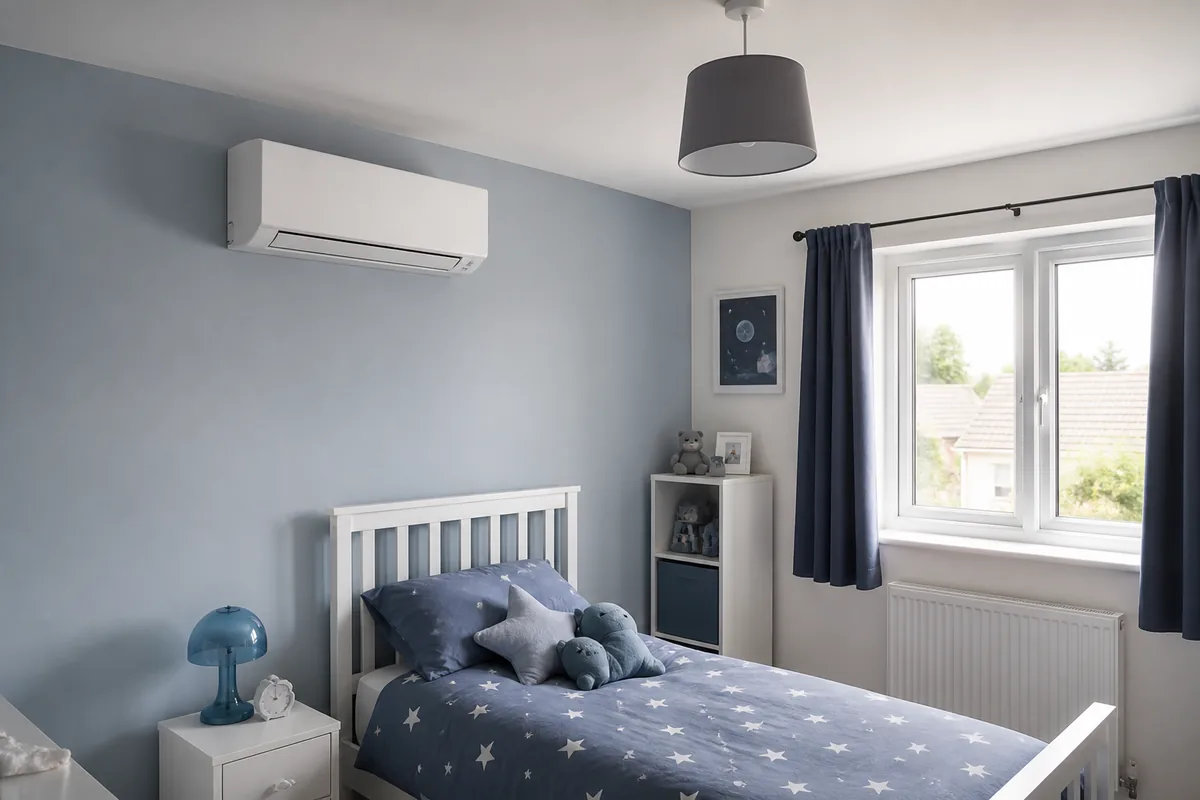
For a home, a wall-mounted split or a small multi-split: outdoor unit outside, quiet indoor inside, F-gas install, heating and cooling from a reverse-cycle heat pump. For a hotel or a series of rooms, UK practice is commercial splits, VRF where the zone count earns it, or fan coils on a central plant. Those are designed, commissioned and serviced here.
Say you saw PTAC units and you want the UK equivalent for the rooms. Ask for outdoor positions, indoor type, kW and condensate. For several rooms, ask whether one outdoor multi-split is enough or whether the building has grown into light-commercial plant.
Frequently asked questions
Can I buy a PTAC for a UK bedroom?
It is the wrong product. Voltage, parts, noise and the wall opening all work against it. A 230 V split is the normal answer.
Do UK hotels use PTAC units?
Some older stock has through-wall units. New and refurbished UK hotels more often use splits or central systems with the compressor outside the guest room.
Is a PTAC cheaper than a split?
The chassis can look cheap until you price the structural opening, the heat loss, the noise and the lack of a UK parts path. A surveyed split is the durable comparison.
Can a US PTAC drop into an old through-wall hole?
No. If an existing building already has old through-wall units, replace them on a surveyed plan. Do not drop a US PTAC into a rough opening because the hole looks similar.
When do hotel systems need an inspection?
Systems with an effective rated output above 12 kW can fall under GOV.UK air conditioning inspection rules. A house split usually does not. A whole hotel will.
Core buying guides
Start with these high-intent guides, then dig into the rest of the library.
Related guides
Sources and further reading
How this guide was prepared
This guide was written by the Local AC Installers Editorial Team. We compare official guidance, legislation and established consumer information, separate general information from project-specific advice, and show publication dates and sources. We do not accept installer accreditation claims at face value.