
Warehouse air conditioning in the UK is rarely a copy of office cassettes. Roof height, infiltration through loading doors, and whether you are cooling people or product decide the system. Many sites need zoned comfort at picking desks, not whole-volume cooling.
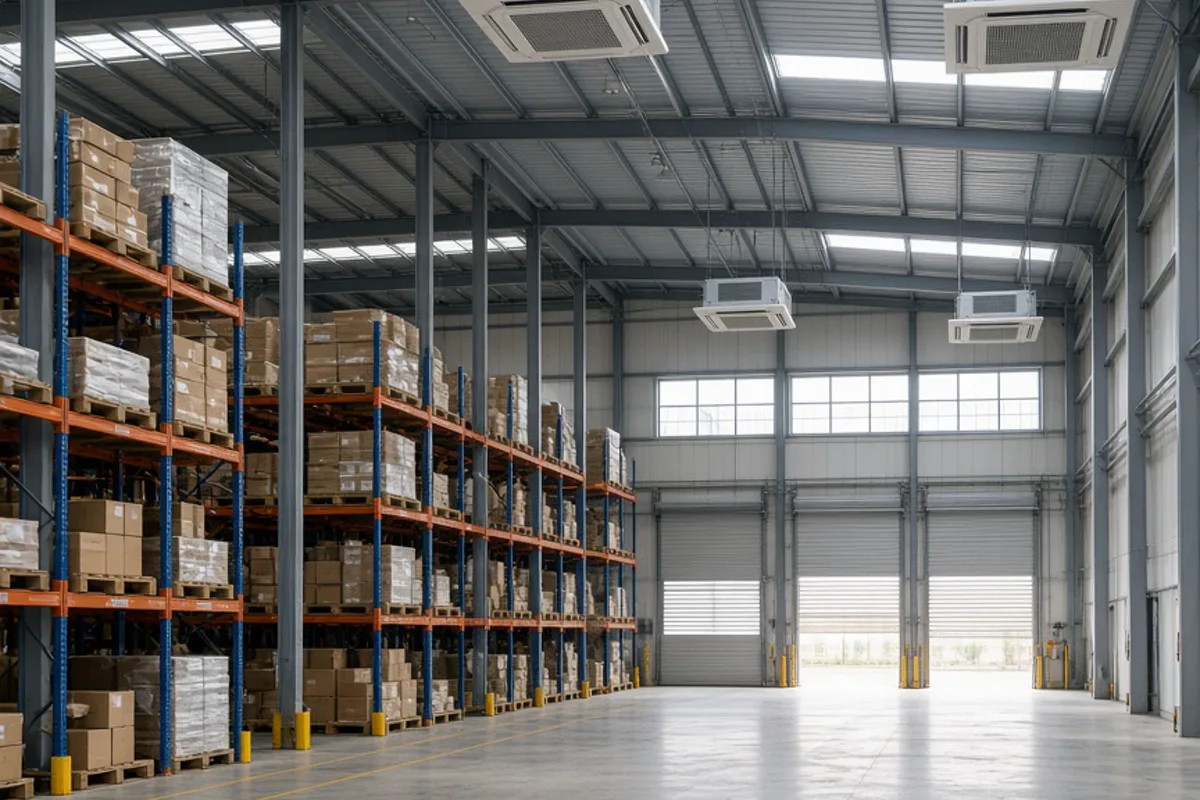
Cool the people, not the cubic metres
A UK warehouse with 8 to 12 m to the underside of the haunch holds a huge volume of air. Trying to hold 21 C in the whole volume is how projects become unaffordable and still feel patchy. Start with who is uncomfortable: pickers on the floor, a mezzanine packing line, or an office pod. Spot cooling, fabric duct, and local splits often beat a giant rooftop that fights open dock doors.
Solar gain through north-lights, dark roofs, and summer peak with doors open are the usual load drivers. Forklift traffic and plastic-strip curtains change infiltration every hour. A load sheet that assumes sealed fabric is fiction. Office and welfare pods inside the warehouse are a separate, easier job: small splits or cassettes, their own outdoor units, and doors that actually close. Do that first if the complaint is an overheating supervisor's office, not the aisle. Read this against the industrial installation guide and the commercial cost guide.
- Mark where people actually stand, not the whole floor plate.
- Treat office pods as a domestic-scale split, not warehouse plant.
- Product cooling is a different design from people comfort.
Formats that show up on UK sites
High-level cassettes or under-ceiling units in lower bays. Fabric duct from an air handler for even throw along a picking face. VRF for mixed office and warehouse zones. Evaporative or adiabatic systems where humidity and water quality are managed. Each has a hygiene and winter story as well as a summer one.
2026 illustrations for a small warehouse office pod can look like a domestic multi-split. Cooling a picking face is a different order of magnitude. Do not compare the two on one spreadsheet line. Noise and draught on the floor matter. High-velocity dump from a poorly aimed grille makes pickers wear jackets in the jet and still sweat in the still air.
Plant, power and maintenance
Roof plant needs structural checks, fall-arrest, and a route for a condenser that can be maintained in January. Three-phase supply and discrimination at the intake often appear late. Ask about them on the first visit.
Filters and coils in a cardboard-dust warehouse clog faster than an office. A maintenance contract priced like a dentist's waiting room will fail. Price attendance, not a sticker in a folder. TM44 can apply once cooling output is over 12 kW. Warehouse plant often clears that without anyone noticing.
Brief that gets a usable quote
Eaves height, floor area, door type, hours, and whether product has a temperature limit. Photos of the roof and the electrical intake. A mark-up of where people actually stand. If you sell food, pharma or electronics, say so. Comfort cooling and product cooling are different designs.
Use the quote form if you want introductions to firms who walk warehouses rather than send a domestic price list.
Frequently asked questions
Can I put domestic splits in a warehouse?
For a small office or welfare room, yes, if outdoor siting and electrics work. For the warehouse floor, domestic indoor units rarely throw far enough or survive the dust load.
Do loading-bay doors make air conditioning pointless?
They make whole-volume cooling expensive. Air curtains, lobbies, and zoned cooling at the picking face are the usual engineering answers, not pretending the door is closed.
Is evaporative cooling enough for a UK warehouse?
Sometimes for people comfort in dry weather. It is not a refrigerator for product, and it needs water treatment. Treat it as a different system, not a cheap VRF.
Core buying guides
Start with these high-intent guides, then dig into the rest of the library.
Related guides
- Industrial Air Conditioning Installation in the UK
- HVAC Installation in the UK: What the Term Actually Means
- Commercial Air Conditioning Installation in London: A Practical Project Guide
- Shop and Retail Air Conditioning: Designing for Customers, Staff and Stock
- Commercial Air Conditioning Installation Cost in the UK
Sources and further reading
How this guide was prepared
This guide was written by the Local AC Installers Editorial Team. We compare official guidance, legislation and established consumer information, separate general information from project-specific advice, and show publication dates and sources. We do not accept installer accreditation claims at face value.