
A fan coil unit is a fan blowing room air across a coil that heats or cools that air. In a house the coil is usually the indoor half of a split, with refrigerant in the pipes. In many offices the coil is fed with chilled water, and sometimes hot water, from a central plant. The grille can look similar. The plant, the installer and the maintenance are different. A quote should say which fan coil it means before anyone talks about price.
A cassette grille in a landlord ceiling
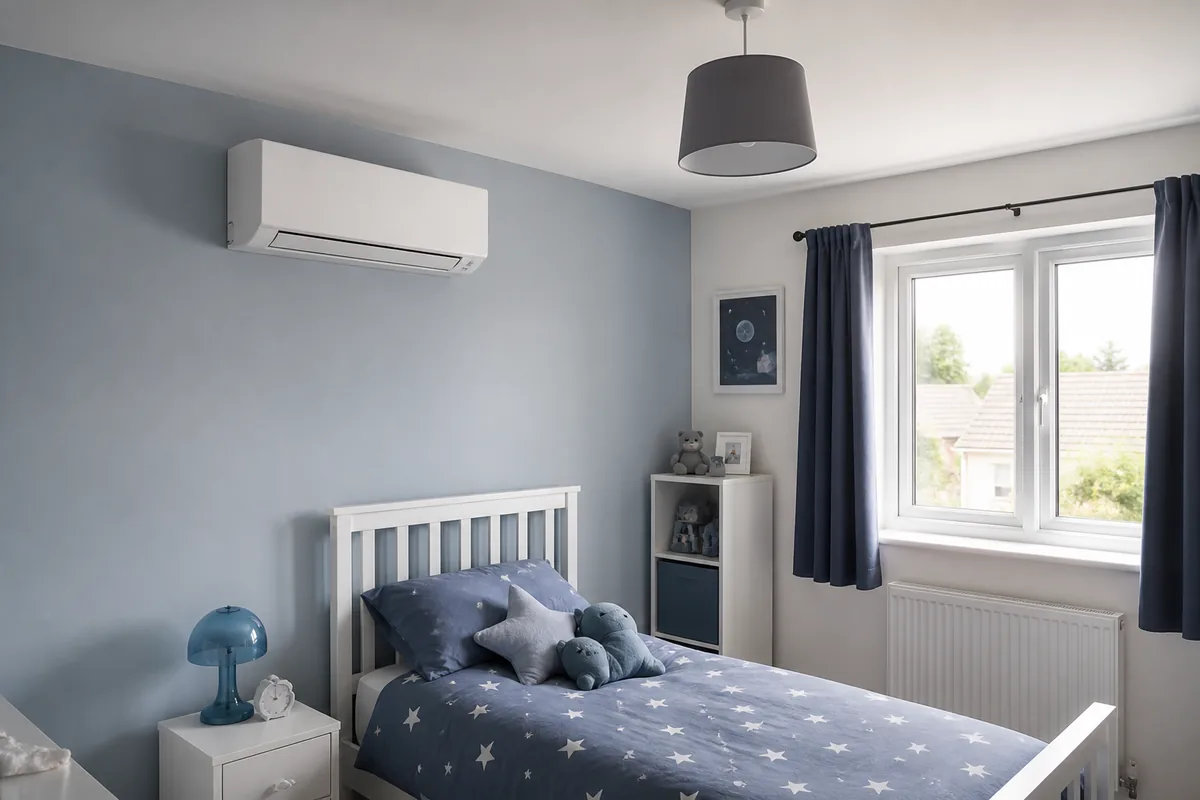
Stand under a ceiling grille in a fitted office and the word fan coil can mean two machines. On a domestic or shop split, the wall unit, cassette, floor console or ducted indoor is a fan coil in the broad sense: a fan, a coil, a filter and a drain. The coil carries refrigerant. An F-gas certified company handles that circuit. The outdoor unit rejects the heat in cooling, or collects it in heating. Energy Saving Trust describes that air-to-air pattern for homes. On a landlord's office fit-out, a fan coil often means a terminal unit on a four-pipe or two-pipe water system. A chiller, a heat pump or a boiler sits elsewhere.
Refrigerant in the coil, or water
The person who services a water terminal may never touch refrigerant. If your quote says fan coil and nothing else, ask which of those two worlds you are in. In everyday engineering language a wall-mounted split is a fan and a coil. In office specifications, fan coil usually means a water terminal. Make the quote say refrigerant split or water fan coil in plain words. The terminal itself often has no refrigerant. Any chiller, heat pump or split that does contain F-gas still needs certified people when that circuit is opened. GOV.UK sets out company certification for that work.
Houses, shops and floors that already have a chiller
A refrigerant fan coil, meaning a normal split indoor, suits houses, small shops, meeting rooms and single retail bays. You buy capacity per room, you put an outdoor unit somewhere lawful, and you live with pipe limits from that manufacturer. A water fan coil suits floors where a central plant already exists or where dozens of rooms must sit on one landlord system. Adding one rogue split in a plant room that was designed for water terminals can fight the building controls. The survey should say whether the base build already has chilled water.
- Split indoor: refrigerant coil, outdoor condenser, F-gas install.
- Water fan coil: chilled water and sometimes heating water from central plant.
- Both need a condensate plan and filter access after the ceiling or the casing is finished.
Two service sheets, one grille
Filters, drains and fans are common to both. Refrigerant checks, leak records and end-of-life recovery apply to the split and to any chiller that uses F-gas, under the operator rules on GOV.UK. A water coil adds pumps, valves, strainers and water treatment. Mixing those service sheets is how a facility manager pays twice. Noise and throw still decide comfort. A cassette that dumps air onto a desk, or a ducted fan coil with no access panel, fails whether the coil holds refrigerant or water. Ask for airflow, sound and a filter location you can actually reach. Where the plant is large enough, GOV.UK also describes air conditioning inspections as a separate duty.
Stop when the quote will not say which coil
Stop and send the quote back if it will not name the terminal type, the medium in the coil, the cooling and heating capacity, the drain method and who maintains it after year one. For a split, ask for the outdoor model and the F-gas company who will install it. For a water unit, ask which plant it connects to and whether the building management system already has a point for it. If you are a tenant, check whether the fan coil is in your demise or the landlord's. That decides who instructs the survey. Swapping a water fan coil for a split cassette is sometimes possible if the building allows an outdoor unit, a pipe route and a drain, and if the landlord agrees. It is a new system, not a grille change.
Frequently asked questions
Does a water fan coil need an F-gas installer?
The terminal itself often has no refrigerant. Any chiller, heat pump or split that does contain F-gas still needs certified people when that circuit is opened. Ask which plant is in scope.
Can I swap a water fan coil for a split cassette?
Sometimes, if the building allows an outdoor unit, a pipe route and a drain, and if the landlord agrees. It is a new system, not a grille change. Survey both the base-build plant and the outdoor position first.
Core buying guides
Start with these high-intent guides, then dig into the rest of the library.
Related guides
Sources and further reading
How this guide was prepared
This guide was written by the Local AC Installers Editorial Team. We compare official guidance, legislation and established consumer information, separate general information from project-specific advice, and show publication dates and sources. We do not accept installer accreditation claims at face value.