
For the bedroom you sleep in, start with Mitsubishi Electric MSZ-AY or Daikin Perfera at the kW the room needs, then choose on night sound and features. AY is the usual pick for the lowest indoor fan noise. Perfera is the usual pick when you want occupancy sensing, streamer filtration, or you are already on a Daikin outdoor unit. A value indoor such as HR or Sensira belongs in a spare room more often than here. The outdoor unit's position still decides whether the room is quiet.
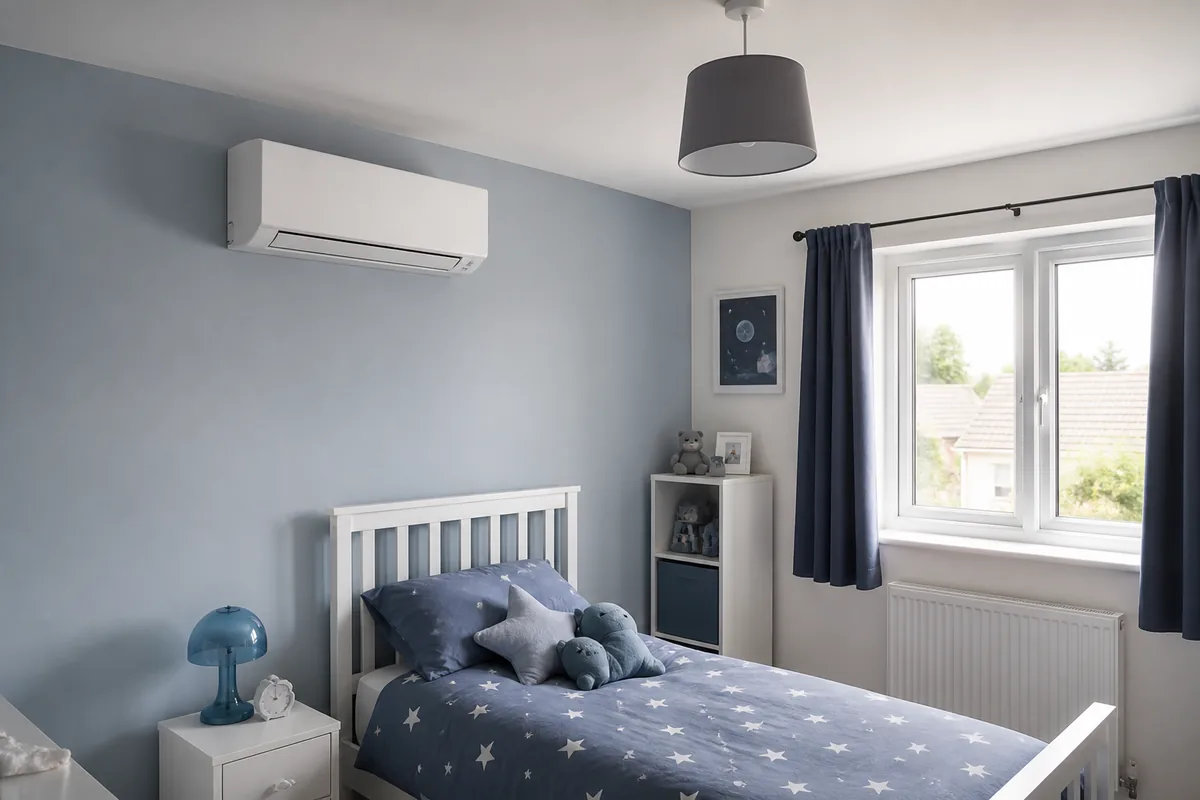
AY or Perfera, then the wall behind the bed
MSZ-AY is Mitsubishi's quiet everyday wall unit. Perfera is Daikin's everyday higher-specification wall unit, above Sensira and Comfora. Both are reverse-cycle R32 splits in current UK form, both heat and cool, and both need a matched outdoor unit. Designer ranges such as LN or Stylish are a look-and-filter step, not an automatic upgrade in kW. AY is the choice when the lowest indoor sound is the priority. Perfera is the choice for sensing, streamer and Daikin systems. Size first. A small bedroom is often 2.0 to 2.5 kW, not 3.5 by habit. Point the airflow away from the bed. If the house is already Mitsubishi, stay on AY or another compatible M Series indoor. If the outdoor unit is Daikin, stay on Perfera or another compatible Daikin indoor. Cross-brand piping is not a clever compromise.
Brochure indoor figures near the bottom of the scale are measured on the quietest fan in a test room. They are useful for comparing AY and Perfera. They do not describe a compressor on a bracket outside the headboard. Put the outdoor unit on a solid wall that is not the bed wall where you can, use proper anti-vibration mounts, and keep it off the neighbour's bedroom window. A larger capacity running gently can be quieter than a small unit running flat out, but only if the survey says the room needs that capacity. Oversizing a tiny bedroom to chase a sound figure can control badly. Get the kW right, then compare sound. A quiet indoor will not fix a noisy outdoor unit. Site and isolate the outdoor unit properly. The indoor series cannot silence a compressor on the other side of the headboard.
Heat, the vane, and a value indoor that belongs next door
A reverse-cycle unit warms the bedroom on cool nights without the whole house heating. Read the heating capacity at a low outdoor temperature. Perfera and AY both publish those tables. Compare the size you are buying. Set the vane so the air does not blow across the pillow. A low fan and a sensible setpoint beat a unit aimed at the bed on a high fan. Filters should be cleanable without a ladder if the indoor is above a headboard. Say that on the survey so the mounting height is human.
Same kW, same wall, same drain, same outdoor position. Then choose AY or Perfera for sound, controls and whether you care about the extra sensors. If a third quote offers HR or Sensira for less, treat that as a spare-room specification and decide whether the saving is worth it in the room you use every night. Often a value model is a false economy if you sleep there through hot nights. HR or Sensira can cool the room, but AY or Perfera is the more usual specification once the install cost is similar. F-gas installation, a proper electrical supply and, in England, Planning Portal rules for the heat pump outdoor unit are part of both quotes. A premium indoor does not unlock a refused outdoor location.
Frequently asked questions
Should a main bedroom have Mitsubishi AY or Daikin Perfera?
AY when night-time indoor sound is the priority. Perfera when you want its sensing and filtration, or you are already on Daikin. Compare the same kW and the same outdoor position.
Is a value model a false economy in the main bedroom?
Often yes if you sleep there through hot nights. HR or Sensira can cool the room, but AY or Perfera is the more usual specification once the install cost is similar.
Will a quiet indoor fix a noisy outdoor unit?
No. Site and isolate the outdoor unit properly. The indoor series cannot silence a compressor on the other side of the headboard.
Core buying guides
Start with these high-intent guides, then dig into the rest of the library.
Related guides
Sources and further reading
How this guide was prepared
This guide was written by the Local AC Installers Editorial Team. We compare official guidance, legislation and established consumer information, separate general information from project-specific advice, and show publication dates and sources. We do not accept installer accreditation claims at face value.