
For a spare room or guest room, start with capacity, then pick a value wall unit. Mitsubishi Electric MSZ-HR, Daikin Sensira and, if the room is used more often, Daikin Comfora cover that logic. You want a 230 V reverse-cycle split, quietly sited outdoors, not a premium fascia in a room that is empty most nights. If the spare room is really a second bedroom you sleep in every hot week, treat it as a main bedroom instead.
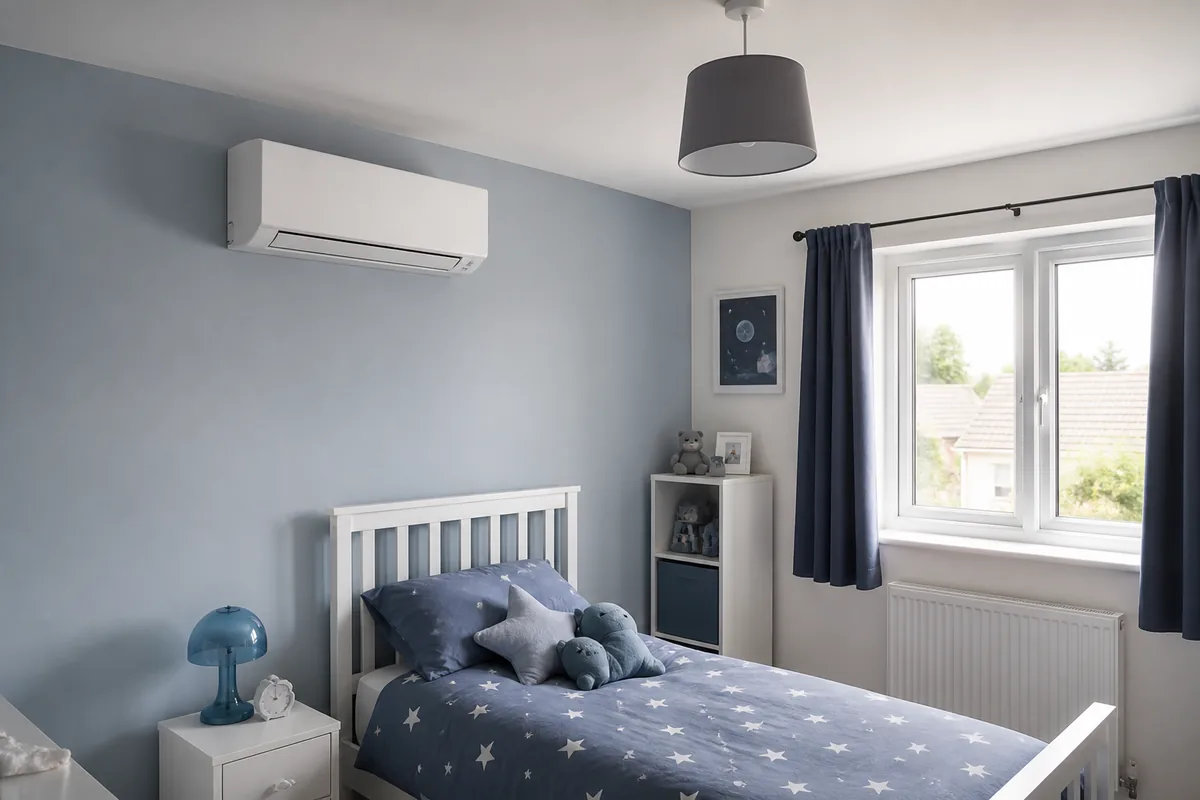
A room that is empty most nights
A box room for occasional guests needs less than the bedroom you use all year. A spare room that is also the home office, or that hosts people for weeks, deserves the mid step: Comfora rather than Sensira if you are in the Daikin range, or a quieter indoor if Mitsubishi is the house brand. The series names are examples of a value tier. The quote must show model codes.
Count the glass and the floor area in metres. Many small spares land at 2.0 or 2.5 kW. A large spare with a bay can need 3.5 kW. Buying a premium indoor at the wrong kW does not fix August. Often 2.0 to 2.5 kW, sometimes 3.5 kW with a large window or a bay. Measure the room. Do not copy the living room size.
HR, Sensira or Comfora
A value model from a supported brand is enough when the kW is right. Avoid unknown 115 V imports.
- HR: Mitsubishi value indoor for simple rooms.
- Sensira: Daikin entry indoor, fewer sensors than Perfera.
- Comfora: Daikin mid step when the room is used regularly.
- Keep Perfera, AY and designer fascias for rooms you occupy most.
A short pipe run beats a filtration badge
The labour for pipes, electrics and commissioning is similar for HR and for a flagship indoor. A short, well insulated pipe run and a drain that falls will matter more to a guest than a filtration badge. If the outdoor unit would sit under the guest window or the neighbour's window, move the outdoor unit or pay for isolation. The indoor series will not hide that hum.
Stay on one brand if it joins a multi-split
Stay on one brand if this room joins a multi-split. An HR can share a Mitsubishi MXZ with an AY in the main bedroom when the combination chart allows. A Sensira cannot share an outdoor unit with a Mitsubishi indoor.
Heat in a cold corner, and a fan a guest could sleep beside
Guest rooms are often the cold corner of the house. A reverse-cycle unit is useful in spring and autumn so you are not heating the whole boiler circuit for one room. Read the heating output. Entry models still have a data table.
You do not need the lowest published bedroom sound in a room used ten nights a year. You do need a fan speed you would be happy to sleep beside if someone stays during a heatwave. Ask for that figure on the size you are buying.
When the spare room is the wrong place for a value indoor
If you sleep there through every hot week, or it is used like a main bedroom or office, HR or Sensira is the wrong tier. Treat it as a main bedroom and put AY or Perfera where you actually sleep. Only then does the spare deserve the better indoor.
If you were offered Perfera or AY for a room used ten nights a year, ask what you gain for the way the room is used. Sometimes the answer is nothing, and HR, Sensira or Comfora is the honest specification. Indoor code, outdoor code, kW, pipe length, condensate, and a reverse-cycle pair should still be written down. F-gas rules and, in England, Planning Portal conditions for the outdoor unit apply to a spare room exactly as they do to a lounge.
Core buying guides
Start with these high-intent guides, then dig into the rest of the library.
Related guides
Sources and further reading
How this guide was prepared
This guide was written by the Local AC Installers Editorial Team. We compare official guidance, legislation and established consumer information, separate general information from project-specific advice, and show publication dates and sources. We do not accept installer accreditation claims at face value.