
Setting 16C does not cool a room faster. The indoor and outdoor pair can remove heat only at the rate they were built for, the cooling kilowatts on the data plate. The remote's low number is a target, not a throttle you open wider. The unit runs harder and for longer, the coil gets colder, and in a humid room it can ice. You feel a colder draught. You do not get a bigger machine. Pick a normal setpoint, set the fan for comfort, shut the doors and close the windows.
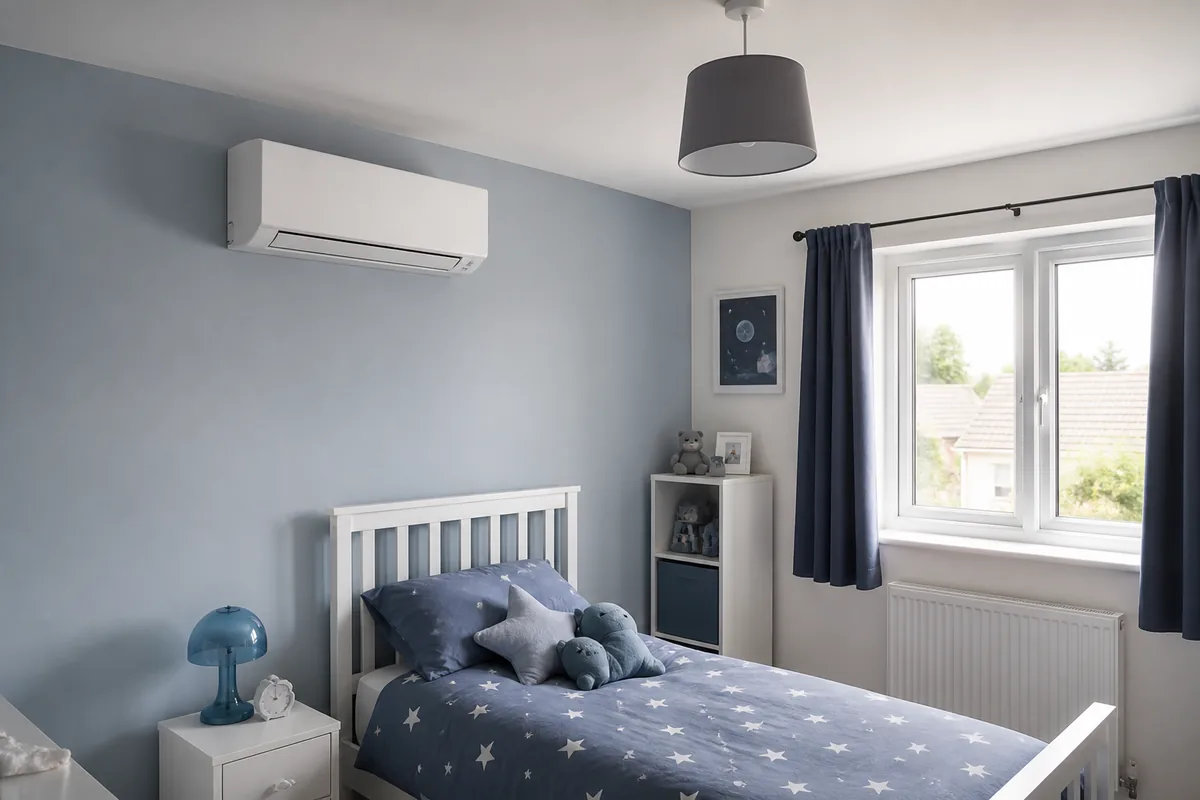
The display reading 16 while the room is still hot
The first minutes of cooling are often similar at 24C and at 16C if both are well below the room temperature. The difference shows up later: the 16C setting refuses to stop when the room is already comfortable, and it keeps drying and chilling the coil. You feel a colder draught. You do not get a bigger machine.
The plate in kilowatts, not the down arrow
A 2.5 kW unit does not become a 5 kW unit because the display says 16. While the room is warmer than the setpoint, a simple control already asks for cooling. Dropping the target further does not add compressor capacity beyond what that model can do. Inverter units can modulate. They still have a maximum. Ask for the cooling kilowatts of the proposed pair, and for a handover setpoint that is not 16C.
- The data plate kilowatts are the cooling rate.
- 16C is a target, not a boost.
- A colder coil can ice in humid weather.
- Fan speed changes the feel without pretending the kW changed.
What to set while you wait
Choose a temperature you want the room to hold, often somewhere in the low or mid 20s for cooling, and wait. Use fan speed and vane direction if you want more movement or less blast. Shut internal doors so the kilowatts stay in that room. If the room never reaches a reasonable setpoint on a hot afternoon, the causes to check are size, glass, an open door, a dirty filter fitted the wrong way, or a fault. The cause is not that you failed to choose 16C. Tell the installer the setpoint you actually used, and whether the windows were open.
Ice, a cracked window and the bill
Ice on the indoor coil blocks airflow and then melts into a tray that may overflow. That is a common end to a weekend of 16C with a cracked window, because the window keeps feeding moisture. Close the window, raise the setpoint, and let the coil recover. If ice returns at a normal setpoint with the room shut, call the installer. The longer run costs more. Energy Saving Trust's air-to-air guidance is about using these units as heating and cooling for the rooms you treat, not about parking the remote at the bottom. A modest setpoint that the unit can reach is the efficient one. Ice from a silly setpoint and ice from a fault are told apart by how you were running it. Ask for a check, not a regas as the opening move.
Stop scraping ice or parking the remote at the bottom
Do not chip the fins. Switch the unit off, close the windows, and let ice melt into the drain. If it ices again at a normal setpoint, ask the installer to inspect. A demo left at 16C is a dramatic draught, not extra capacity. Ask them to leave a normal setpoint. If a salesperson told you the lowest number cools fastest, have that corrected on the day. The kilowatts on the plate are the limit.
Frequently asked questions
Will 18C cool faster than 24C?
Not in the way people hope. If the room is 28C, both settings call for cooling. The unit's kilowatts set the speed. 18C mainly stops it easing off once the room is already pleasant.
Why did the installer demo it at 16C?
It makes a dramatic draught. Ask them to leave a normal setpoint instead. The drama is not extra capacity.
Core buying guides
Start with these high-intent guides, then dig into the rest of the library.
Related guides
Sources and further reading
How this guide was prepared
This guide was written by the Local AC Installers Editorial Team. We compare official guidance, legislation and established consumer information, separate general information from project-specific advice, and show publication dates and sources. We do not accept installer accreditation claims at face value.