
After a storm, look at the outdoor unit before you ask it to cool. If the casing is cracked, the fan has struck something, or a branch is in the coil, switch it off at the isolator and leave it off. Do not hose the electrics to clear grit. Water forced into a damaged box is how a repair becomes a replacement. Leaves and light debris on an intact casing can wait for a dry, calm look. Lightning scars, a leaning bracket and a tripped circuit are an F-gas engineer, not a broom.
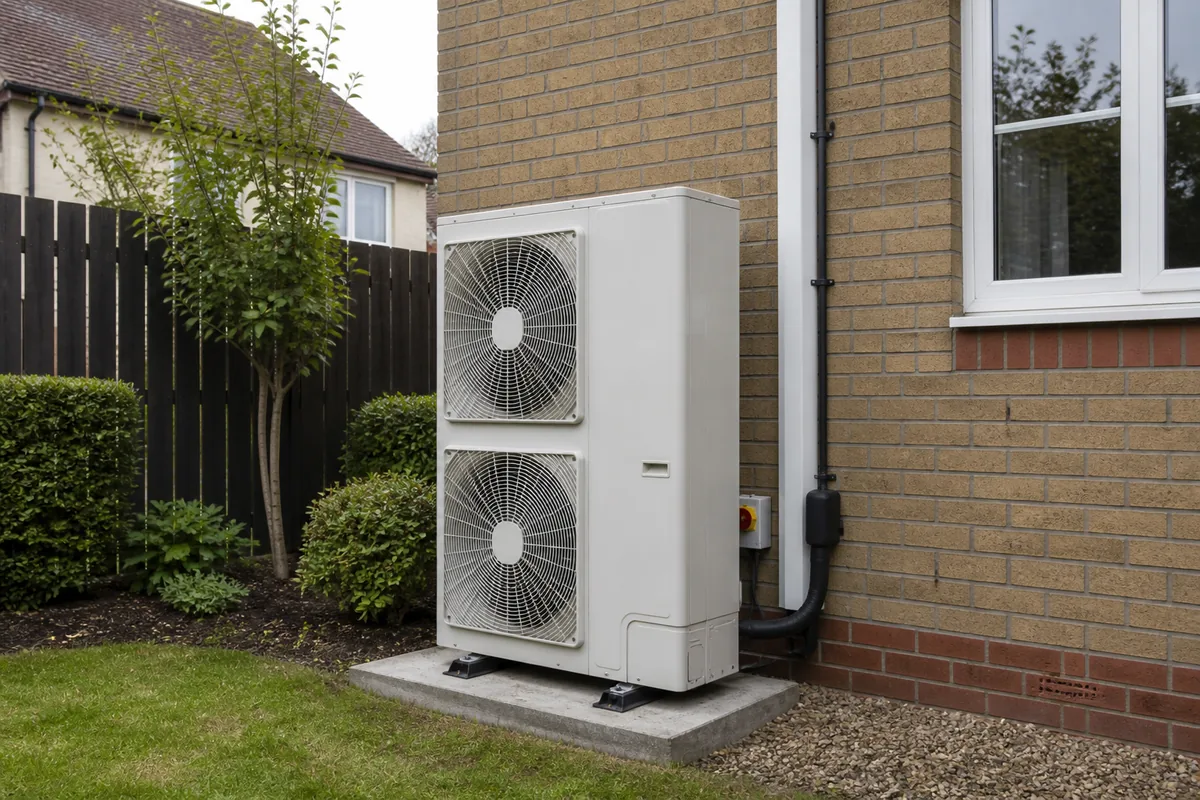
Walk round when it is safe to be outside
Walk round when it is safe to be outside. You want an upright unit, a fan that is not jammed, fins that are not crushed by debris, and cables that still enter the case through their glands. A dented but sealed panel can often wait for a routine visit. An open hole, a missing top, or a fan blade touching metal means isolator off.
Find the isolator before the next storm
If you never learned where the isolator is, find it before the next storm. It should have been part of handover. Switching off at the remote is not the same if the outdoor electrics are exposed. Indoor power and outdoor isolation are a question for the engineer if you are unsure. When in doubt, leave it off. Reset a tripped circuit only if the outdoor unit looks intact, dry at the electrics, and the fan is free. If the casing is damaged or you smell burning, leave the isolator off and call an engineer.
What you do not do with a hose
Rain on an intact outdoor unit is normal. These boxes live outdoors.
- Isolator off if the casing is open or the fan is jammed.
- Do not hose electrical parts.
- Do not pull branches out of a spinning fan.
- Photograph damage before anyone tidies it.
Flood water and a hose in the gully
Flood water that has covered the unit, or spray driven into a broken panel, is not normal rain. Do not dry the electrics with a pressure washer, a jug, or a hair dryer you have to stand in a puddle to use. HSE's electricity guidance is the principle: damaged electrical equipment is not a cleaning task. If the case is sound, light debris can be lifted off. Leave a proper clean to someone who will keep water out of the controls. Say whether water covered the unit when you ask for the visit.
Condensate and defrost water should still go where the install sent them. A storm can lift a hose out of a gully. Pushing it back onto a waste, once the power is safe, is reasonable. Opening the refrigerant pipes is not. That stays with an F-gas certified company.
Brackets, silt and a fence now touching
A bracket pulled from the wall, a ground stand sitting in flood silt, or a unit that now touches a fence needs a visit before it runs. Vibration into a loose fixing gets worse. In England, a replacement position still has to satisfy Planning Portal conditions. A storm is not a permitted-development waiver. Light leaves stuck to a healthy coil are the leaf-fall job: lift them off, do not knife the fins. If the storm and the leaves arrived together, deal with damage and power first. Comfort cooling can wait a day. 16C on the remote does not help a unit with a bent fan.
Photograph before you move debris, and keep the installer's later note. Insurers often want those pictures. This page is not an insurance claim. It is the safety order: isolator if damaged, then a qualified look. Include the indoor model number if you can still read the plate safely.
When a broom is the wrong next step
Lightning scars, a leaning bracket and a tripped circuit on a damaged case are an F-gas engineer, not a broom. Water forced into a damaged box is how a repair becomes a replacement. Do not hose the electrics to clear grit, and do not treat a branch in the fan as a tidy-up. A storm visit is a damage check, not a routine service. Ask for an F-gas engineer to inspect before anyone replaces parts on a guess.
Core buying guides
Start with these high-intent guides, then dig into the rest of the library.
Related guides
Sources and further reading
How this guide was prepared
This guide was written by the Local AC Installers Editorial Team. We compare official guidance, legislation and established consumer information, separate general information from project-specific advice, and show publication dates and sources. We do not accept installer accreditation claims at face value.