
A split can cool or heat a room that also has a wood burner, as long as the airflow does not blow across the stove opening or an open flue. The carbon monoxide alarm stays. The air conditioner recirculates room air. It does not supply the combustion air the stove needs, and it is not a reason to close the vents the stove was installed with. F-gas rules apply to the split. Flue and ventilation questions stay with the stove installation and building control.
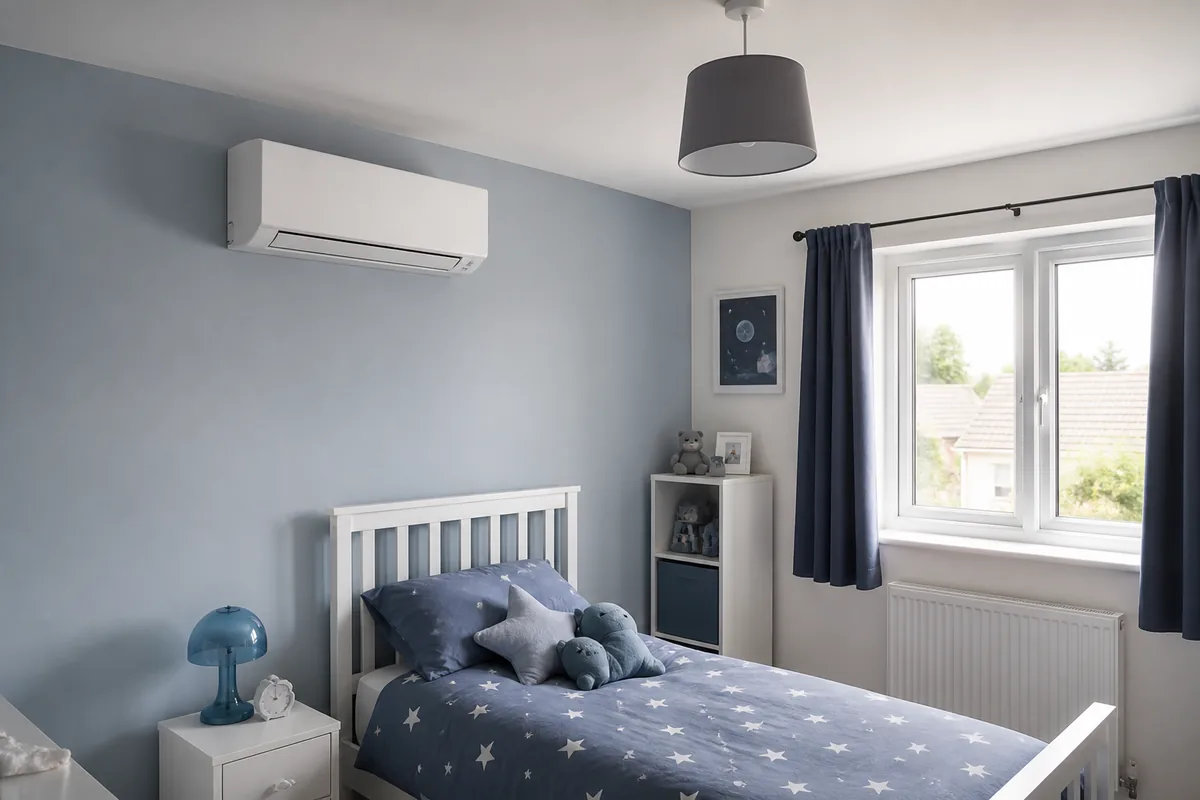
A jet across an open stove door
A wall unit throws a long jet of air. Aimed across an open stove door, or across the throat of an open flue, that jet can disturb the draught and pull smoke and fumes into the room. Place the indoor unit so the vane sends air along a clear wall, away from the appliance and away from anyone sitting in front of it.
Heating mode still crosses the hearth
The same rule applies in heating mode. Warm air from the split is still a draught across the fire. Ask the installer to stand in the hearth position and trace the throw before the bracket is fixed.
The alarm stays after the room is cooled
A carbon monoxide alarm in a room with a solid-fuel appliance stays in service. Cooling the room does not remove that need. Test it as you already should, and replace it when it expires. An air conditioner does not detect carbon monoxide.
Combustion vents are not a cooling trick
Stoves need air for combustion, as the installer set out under the building regulations and the appliance instructions. The split does not replace that air path.
- Keep discharge off the stove and the flue opening.
- Leave the carbon monoxide alarm where it is.
- Do not close combustion vents to help the split.
- Size the room as a normal heat gain, including the stove only when it is lit.
Mild days, one heat source, flue clearance
A lit stove can overwhelm a small split, and a split in heating mode can fight a stove that is already too hot. Use one or the other as the main heat when you can. The split is useful on mild days when lighting the stove is too much, which is the air-to-air heating job Energy Saving Trust describes, not a second flue.
Pipes and the outdoor unit should stay clear of the flue terminal and of any thatch or eaves the flue passes. Outdoor siting in England still needs a look at the Planning Portal conditions. Say whether the flue is open or a closed stove with a sealed appliance.
Wrong when the vane must cross the fire
This pairing is the wrong layout when the only way to hold a setpoint is to tape vents, board over airbricks, or shut a dedicated stove vent, or when the vane has to blow across the stove opening. Flue and ventilation questions stay with the stove installation and building control. F-gas rules still apply to the split.
Core buying guides
Start with these high-intent guides, then dig into the rest of the library.
Related guides
Sources and further reading
How this guide was prepared
This guide was written by the Local AC Installers Editorial Team. We compare official guidance, legislation and established consumer information, separate general information from project-specific advice, and show publication dates and sources. We do not accept installer accreditation claims at face value.