
A whistle that changes when you change fan speed is usually air rushing through a choked filter, a half-shut louvre, or a fascia that is not clipped home. A hiss that stays the same at the pipes, especially if it appeared after work on the unit, can be a refrigerant leak and is not a DIY listening game. Wash and dry the filters, open the louvre, and reseat the filter door the manual shows. Do not spray soapy water over electrics, do not loosen flare nuts, and do not add refrigerant. If the whistle remains with poor cooling, oil, or ice, call an F-gas engineer.
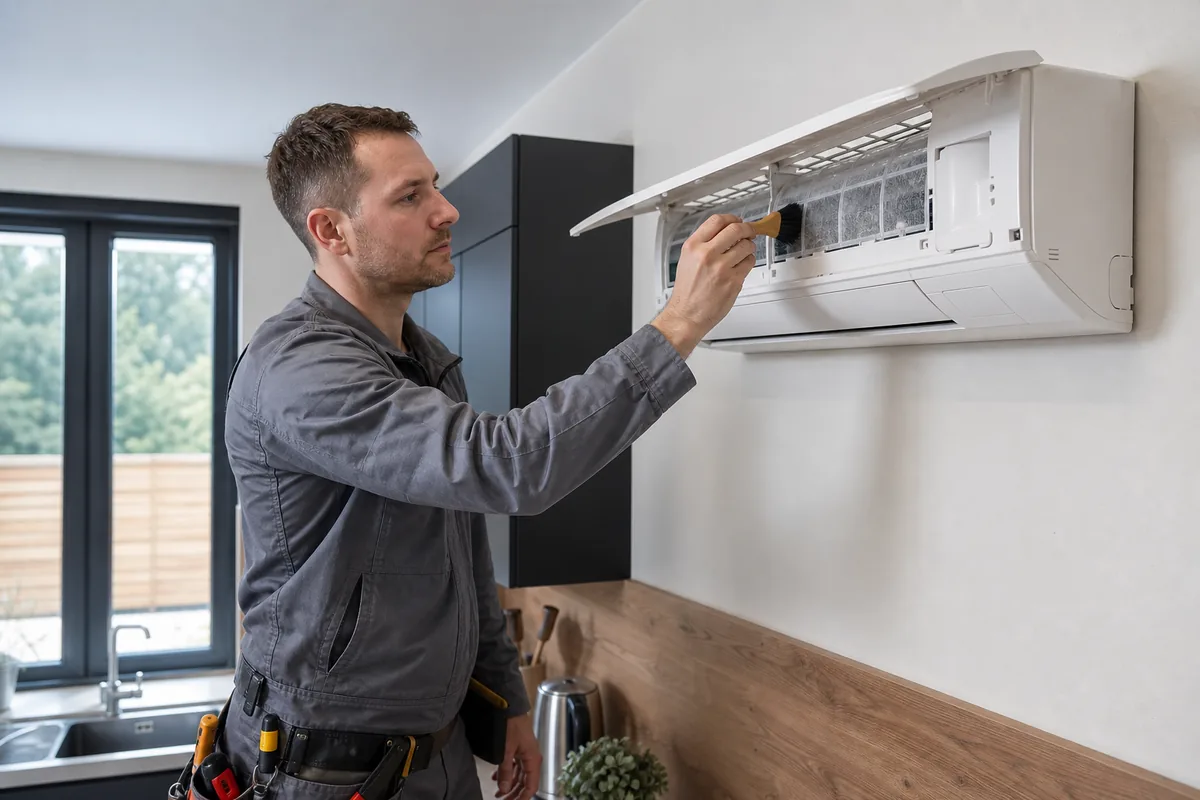
A whistle that rises when the fan speeds up
Put the fan on low, then high. If the whistle rises and falls with the fan, you are hearing velocity. UK bedroom units on quiet mode can still whistle if the filter is matted and the remaining gap is small. The same thing happens when a louvre is driven almost shut or a curtain is sucked across the discharge.
A whistle from the outdoor unit that tracks the fan, with a leaf caught on the grille, is the outdoor version of the same idea. Isolate, wait until the fan is still, and remove debris you can reach from the ground. Do not stick a screwdriver through the grille while it could restart.
A gap at the filter door, or a hiss at the flare
Wash the filters and dry them. Close the filter door until it sits flush. A millimetre gap at the door edge whistles because the fan pulls air through the crack instead of through the mesh. Smooth a curtain off the intake. Set the louvre to a normal open position rather than a hard stop. A higher fan speed often makes an airflow whistle louder. If high speed is the only way to get air, the filter or the coil is restricted.
Do not tape gaps, do not pack tissue into a whistling seam, and do not remove the filters to see if the noise stops. Running without filters proves a point for ten minutes and then dirties the coil. If the fascia needs screws the manual does not treat as user maintenance, leave it. Do not silicone the whistling gap. Sealant jams the filter door and can fall into the fan. If the case is cracked, an engineer should see it.
If the sound stays when the fan is on its lowest setting, or you hear it at a flare, a valve cap or the pipe insulation, stop. That can be gas escaping. You may see oil staining the insulation or a joint. Do not tighten flares with a spanner. Over-tightening cracks them. Do not use a lighter, soap over a live board, or any leak spray near electrics.
Book an F-gas engineer and leave the system off if cooling has collapsed or you can smell a sweet or oily note. HSE F-gas rules and GOV.UK certification are why nobody should open the refrigerant circuit except a certified company. A whistle alone, with normal cooling and a clean filter, can wait as an airflow complaint. A hiss plus oil cannot. Energy Saving Trust's air-to-air page describes the heat pump, not a listening test for leaks.
Say if the sound follows the fan
Note whether the whistle is only on high fan, a hiss all the time, a new noise after a service, or noise with oily marks, and whether the room still cools. A short video helps if you can take it without leaning on the outdoor fan. That is the difference between a filter visit and a leak investigation.
Frequently asked questions
Is a whistle always a gas leak?
No. Most whistles that change with fan speed are air through a restriction or a gap. A hiss at the pipes with poor cooling or oil needs an F-gas engineer. Do not hunt bubbles yourself.
Will a higher fan speed stop the whistle?
It often makes an airflow whistle louder. Clean the filter and open the louvre first. If high speed is the only way to get air, the filter or the coil is restricted.
Can I silicone the whistling gap on the fascia?
No. Sealant jams the filter door and can fall into the fan. Reseat the door. If the case is cracked, an engineer should see it.
What if the hiss started after someone worked on the pipes?
Treat a new hiss at a flare, a valve cap or the pipe insulation as a possible refrigerant leak, especially if it appeared after work on the unit. Do not tighten flares with a spanner. Leave the system off if cooling has collapsed or you can smell a sweet or oily note, and call an F-gas engineer.
Core buying guides
Start with these high-intent guides, then dig into the rest of the library.
Related guides
Sources and further reading
How this guide was prepared
This guide was written by the Local AC Installers Editorial Team. We compare official guidance, legislation and established consumer information, separate general information from project-specific advice, and show publication dates and sources. We do not accept installer accreditation claims at face value.