
Sleep, night or quiet-hours modes on UK splits are comfort programmes. In cooling they typically raise the setpoint in steps and drop fan speed so the unit is less noisy and less cold by morning. They do not switch the outdoor unit off for the whole night, and they do not make an undersized room safe in a heatwave. You can use sleep when the room already cools properly and you want less draught on the bed. If the room is still oppressive, use ordinary cool with a moderate setpoint and good blinds. Stop if sleep mode ices the unit, trips a breaker, or is the only way a vulnerable person is being kept cool. An F-gas engineer should be called for faults, not for a mode explanation. Do not open the gas circuit.
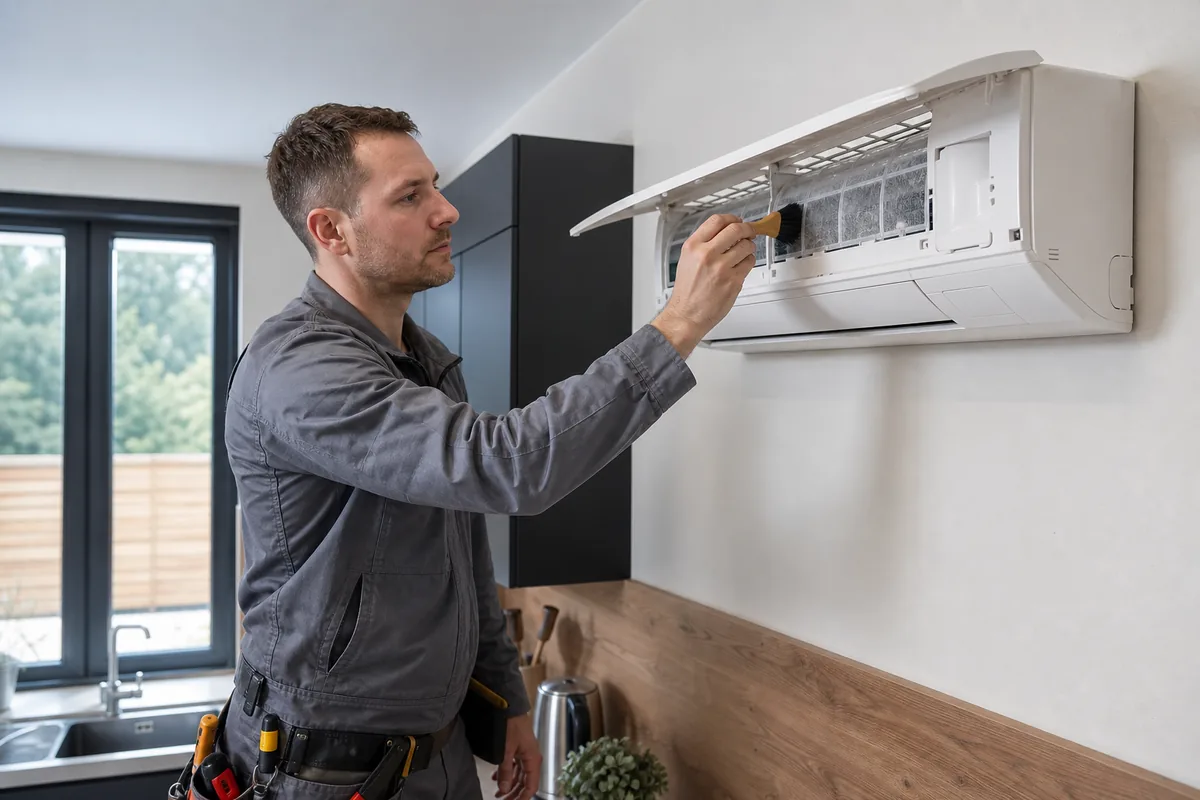
Setpoint steps, a quieter fan, and lights that dim
The exact steps sit in that model's manual. A common pattern in cooling is a small rise in setpoint over a few hours, a lower fan speed, and dimmed lights. Heating sleep modes often drift the setpoint down so the room is not stifling at 6am. Neither pattern is a medical device. HSE temperature law is for workplaces, not a promise about a bedroom at 2am. NHS heat exhaustion and heatstroke advice is the health guidance for people in hot weather. The air conditioner is only one part of that. Provide water and follow that NHS advice. Energy Saving Trust's air-to-air page is about the heat pump, not about a night programme.
Quiet fan is not the same as sleep. Quiet only slows the fan. Sleep changes temperature over time. Night setback on an app schedule is a third feature. If all three are on, the room can be warmer than you intended and you will blame the compressor.
A bedroom that is already comfortable before you press it
Use it in a bedroom that reaches a comfortable temperature before you press sleep, with the door shut, filters clean, and the louvre not aimed at your face. The outdoor unit will still start and stop as needed. Neighbours hear that. Sleep does not silence a condenser on a party wall. Say what the room feels like at 6am.
Heatwave nights and a mode that lets the room rise
Do not use sleep to hide a unit that cannot cool. If you need the room cold because of a heatwave, set cool properly and watch the room. A mode that deliberately lets the temperature rise is the wrong tool. GOV.UK certification is for an F-gas engineer if the visit is a fault, not a button lesson. Do not open the gas circuit to explain a mode. If sleep cannot be cancelled from the remote, pull the schedule out of the app only if you already use the app, then try one documented reset from the manual. Do not factory-reset with a code from another brand. If the unit ignores the handset entirely, the problem is controls, not the idea of sleep.
Frequently asked questions
Does sleep mode use less electricity?
Often yes in cooling, because the target rises and the fan slows, so the compressor does less work later in the night. It saves energy by cooling less. It is not a hidden efficiency mode that keeps the same temperature for fewer watts.
Will sleep mode stop the outdoor unit disturbing neighbours?
It may reduce how often and how hard it runs. It does not guarantee silence. A rattling bracket is a mechanical fault, not a sleep setting.
I pressed sleep and now I cannot get full cooling. What should I do?
Cancel sleep from that remote or app, then set cool and a normal setpoint. If the unit stays in a reduced mode, stop guessing button codes and send a photo of the display to an engineer.
Ice, a pump alarm, or a trip appeared overnight. Is that sleep mode?
No. Ice by morning, a pump alarm, or a breaker that opens when the compressor tries to restart are faults. Leave the unit off if water or burning is involved. An F-gas engineer should see ice and any refrigerant suspicion. Do not disable sleep by rewiring a board.
Should a baby or someone unwell rely on sleep mode in a heatwave?
No. A mode that deliberately lets the temperature rise is the wrong tool. Set cool properly, watch the room, provide water, and follow NHS heat advice. If sleep is the only way a vulnerable person is being kept cool, stop and treat the cooling as a fault visit. Include whether someone vulnerable sleeps in the room.
Core buying guides
Start with these high-intent guides, then dig into the rest of the library.
Related guides
Sources and further reading
How this guide was prepared
This guide was written by the Local AC Installers Editorial Team. We compare official guidance, legislation and established consumer information, separate general information from project-specific advice, and show publication dates and sources. We do not accept installer accreditation claims at face value.