
Wall brackets are the usual UK way to hold a domestic outdoor unit off the ground. They work when the fixings go into sound structure, the mounts break the vibration path, and the coil still has its air gaps. They fail on crumbling mortar, render-only fixings, thin timber, and hollow party walls that turn a quiet condenser into a hum in a bedroom. Look at the wall before you look at the bracket brochure.
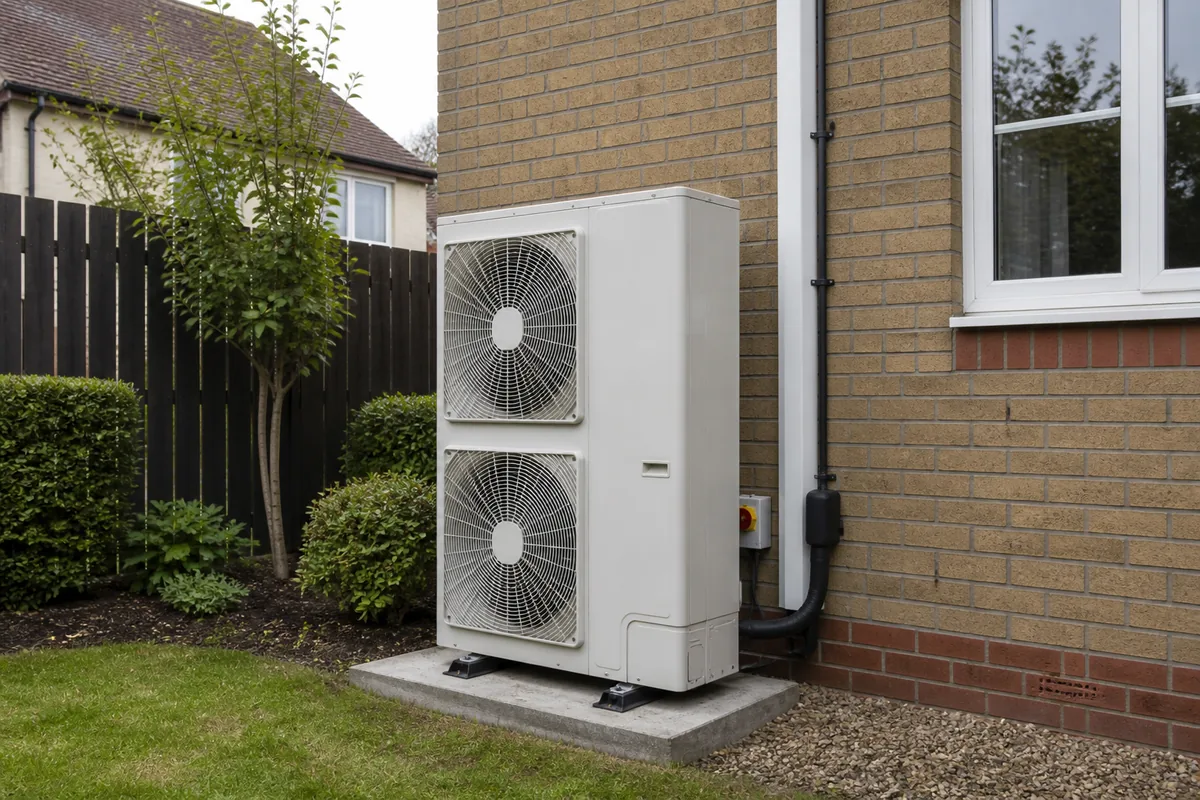
Sound masonry, and a hum in the room behind
The load is the unit, plus wind, plus a person leaning on it during service. Brackets should land in brick, block or a designed frame, with fixings of the right length and type for that wall. Cavity walls need anchors that reach the leaf you intend, not just the outer skin if the skin is weak. Render, pebble-dash and cladding are not the structure. Fix into structure, not into render. Spalled bricks, cracked lintels and loose mortar should be repaired before anyone hangs plant. A neat white bracket on a failing wall is how units end up on the path.
A compressor does not have to be loud in the garden to be loud in the room behind the bracket. Vibration becomes a low hum in joists and party walls. That is why you can hear the unit inside and not outside. The bracket is sending vibration into the structure. Rubber mounts, a solid leaf of masonry, and a position away from beds are the controls. Use anti-vibration mounts between unit and bracket. Tightening the bolts harder can make resonance worse. The indoor fan setting will not fix it. Avoid the bedroom headboard wall and thin party walls. If the neighbour's lounge is the other side of a half-brick wall, choose a ground stand on your side instead. The datasheet sound pressure will not describe structure-borne noise. Brackets keep the unit out of floods and gardens when the wall is sound. On a weak, noisy or party wall, a ground stand is often better. Choose from the wall you have.
Service height, heating condensate and the planning line
Above snow and splash is good. Above a safe ladder height, with no way to service the fan, is not. Leave room to remove the front panel. Keep the manufacturer's clearances for air and service. Do not box the unit in with a close shelf that recirculates discharge air. Heating mode produces condensate at the outdoor unit. It needs a path that does not sheet down the wall and freeze on a path. Cooling condensate is mostly at the indoor unit, and the pipes along the bracket run still need insulation so they do not sweat on the brick.
F-gas commissioning is the same on brackets or a slab. In England, Planning Portal conditions for the heat pump include where the unit sits on the wall, boundaries and noise. A bracket that puts the unit above a neighbour's window can fail those conditions even if the wall is strong. Ask the installer to name the wall construction they are fixing to and the mount type. If the answer is whatever comes in the van, pause on party walls and rendered cavities.
Frequently asked questions
Are wall brackets better than a ground stand?
They keep the unit out of floods and gardens when the wall is sound. On a weak, noisy or party wall, a ground stand is often better. Choose from the wall you have.
Why can I hear the unit inside and not outside?
The bracket is sending vibration into the structure. Anti-vibration mounts and a different wall or a ground stand address that. The indoor fan setting will not.
Can brackets fix to render?
The fixing has to reach sound structure behind the render. Render alone will not hold a condenser.
Core buying guides
Start with these high-intent guides, then dig into the rest of the library.
Related guides
Sources and further reading
How this guide was prepared
This guide was written by the Local AC Installers Editorial Team. We compare official guidance, legislation and established consumer information, separate general information from project-specific advice, and show publication dates and sources. We do not accept installer accreditation claims at face value.