
A nursery can use a small reverse-cycle wall split if the air does not blow across the cot, the indoor unit is quiet on a low fan, and the outdoor unit is not humming outside that window. This page is about comfort and installation. It is not medical advice. Temperature and clothing for a baby belong with your health visitor or NHS guidance, not with an equipment quote. Size the room in kW, keep the install to 230 V UK equipment, and use an F-gas certified company.
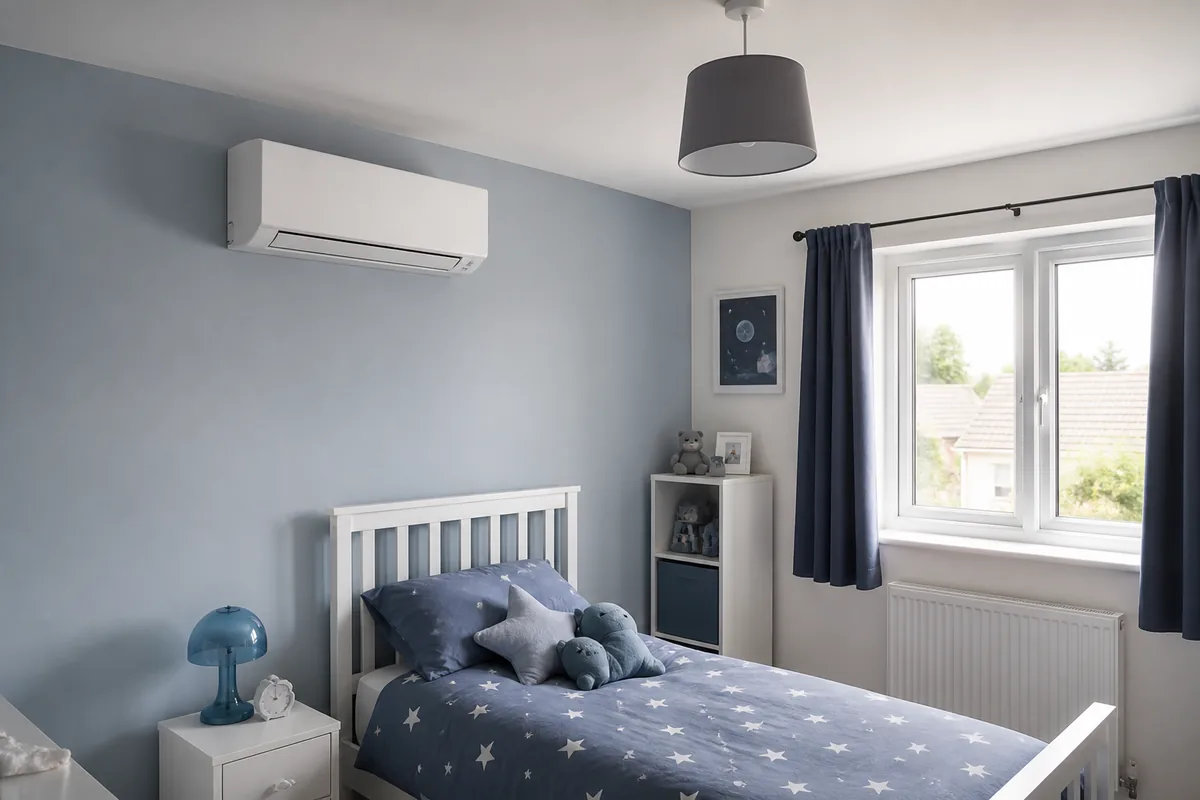
The vane, the cot and a modest nursery
Mount the indoor unit so the vane can send air along the ceiling or down a clear wall, not onto the cot, the changing mat or the chair where someone feeds at night. A low fan and a steady setpoint are kinder than a unit that blasts and then stops. Ask the installer to stand in the room and trace the throw before the bracket is fixed.
Leave space to clean the filters without climbing over furniture. Dust on a coil is a comfort problem in a room that is occupied for long stretches. Cleaning filters is housekeeping. It is not a health claim about the air. Choose a small kW after a survey, often 2.0 to 2.5 kW in a modest nursery. Use a reverse-cycle unit if you also want gentle heat on cool nights.
Night sound, timers, and decisions that are not the installer's
The indoor sound figure on a low fan is worth comparing, which is why main-bedroom ranges such as Mitsubishi AY or Daikin Perfera come up for nurseries as well. The number that wakes people is often the outdoor unit on a bracket the other side of the wall. Anti-vibration mounts and a different elevation matter more than a premium fascia. Put the outdoor unit away from that bedroom window.
Night setback and a simple timer help if you do not want the unit hunting while the house is asleep. App control is optional. A reliable remote that a tired adult can see in the dark is the practical tool.
Do not ask an installer for a medically correct temperature, a safe humidity for an infant, or a claim that cooling prevents illness. Those are clinical questions. The installer's job is a legal, quiet, correctly drained split that holds a setpoint you have chosen from proper guidance.
Model codes, condensate and the nursery wall
Room size, cot position, photos of the walls and the outside, and whether the room also needs heat should be on the visit. Ask for model codes, low-fan sound, vane direction and condensate route. F-gas rules apply. In England, check Planning Portal conditions for the outdoor unit.
Frequently asked questions
Can air conditioning blow on a baby's cot?
Aim the airflow away from the cot. Cooling the room is the goal. A draught across the sleeping position is uncomfortable and is the detail to fix at survey.
What temperature should a nursery air conditioner be set to?
This is not a medical page. Follow NHS or health-visitor guidance for your child, then use the system to hold the comfort level you have been given.
Is a portable better in a nursery because it is temporary?
A portable is noisier next to the cot and needs a window hose. A small fixed split is the better comfort install when the outdoor unit can be sited lawfully. A hose also blocks a window you may want for fire escape and ventilation. Window units are worse.
Will a quiet indoor cancel a condenser on the cot wall?
No. If the only outdoor spot is directly beyond the cot wall, look for another elevation or a ground stand before you accept the job. A quiet indoor cannot cancel that path.
Core buying guides
Start with these high-intent guides, then dig into the rest of the library.
Related guides
Sources and further reading
How this guide was prepared
This guide was written by the Local AC Installers Editorial Team. We compare official guidance, legislation and established consumer information, separate general information from project-specific advice, and show publication dates and sources. We do not accept installer accreditation claims at face value.