
A playroom is a shut room that fills with children, sun and toys. The decision is a high indoor unit they cannot hit, sized for that room after a survey, with the air off the place they sit on the floor. Do not use a nursery medical brief, and do not use a gym brief. This is play. The outdoor unit still needs a lawful spot and an F-gas certified install. If the playroom is a glazed extension, the glass sets the duty more than the floor area.
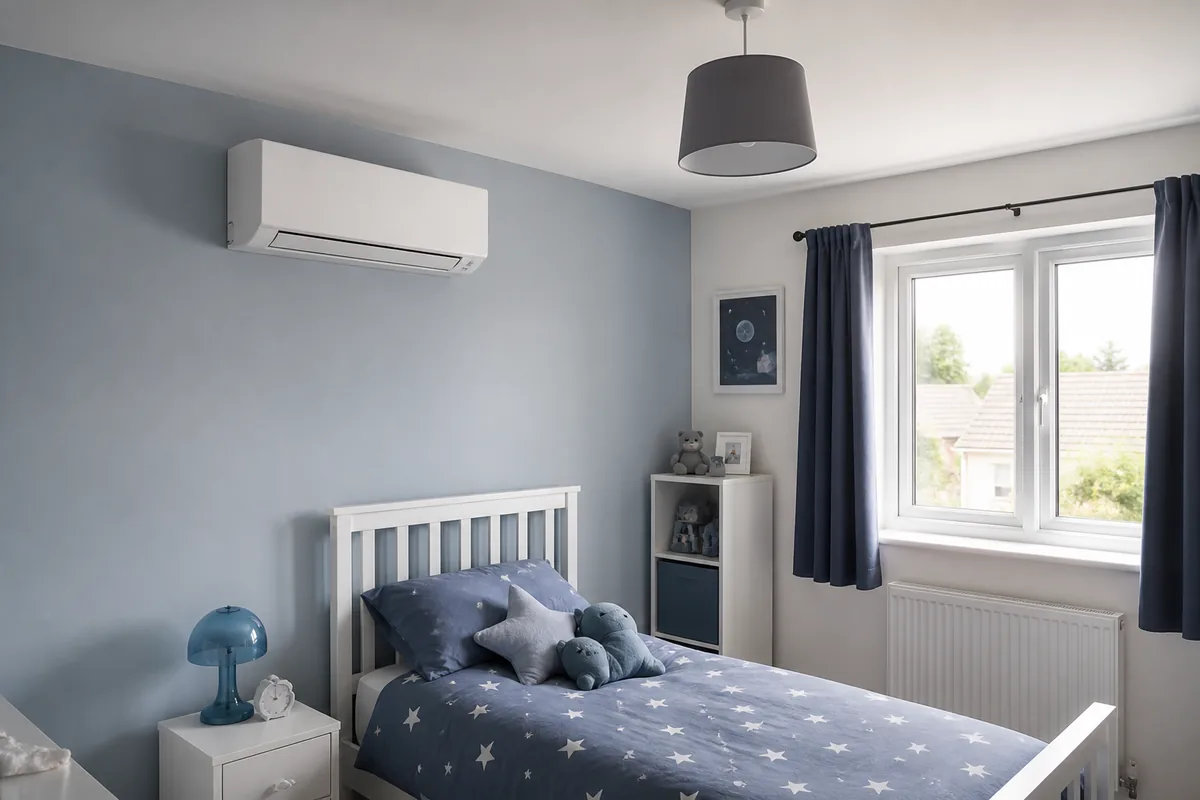
A high bracket clear of the goal they invent
Balls, bunks and a rocking horse reach a low unit. Mount high on a solid wall, clear of the goal they invent against the end wall. Leave the filter accessible to an adult without climbing over a den. A floor console in a playroom is usually a mistake because it sits at child height.
A locked setpoint and a vane on the ceiling
The remote should live where an adult sets it. A unit with a locked setpoint or a simple timer avoids a room left at the coldest stop after one experiment. The vane should lift air along the ceiling rather than dump it on the mat. Say if you want the setpoint lockable. Do not ask for a floor console unless the high walls truly do not exist.
A lantern extension or a north-facing toy bedroom
A purpose-built playroom in a rear extension is often a lantern and a set of doors. The survey counts that solar gain. A small north-facing bedroom used for toys is a much smaller duty. Say which one you have. Copying a kilowatt from the other kind of room is how the extension still overheats at 4pm.
A door shut against the kitchen
The door is usually shut to keep the noise in, so this room does not borrow cooling from the kitchen. It needs its own indoor unit if you want it cooled. The kitchen unit cools the playroom only partly, and only if the door is open. Survey the playroom as its own zone if that is the room that overheats.
- High wall, out of the line of play.
- Adult control of the setpoint.
- Size for the children in the room and the glass.
Afternoon noise on a lightweight extension wall
Indoor noise matters less than in a bedroom, and outdoor noise matters as much, because playrooms run in the afternoon next to someone else's garden. In England, check Planning Portal conditions. Anti-vibration mounts on a lightweight extension wall are part of being a decent neighbour. Keep the outdoor unit off a neighbour's quiet side if the room is an extension. Pipe length and height back to one outdoor spot still decide whether it can join a multi-split. A long extension at the bottom of the garden can fail that test.
A dedicated circuit and a dry play floor
Condensate must not pool on the play floor. Gravity to a gully or a pumped line, written on the quote. A dedicated 230 V circuit is the ordinary electrical ask. As a 2026 illustration, a playroom on the back of the house is often in the low thousands including VAT, and a lantern plus a pump is what lifts it. A reverse-cycle unit also heats a room that is empty of radiators. This is not the same job as a nursery. A playroom is about play, glass and a robust mounting height. Temperature advice for babies is not this decision. Say the room is a playroom, with photos of the wall the children do not use as a goal, the glazing and the outdoor spot, and how many people are usually in there and whether the door stays shut. Ask for a high-wall model code, the duty after survey, pipe length and a condensate route that cannot wet the floor.
Frequently asked questions
Can the unit sit low so it cools the floor where they play?
No. Low units get hit, and cold air at floor level is a draught on a child sitting still. Throw along the ceiling and let the room mix.
Core buying guides
Start with these high-intent guides, then dig into the rest of the library.
Related guides
Sources and further reading
How this guide was prepared
This guide was written by the Local AC Installers Editorial Team. We compare official guidance, legislation and established consumer information, separate general information from project-specific advice, and show publication dates and sources. We do not accept installer accreditation claims at face value.