
Listed shops can have air conditioning, and many do, but the external condenser, a core through historic fabric and trunking on a principal frontage are consent questions before they are equipment questions. Listed building consent is separate from ordinary planning permission. Internal work can need consent too if it affects historic structure. The Planning Portal heat-pump page is a domestic heating starting point and does not authorise a condenser on a listed high street. Talk to the conservation officer early. Lead time, not the badge, is what moves the opening date.
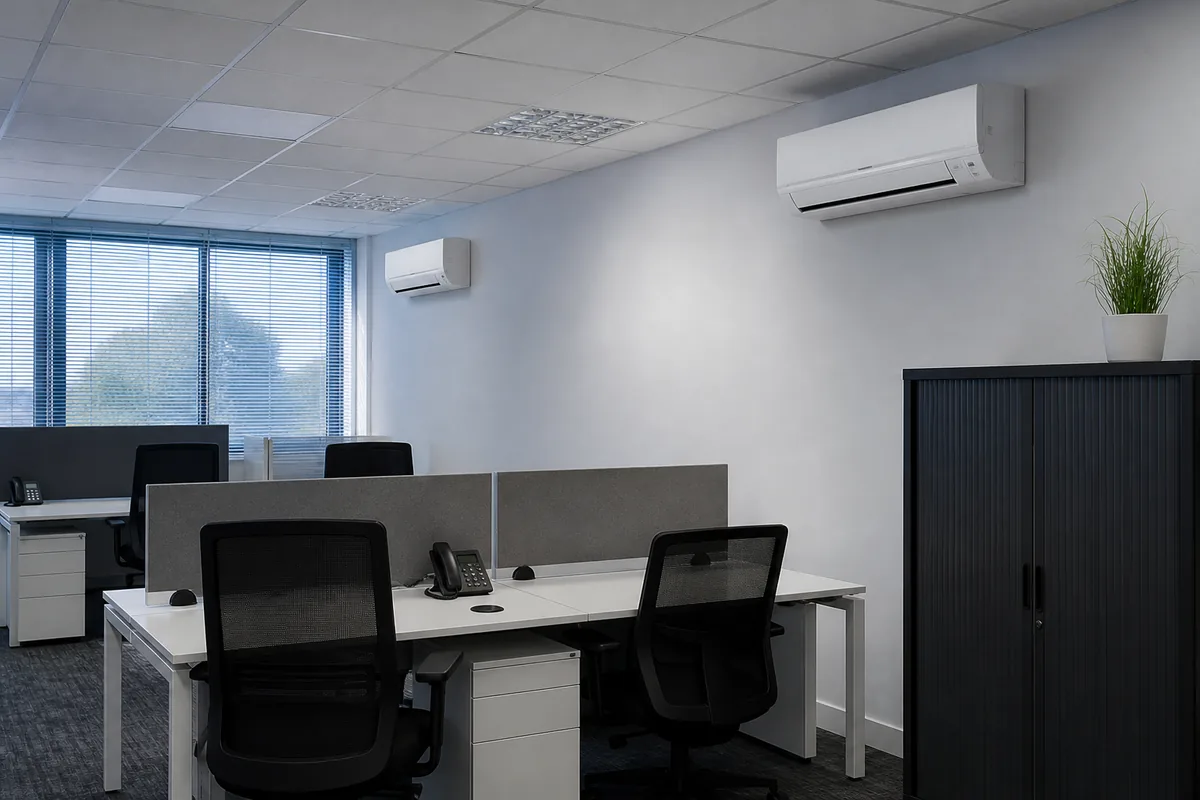
A bracket on a principal frontage
A new opening in a listed wall, a bracket on a visible elevation, and a pipe run across brick or stone are the classic triggers. A condenser in a rear yard, painted to tone down, is sometimes acceptable and sometimes refused. You will not know from a product photo. The local conservation officer and, where needed, a heritage statement come before the order. Rear elevations can still be sensitive. Interiors matter as well. Chasing a beam, cutting a lath-and-plaster ceiling or fixing a cassette into a decorated soffit can be as sensitive as the outdoor unit. A freestanding approach is rarely available for a split, because the outdoor unit still has to exist. Internal fabric can be controlled. Listed building consent is its own application. Do not rely on permitted development rights for a condenser on a listed shop. The Planning Portal heat-pump guidance does not override listing. Ask the local authority before you order. Order equipment after the position is agreed. Whoever the lease requires to apply, usually with the owner's involvement because listing attaches to the building, should make the application. Agree it before the survey turns into an order.
Consent lead time and duties listing does not cancel
Short pipe runs, a single core in a discreet location, and trunking that does not cross a shopfront are the patterns that survive contact with conservation teams. Pipes can often run internally if an internal route exists without damaging protected fabric. It can cost more and still needs a core somewhere. The approved drawing should show it. A multi-split with one outdoor unit may be kinder than several condensers. VRF on a roof may be kinder than a row of wall brackets, if the roof structure and the sight lines allow. Noise conditions and neighbour windows still apply in a historic street. Anti-vibration mounts belong in the specification. They do not buy consent. The F-gas certified installer should see the approved drawing so the as-built hole matches the consented hole. GOV.UK publishes that certification. Consent can take longer than the fit-out programme expects. Build that in. A temporary through-the-window unit that scars the joinery is a poor bridge, and it can be its own breach. If you need cooling for a summer of works, ask the officer what temporary plant is acceptable. As a 2026 illustration, the air conditioning equipment may be the familiar commercial range, while heritage drawings, applications and a more awkward route can add from the high hundreds to several thousand pounds including VAT, plus delay. The delay is the item that hurts a shop opening. F-gas certification, recovery at end of life, and air conditioning inspections where the GOV.UK output threshold is met all still apply. Listing changes the fabric approval. It does not change the refrigerant rules. Staff comfort still sits under HSE guidance. If consent refuses the only condenser position, the honest outcome may be a reduced scheme, a different room, or no fixed cooling. Say that early rather than installing first and arguing later.
Core buying guides
Start with these high-intent guides, then dig into the rest of the library.
Related guides
Sources and further reading
How this guide was prepared
This guide was written by the Local AC Installers Editorial Team. We compare official guidance, legislation and established consumer information, separate general information from project-specific advice, and show publication dates and sources. We do not accept installer accreditation claims at face value.