
Cooler indoor conditions can help prevent heat exhaustion and related illness during hot weather, which is why official guidance includes moving to a cooled room and using air conditioning where available. Cooling is not automatically healthy if filters and drains are neglected, outdoor air pathways are poorly considered, or people treat mechanical plant as a reason to ignore hydration and heat alerts. The balanced approach is: use cooling to protect vulnerable occupants when rooms overheat, maintain the system, and keep following UKHSA behavioural advice.
The heat-illness case for cooler rooms
UKHSA Beat the heat guidance lists heat exhaustion and heatstroke among harms linked to hot weather and recommends moving to a cooler place, including a room with air conditioning if available. Healthcare guidance for vulnerable people also uses cooled rooms as part of hot-weather preparedness, ideally keeping a cool room below about 26°C where practical.
That evidence supports targeted cooling of occupied rooms during Heat-Health Alerts. It does not require every corridor, loft void or unused box room to be conditioned.
Indoor air quality and maintenance realities
Climate-health summaries note that energy-efficiency and airtightness strategies can change indoor pollutant dynamics if ventilation is poor. Air conditioning is not a full substitute for adequate outdoor-air ventilation where regulations or good practice require it. Dirty filters, blocked condensate drains and stagnant drip trays create avoidable hygiene and performance problems.
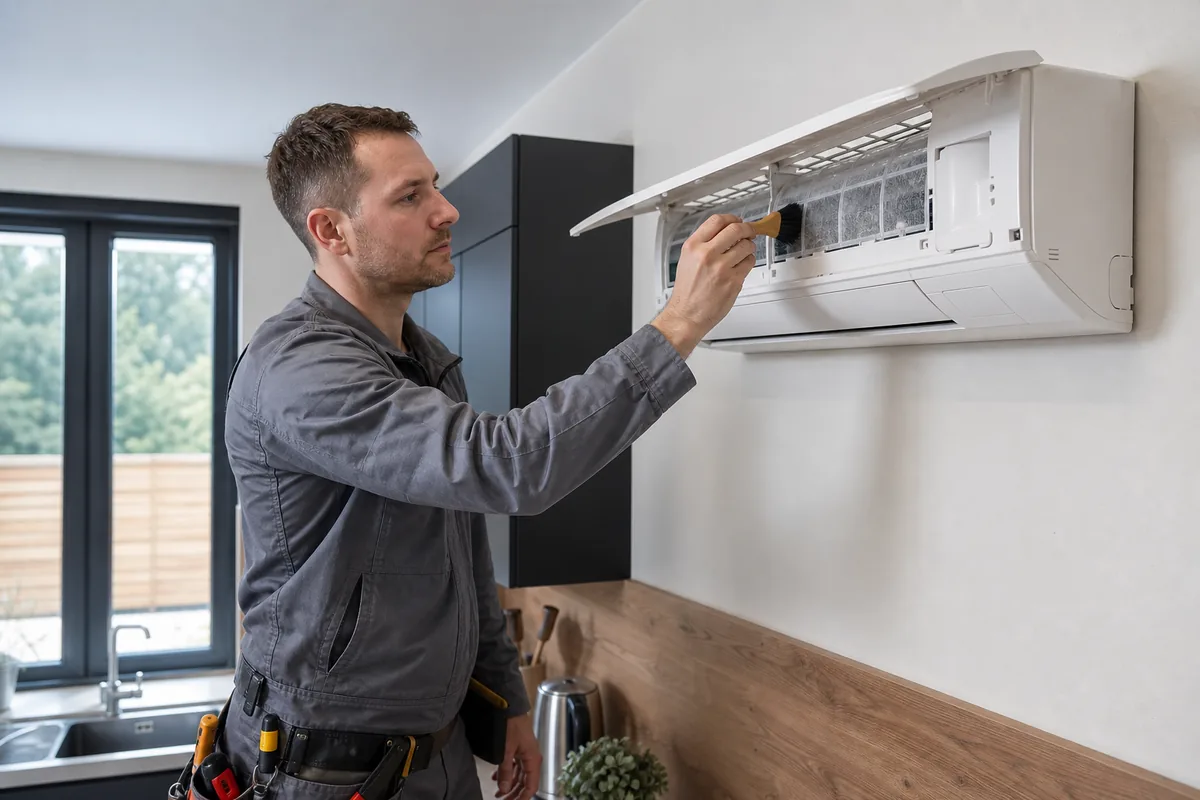
Homeowners can usually clean accessible filters as the manual allows. Refrigerant work and sealed electrical components remain professional tasks. A service visit that inspects filters, coils, drains and outdoor airflow is part of keeping cooling both effective and cleaner to live with.
- Follow manufacturer filter intervals, especially with pets or dusty renovation work.
- Do not ignore persistent musty smells, water marks or repeated fault codes.
- Keep outdoor coils clear so the system does not struggle and recirculate problems.
- Ask commercial and care settings about planned maintenance, not only install price.
Honest limits of this briefing
This article summarises public guidance for building and buying decisions. It is not clinical diagnosis, infection-control advice for healthcare premises, or a claim that Local AC Installers assesses medical vulnerability.
If someone becomes unwell in hot weather, follow NHS and UKHSA emergency advice. If you are comparing installers, focus on scope, credentials, outdoor position, condensate design and a written maintenance plan after handover.
Frequently asked questions
Can air conditioning help during a heatwave?
Yes, where available. Official hot-weather advice includes moving to a cooler room and using air conditioning with windows closed so cooled air stays inside.
Does air conditioning automatically improve indoor air quality?
Not automatically. Filters and drains need maintenance, and cooling does not replace ventilation requirements. Neglected equipment can create moisture and cleanliness problems.
Who needs cooling most during hot weather?
UKHSA guidance prioritises people who are older or have heart, lung or other conditions that increase heat vulnerability. Building decisions should start with occupied rooms used by those people.
Is this a substitute for medical advice?
No. Use NHS and UKHSA resources for health decisions. Use this site for installation, servicing and survey practicalities.
Core buying guides
Start with these high-intent guides, then dig into the rest of the library.
Related guides
Sources and further reading
How this guide was prepared
This guide was written by the Local AC Installers Editorial Team. We compare official guidance, legislation and established consumer information, separate general information from project-specific advice, and show publication dates and sources. We do not accept installer accreditation claims at face value.