
Ice on the indoor coil means the coil is colder than it should be and moisture is freezing instead of draining. On a UK split the common household causes are a blocked filter, louvres shut, or a fan that is not moving enough air. Low refrigerant can freeze a coil too, but that is a suspicion for an F-gas engineer, not a top-up you buy online. Switch cooling off, use fan-only if the manual allows so the ice melts, and do not chip it or pour hot water. If ice returns after airflow is restored, stop. Do not open the gas circuit.
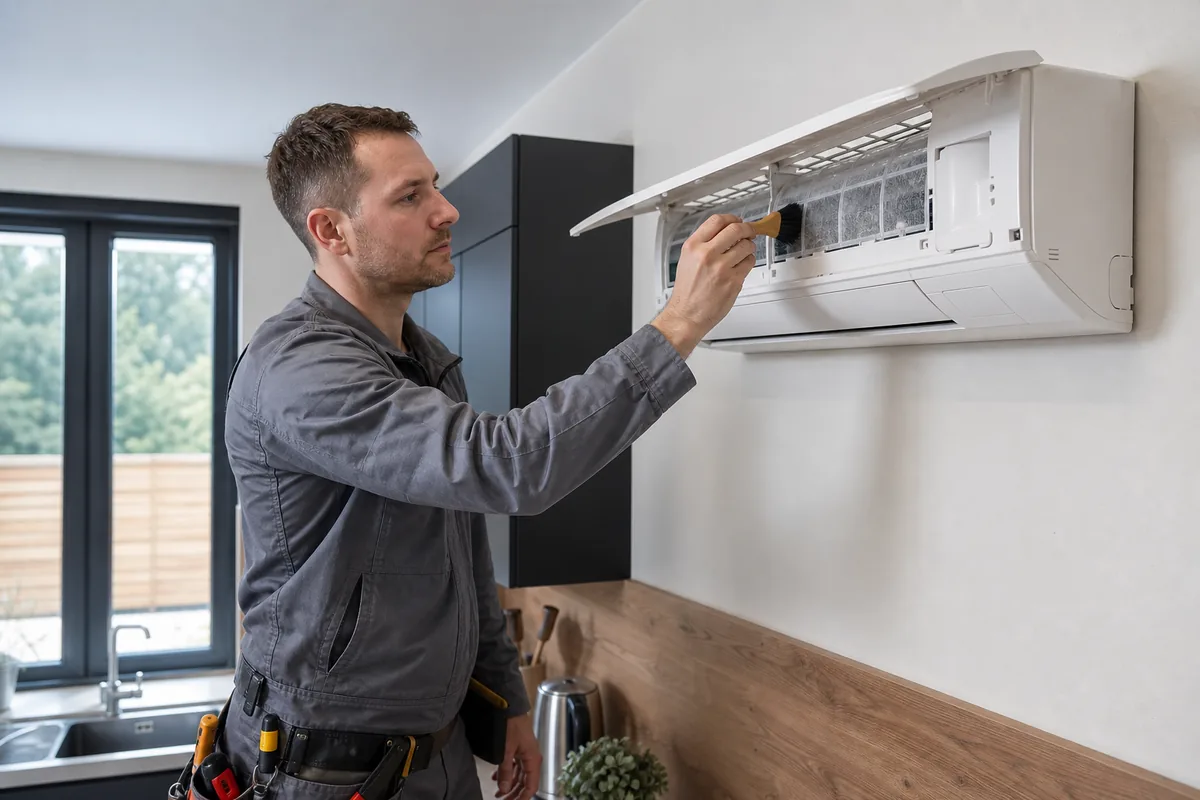
A white coil where a wet coil should be
The indoor coil should be cold and wet in cooling, not a block of ice. When air cannot cross the fins, the coil temperature falls and the condensate freezes. A filter left in through a UK pollen season, a louvre driven fully closed, furniture pushed against the return, or a fan that has failed will all do this. The room then gets less cool, not more, because the coil is insulated by ice. A loft or a closed bedroom makes the same shortage of air more likely.
A shortage of refrigerant can produce ice as well, often with a hiss, poor cooling, or ice starting on the pipe insulation near the indoor unit. You cannot see the charge from the sofa. Treat low gas as a reason to stop, not as a DIY diagnosis you then act on. Note whether this is cooling in summer or heating in winter. Ice on the indoor coil in cooling is a different visit from frost on the outdoor unit during a normal defrost.
Melt, dry the filters, then judge one more run
Turn cooling off. If the remote has fan-only, run that so room air melts the ice. Put a towel down. The meltwater can overflow a frozen drain pan and land on the floor or, in a flat, in the ceiling of the room below. Do not scrape with a knife, screwdriver or credit card. Fins bend, then airflow gets worse. Do not pour a kettle of hot water into the unit. Thermal shock cracks coils and drives water into electrical parts.
When the ice has gone, wash and dry the filters before you cool again. Set a normal setpoint, around the mid-20s Celsius for cooling, not 16 degrees. An extreme setpoint on a choked filter is how the ice returns the same afternoon. One freeze after a filthy filter can be the end of the problem once airflow is restored and the coil stays wet rather than white. If ice rebuilds within a short run, if the fan is noisy or still, or if you see oil at a pipe joint, leave the system off.
An F-gas engineer can measure airflow, coil condition and, if the tests justify it, the refrigerant circuit. HSE F-gas rules and the GOV.UK certification scheme restrict who may handle that refrigerant. Do not fit gauges, do not open service ports, and do not buy a can of refrigerant. Adding gas to a leaking or airflow-starved system is how compressors get wrecked. A top-up without a leak and airflow check is the wrong job.
Frequently asked questions
Should I chip the ice off the indoor coil?
No. Let it melt on fan-only, with towels ready. Scraping bends the fins and can puncture the coil. Hot water is not a safe shortcut.
Is a regas the usual fix for an iced indoor unit?
No. Restore airflow first. If ice returns, an F-gas engineer should find out why. A top-up without a leak and airflow check is the wrong job.
Can a heat pump ice the indoor unit in winter?
In heating, the indoor coil should be warm. Ice indoors while you are asking for heat is not a normal defrost. Switch off and get it checked. Outdoor frost in heating can be normal. Indoor ice is not.
Core buying guides
Start with these high-intent guides, then dig into the rest of the library.
Related guides
Sources and further reading
How this guide was prepared
This guide was written by the Local AC Installers Editorial Team. We compare official guidance, legislation and established consumer information, separate general information from project-specific advice, and show publication dates and sources. We do not accept installer accreditation claims at face value.