
Flashing lights on a UK indoor unit, outdoor unit or remote are a status or fault pattern defined in that model's manual. A count that means one thing on a Daikin can mean something else on a Mitsubishi or a Samsung. Photograph the pattern, note how many flashes and any pause, and look up that exact manual. You may try one power cycle if the manual says a reset is safe and there is no burning smell or water. Do not reset every morning for a week. Do not invent a meaning from a forum post about a different badge. If it returns, call an F-gas engineer and leave the gas circuit closed.
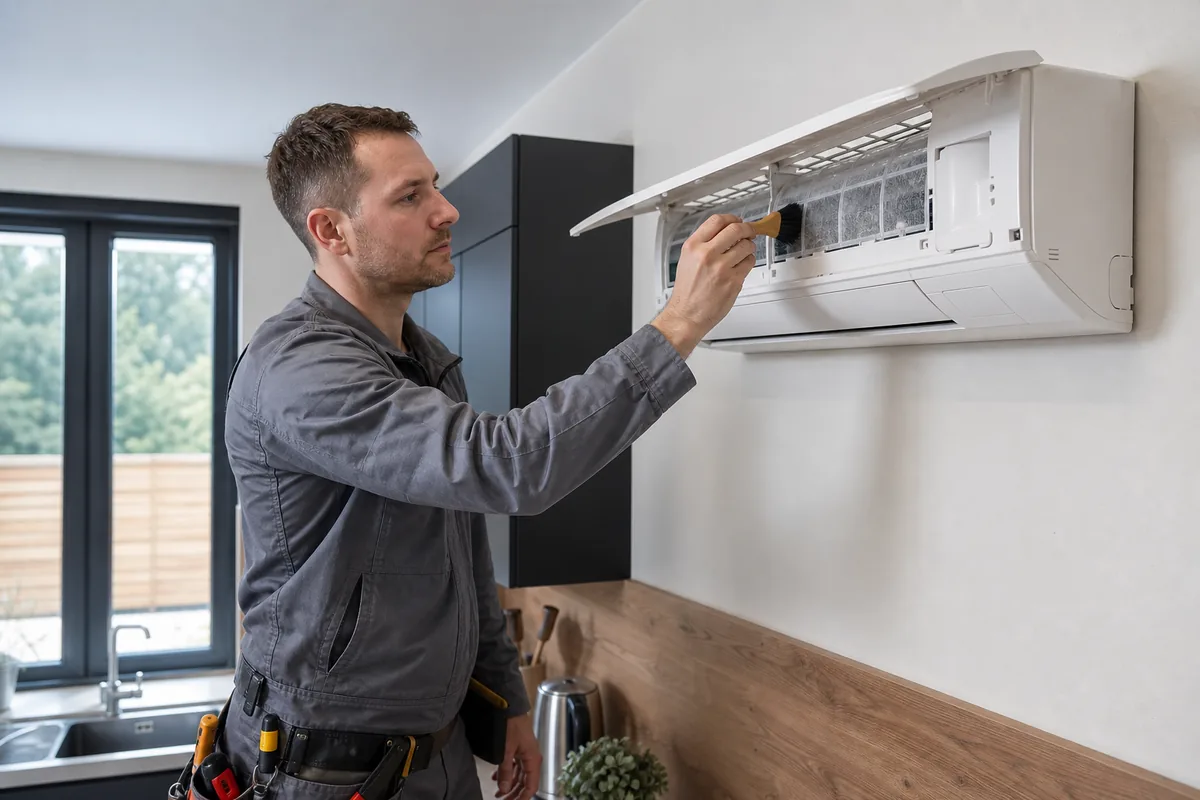
The same LED can be a timer or a stop
Manufacturers publish fault patterns for each series. The same LED can be a filter timer, a defrost lamp, or a stop. A count that means one thing on a Daikin can mean something else on a Mitsubishi or a Samsung. Outdoor boards on some UK installs have their own lamp that is invisible unless you are beside the condenser. Copying a code chart for a different generation sends the engineer to the wrong part.
Count the flashes and the pause
Write what you actually see: which lamp, what colour, how many flashes, how long the pause is, and whether the unit still fans. A steady lamp can be normal operation. A lamp that appears only during defrost in heating can be normal on that model. The manual is the only decoder. This guide will not list fake universal meanings. Note what the unit was doing before the lamp started, such as cooling a loft, heating in frost, or restarting after a power cut.
One reset only if that manual allows it
If, and only if, the manual for your model describes a reset, you can switch the unit off at the remote, turn the rotary isolator off, wait several minutes, and turn it back on. Stay out of the isolator enclosure. HSE electricity guidance is to leave that cover on. If the pattern clears and the unit heats or cools normally, keep the photo anyway.
- Do not pull random plugs inside the indoor unit.
- Do not bridge pins.
- Do not hold buttons in combinations from a different brand.
A filter reminder is not a fault clear
Filter-reset buttons are not fault-clear buttons. Clear a filter reminder only after you have actually washed the filters, and only by the steps in that manual. A week of resets, if the unit is tripping on a real fault, hides the pattern and can stress a failing compressor or fan. One reset is a test.
The lamp that comes back the same day
Stop if the flash returns the same day, if a breaker trips, if you smell burning, if water is leaking, or if ice is forming. Leave the isolator off when any of those arrive with the lamp. An F-gas engineer can read the pattern against the service manual and test the unit. GOV.UK certification is required if that test reaches the refrigerant circuit. Some faults are sensors and fans. Some are protection because refrigerant conditions are wrong. You will not separate those by counting flashes harder.
Do not buy a board from a flash count
Do not buy a replacement PCB because a video said the code was the board. Do not open the refrigerant circuit because a lamp flashed. If the outdoor lamp is the one flashing, do not remove the outdoor electrical cover to get a better look. If you cannot find the pattern in the manual, including a pattern that flashes and then the unit works, send the video. Only ignore a pattern when the manual shows it as normal, for example during defrost. Intermittent protection stops become hard faults.
Frequently asked questions
Can you tell me what three flashes mean?
No. Meanings are model specific. Photograph the pattern and use the manual for that indoor and outdoor pair, or hand the photo to an F-gas engineer. A generic count would be a guess.
Core buying guides
Start with these high-intent guides, then dig into the rest of the library.
Related guides
Sources and further reading
How this guide was prepared
This guide was written by the Local AC Installers Editorial Team. We compare official guidance, legislation and established consumer information, separate general information from project-specific advice, and show publication dates and sources. We do not accept installer accreditation claims at face value.