
A brief gurgle as a UK split starts, stops or defrosts is often refrigerant shifting or condensate leaving the pan. It should settle. Gurgling that continues, that matches a pump that never quite empties, or that arrives with weak cooling or water indoors is not normal. You can listen, note whether the outdoor spout drips, and check the filters. Do not open pipe insulation hunting a leak, and do not bleed anything. If the gurgle stays with ice, oil or a performance drop, call an F-gas engineer.
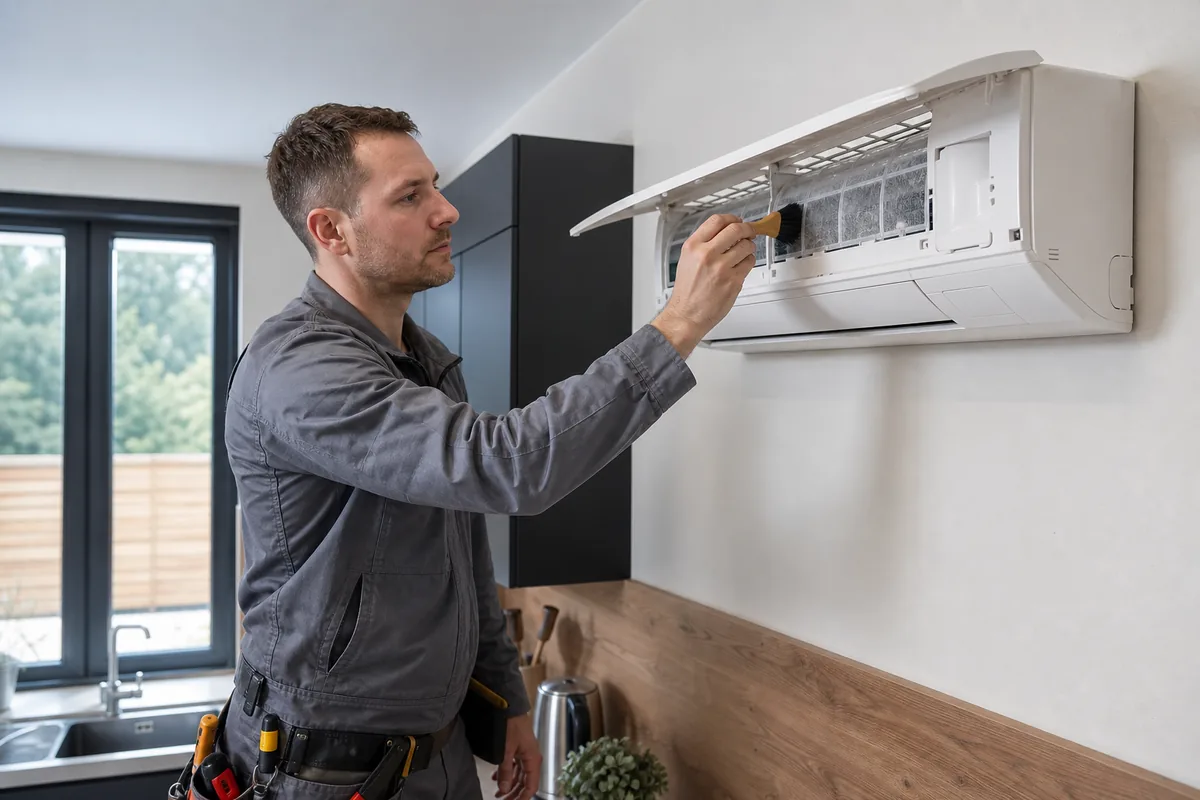
A short glug as the compressor starts
Stand by the indoor unit as it starts in cooling. Refrigerant moving at start-up can sound like a short glug in the indoor unit or in the pipes, then it fades as the system settles. If the gurgle lasts a few seconds and the air turns cold, leave it. Heating and defrost change the direction and the noise for a minute. That kind of gurgle lines up with the compressor starting and then goes quiet.
A fish-tank sound in the drain or the pump
Condensate gurgles in the drain or in a pump tank. It can be rhythmic, a little like a fish tank, and it may match drips at the outdoor spout. A pump that is sucking air because the tank is low, or pushing against a blocked riser in a flat, gurgles for much longer. Those are water-side sounds. They do not mean you should touch the gas valves.
Later, check from the ground whether the spout drips. No drip plus an indoor gurgle plus a wet wall means the water is not leaving. There is no homeowner bleed point on a split. Do not open any valve on the pipes. That is the refrigerant circuit.
Filters, then a listen for ice melting back
Wash the filters if airflow is weak. A starved coil can ice and then gurgle as ice melts back into the pan. Do not cut pipe insulation away. Sweating pipes are normal on cold suction lines. Ice on those pipes is not. Do not loosen clips or flare nuts to stop a noise. Do not spray soapy water over electrical parts hunting bubbles.
A pump that gurgles and then alarms
Pumps in UK flats are often the only way condensate leaves. A noisy pump that still clears water can wait for a planned visit. A noisy pump with a wet ceiling cannot. If water is coming through a ceiling, stop the unit even if the gurgle seems minor. In a flat, tell the neighbour below. Do not keep cooling while you wait.
Stop when the gurgle and the cooling both stay wrong
Call an F-gas engineer if the gurgle is constant and the room no longer cools or heats, if you see oil at a joint, if ice builds on the indoor coil, or if a pump gurgles and then alarms. A refrigerant-side noise with poor performance needs instruments, not a bigger setpoint. HSE F-gas rules and GOV.UK certification are why that test is not a homeowner job. The engineer should see a drain or pump fault before anyone discusses charge. Note whether the sound is a few seconds at start, all the time, only in heating, or with water on the floor, and whether cooling still works.
Frequently asked questions
Is gurgling always a refrigerant leak?
No. A short gurgle at start-up is common. A leak is more likely when performance has fallen, ice forms, or you see oil. Do not spray soapy water over electrical parts hunting bubbles.
Can a gurgling pump be ignored?
Not if it alarms, overflows, or never settles. Pumps in UK flats are the only way condensate leaves. A noisy pump that still clears water can wait for a planned visit. A noisy pump with a wet ceiling cannot.
Core buying guides
Start with these high-intent guides, then dig into the rest of the library.
Related guides
Sources and further reading
How this guide was prepared
This guide was written by the Local AC Installers Editorial Team. We compare official guidance, legislation and established consumer information, separate general information from project-specific advice, and show publication dates and sources. We do not accept installer accreditation claims at face value.