
Fan-only means the indoor fan circulates the room and the outdoor compressor stays off. If cool and heat also behave like fan, the system is not changing the air temperature. Check you are not actually in fan mode, that the setpoint is far enough from the room temperature to create a demand, and that the outdoor unit is powered at the isolator. Wait several minutes. You should not bridge the outdoor unit to force cooling. If a real cool or heat demand still produces only room-temperature air, stop and call an F-gas engineer. Do not open the gas circuit because the fan still spins.
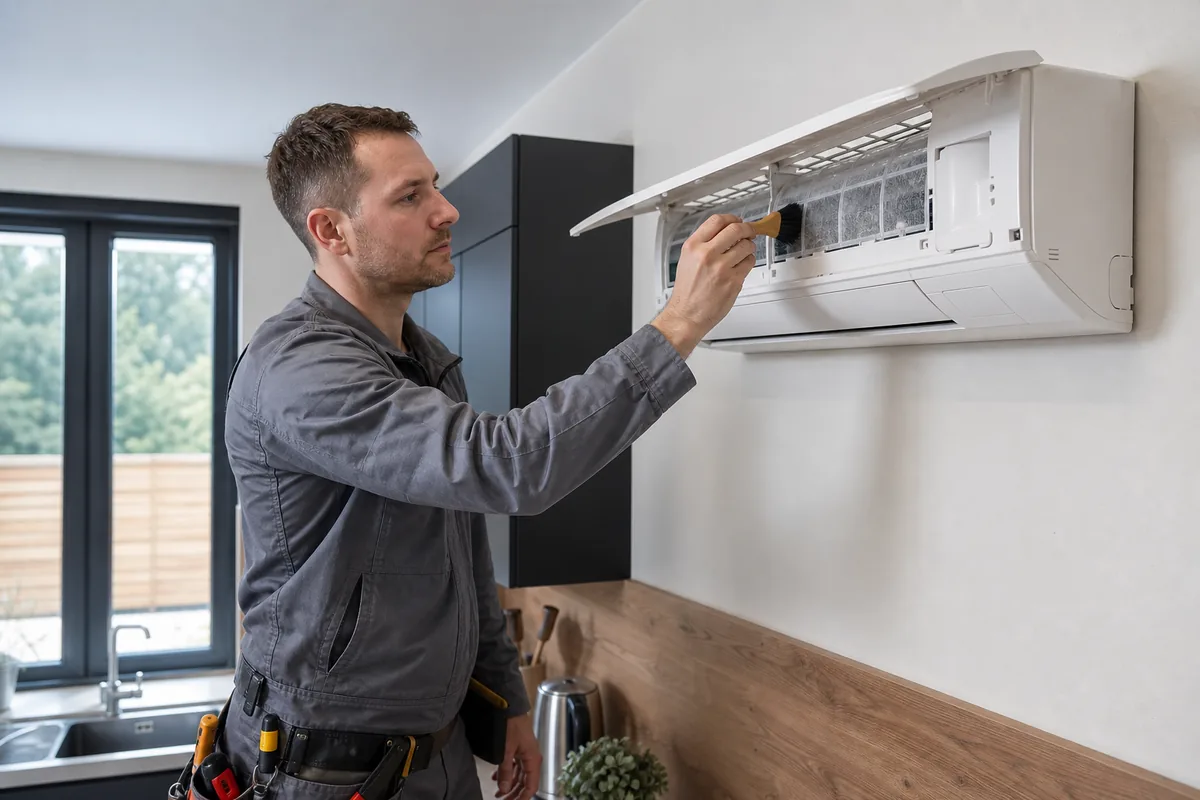
The fan icon, a mild auto day, and a setpoint with no demand
The remote has a fan position that people hit when they meant cool, especially on handsets with a single mode key that cycles through icons. Apps do it too, after a schedule. The indoor unit then behaves exactly as designed: air moves, temperature does not change, outdoor unit silent. Dry mode is different again. It may run the compressor gently and the air may not feel strongly cold. Auto on a mild UK day can refuse both heat and cool. For the test, pick cool in summer or heat in winter, with a setpoint several degrees past the room temperature, and ignore auto until you know the unit can do one job properly. Energy Saving Trust describes the outdoor unit's job as moving heat. Fan mode never asks it to. The app can show cooling while that is only a demand, not proof the compressor is running. If the outdoor unit is silent, cooling is not happening.
Write the mode you set, not the mode you wanted. Note how long you waited and whether this followed a power cut. Do not swap the remote batteries and call it a compressor repair: batteries matter only if the mode never changes on the indoor display.
Isolator on, five quiet minutes, then a stop
Look at the rotary isolator. Indoor fans on some installs can run while the outdoor supply is off, which feels exactly like fan-only. Turn the isolator on only if the enclosure is intact and you are not standing in water. HSE electricity guidance is to leave the enclosure shut. Then wait. A compressor delay of several minutes is normal after power-up. Listen at the outdoor unit from a safe distance. Silence plus room-temperature air indoors, after a clear cool or heat demand, means the compressor is not running. A click and a hum that dies is a fault, not a mode. Do not press contactors.
If the display accepts cool or heat, the isolator is on, you have waited, and the air temperature still does not change, book an F-gas engineer. GOV.UK certification is what that company needs if the refrigerant circuit is tested. Protection stops, failed outdoor boards, and refrigerant conditions that the unit refuses to run in are all on that visit. Low gas is one possibility among several. It is not a can you fit yourself. Wrong mode and no outdoor power look the same as lost gas. Stop sooner if lights flash a pattern you cannot match in that manual, if the breaker trips, or if there is a burning smell. Leave it off. Do not run fan all week as a substitute for cooling in a heatwave if the unit is tripping when it tries to start the compressor. Fan mode that trips a breaker is an electrical fault. Fan mode that is stable, with no burning smell and no tripping, can circulate air until someone attends. It will not cool the room. Switch off if water is leaking or the breaker opens.
Core buying guides
Start with these high-intent guides, then dig into the rest of the library.
Related guides
Sources and further reading
How this guide was prepared
This guide was written by the Local AC Installers Editorial Team. We compare official guidance, legislation and established consumer information, separate general information from project-specific advice, and show publication dates and sources. We do not accept installer accreditation claims at face value.