
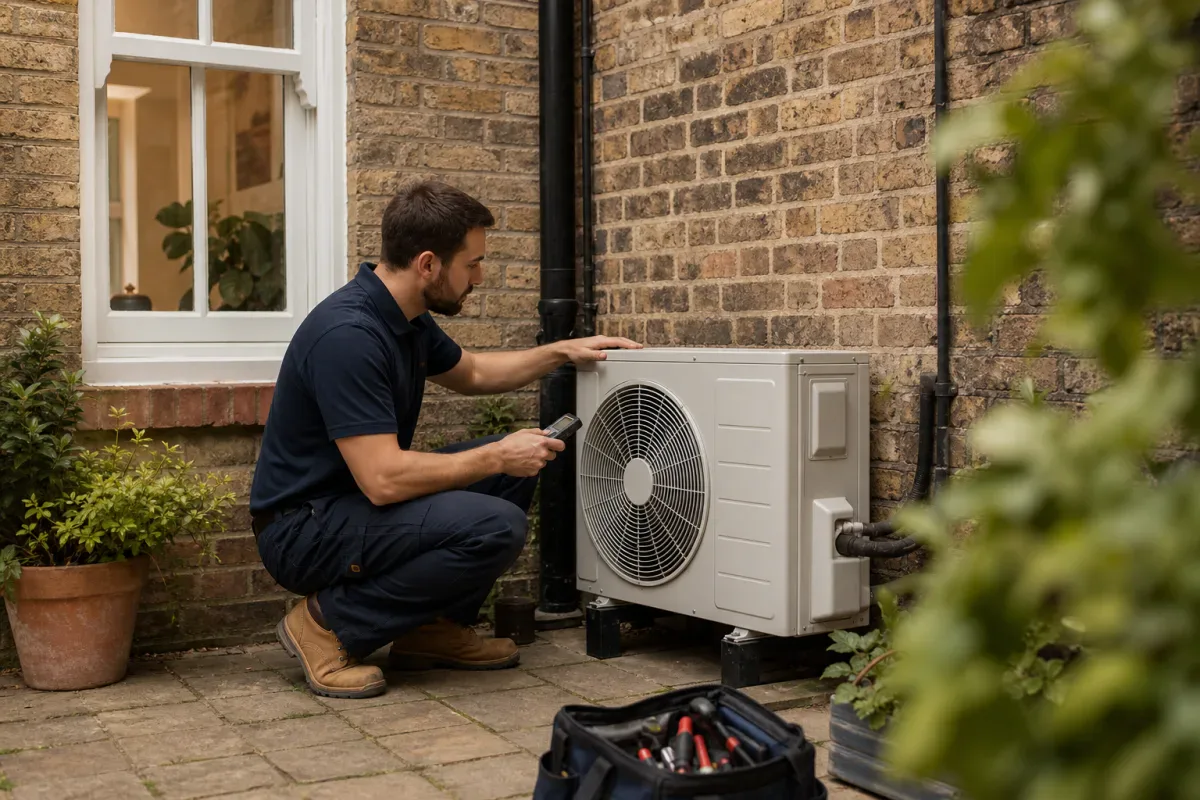
The outdoor unit needs airflow, a sound path that will not start a neighbour dispute, a legal planning position, and access for F-gas work. Pretty indoor photographs do not rescue a condenser boxed in, bolted to a weak wall, or humming beside a bedroom window.
Physics first, then the photograph
The outdoor unit rejects heat in cooling and, in reverse-cycle, gathers heat in heating. It needs manufacturer clearances at the coil and fan. Fences, decking lids, and decorative boxes that seal three sides are why systems high-pressure trip on the first hot Saturday.
Vibration through a cavity wall into a bedroom is a classic complaint. Anti-vibration mounts, a proper bracket or a ground slab, and a wall that can take the weight. Plastic soil-pipe brackets are not a condenser support. Pipe length and rise limits are in the installer notes. A perfect quiet corner 25 m away may be outside the model's limit. Survey both the quiet corner and the refrigeration limit. The outdoor unit noise guide covers the neighbour side of the same problem.
- Keep manufacturer coil and fan clearances.
- Do not seal the unit in a timber box.
- Mounting isolation matters as much as fan sound data.
Noise, neighbours and planning
Sound power in the brochure is not the sound at the neighbour's window. Distance, reflecting walls, and night-time heating defrost all change it. Environmental Protection Act complaints are how badly sited units get switched off. Front-elevation condensers also attract planning interest. Rear and side are the usual domestic pattern, still subject to listed and conservation rules.
Permitted development is not a free pass for a noisy machine next to a shared path. Read the planning permission guide. Flats add leaseholder consent. Commercial rooftops need safe access, fall protection, and a structure that takes the weight. A cheap crane day is cheaper than a condenser in a car park.
Condensate, electrics and leaves
Outdoor units still want a drain path in heating, because defrost water has to go somewhere. In winter that can freeze on a path and become a liability. Point it at a gully, not a pedestrian route.
Electrical isolator in reach. Not behind a locked side gate the engineer cannot open. Not over a thorn bed. Autumn leaves against a low-level coil are a maintenance issue. Raise the unit, fit a coil guard if needed, and put clearing it on the maintenance visit.
How to photograph the problem
Show the proposed wall or slab, the neighbour's windows, the consumer unit, and the route back to the indoor position. If every wall is contested, say so. A good installer will walk alternatives rather than force a bad one.
Screens are allowed if they leave the manufacturer's airflow. Treat screens as architecture, not a coffin. Include siting photos in the quote form. It is the difference between a real introduction and a wasted call.
Frequently asked questions
Can I put the outdoor unit in the loft?
No. It needs outdoor air. Loft-indoor ducted units exist. The condenser still sits outside.
Can I hide it in a box?
Only with open sides, the right clearances, and service access. A sealed timber box is a breakdown waiting for August.
How far from a neighbour's window?
There is no single legal metre figure that blesses every job. Use manufacturer noise data, distance, and common sense. If it would keep you awake, it is in the wrong place.
Core buying guides
Start with these high-intent guides, then dig into the rest of the library.
Related guides
Sources and further reading
How this guide was prepared
This guide was written by the Local AC Installers Editorial Team. We compare official guidance, legislation and established consumer information, separate general information from project-specific advice, and show publication dates and sources. We do not accept installer accreditation claims at face value.