
Quiet air conditioning depends on the whole design, not the lowest catalogue sound figure. Compare declared sound data at realistic operating settings, place indoor airflow away from occupants, and assess the outdoor unit against nearby windows, reflective surfaces, mounting and night use. Passive cooling can reduce operating hours, while careful selection and installation reduce the risk of neighbour nuisance.
Understand the sound figures
Manufacturers may publish sound pressure and sound power values, which are not interchangeable. Sound pressure also depends on test distance and surroundings. Compare like with like for the exact model and operating mode.
A very low indoor figure may apply only at the lowest fan speed. Ask whether that setting provides enough output for the design condition. Tonal character, airflow noise and changes in compressor speed can also affect how noticeable a system feels.
Plan the indoor unit for real life
Keep direct air throw away from beds, desks and sofas. An undersized unit may run hard and an oversized unit may cycle or create draughts, so correct load calculation supports both comfort and acoustic performance.
Filters need regular access because restricted airflow can increase noise and reduce performance. Loose panels, poorly supported pipework and condensate pumps can introduce sounds that were not apparent in catalogue data.
Control outdoor noise and vibration
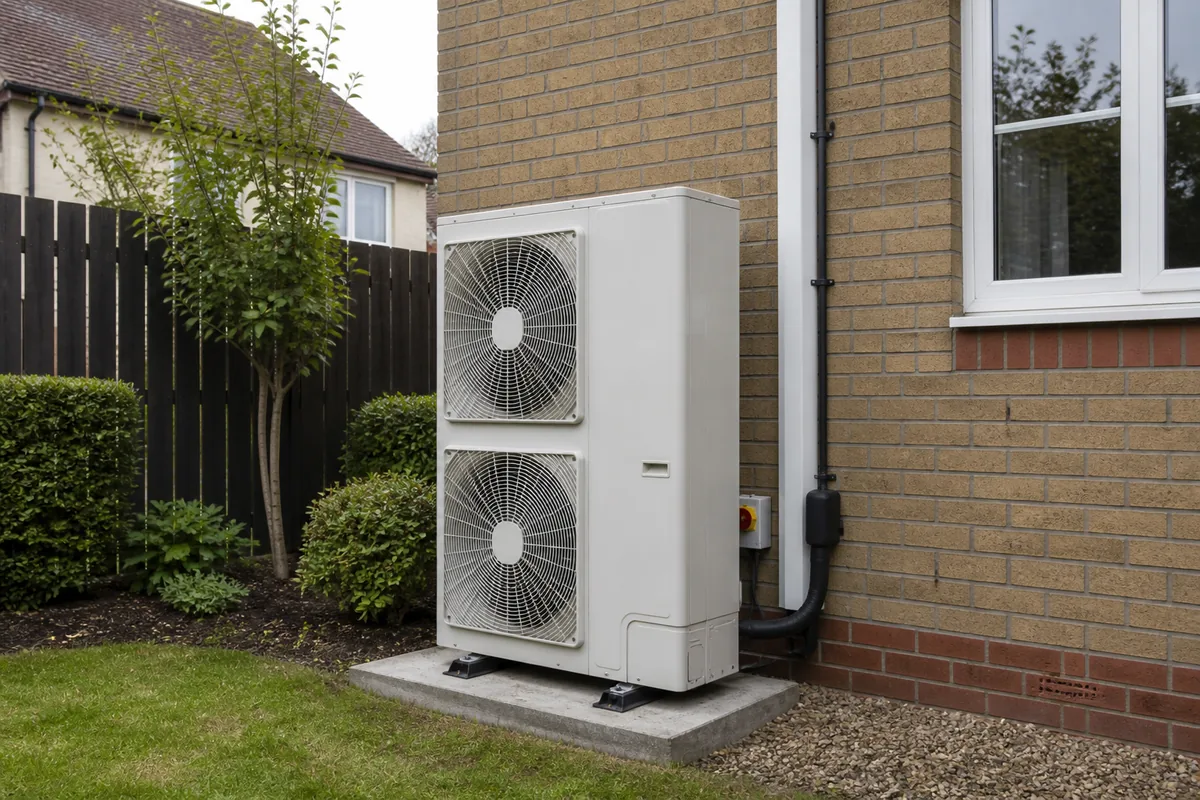
Assess the condenser from the nearest noise-sensitive rooms, including neighbours' bedrooms. Corners and narrow side passages can reflect sound. Lightweight roofs, brackets and timber structures may transmit vibration if mounting is not properly engineered.
Screens and enclosures must not restrict airflow or service access. A barrier can sometimes help when professionally designed, but an improvised box may increase recirculation, performance problems and sound.
- Review exact model data and proposed operating hours.
- Avoid reflective corners where feasible.
- Use mounting suitable for the structure and equipment.
- Commission the system and check for vibration under load.
Planning and neighbour considerations
Permitted development rights include conditions and do not remove the need to avoid nuisance. Local planning requirements, lease controls and listed-building constraints may apply. Discuss the position before installation when boundaries or bedroom windows are close.
Councils can investigate noise that may amount to a statutory nuisance. It is better to prevent a problem through design than to rely on a nominal quiet mode after a complaint. Keep commissioning records and maintain the system so faults do not increase sound.
Frequently asked questions
What decibel level counts as quiet air conditioning?
There is no single number that guarantees acceptability. The metric, operating mode, distance, background sound, tone, duration and location all matter.
Are ground-mounted outdoor units always quieter than wall-mounted units?
No. Ground mounting can reduce transmission into some structures, but the base, location, reflections and distance to receptors still need assessment.
Can I soundproof an outdoor unit with a box?
Do not improvise an enclosure. Outdoor units require substantial airflow and service clearance. Any acoustic treatment should be designed around the equipment requirements.
Does quiet mode solve neighbour noise at night?
It may reduce output or sound on some models, but it is not a substitute for suitable location and assessment. The system must still meet comfort needs without causing nuisance.
Why has an existing unit become louder?
Possible causes include dirt, loose components, fan damage, mounting deterioration or another fault. Stop using it if safety is in doubt and arrange competent inspection rather than opening refrigerant equipment yourself.
Core buying guides
Start with these high-intent guides, then dig into the rest of the library.
Related guides
Sources and further reading
How this guide was prepared
This guide was written by the Local AC Installers Editorial Team. We compare official guidance, legislation and established consumer information, separate general information from project-specific advice, and show publication dates and sources. We do not accept installer accreditation claims at face value.