
For cooling at home, many UK households settle somewhere between 24C and 26C in a heatwave and feel comfortable without forcing the unit flat out. Treat that as a comfort ballpark, not a medical rule and not a target for every body in the room. Each degree lower increases running time and can feel clammy if the room is already humid. Workplaces follow HSE guidance on reasonable thermal comfort, which is a different document from a bedroom remote.
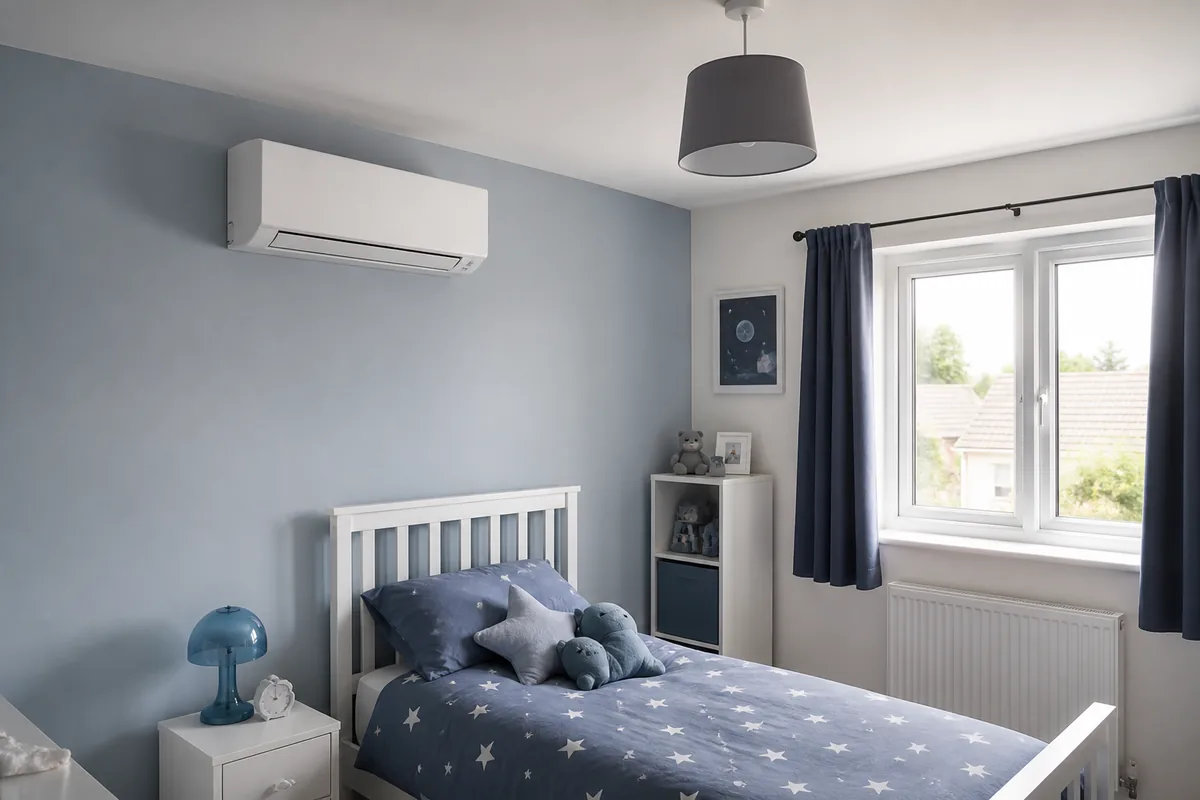
A 25C start on the wall sensor
The setpoint is the temperature the unit aims at, measured at its own sensor, which may be high on a wall in a patch of sun or draught. Starting at 25C and moving one degree after an hour tells you more than copying a number from a forum. The ballpark of 24C to 26C is where a lot of British cooling ends up once the novelty of 18C has worn off.
Bodies in the room will not share one figure
People who exercise, small children, and someone sitting still at a desk will not agree on one figure. This is not health advice. If someone in the house has a medical need for a particular environment, follow their clinician. The air conditioner is a comfort tool with a thermostat, not a treatment. The 24C to 26C band is a comfort ballpark for many healthy households in a UK heatwave. People who are unwell, very young or medically advised to keep a specific environment should follow that advice.
The cost of holding 18C
An 18C setpoint on a 32C afternoon asks the machine for a large, continuous lift. Electricity use climbs, the coil runs very cold, and anyone who steps in from the garden feels a shock of cold rather than comfort.
- 24C to 26C is a common home cooling band.
- The sensor position changes what that number feels like.
- Lower setpoints cost more to hold.
Shade, filters and outdoor air before a lower number
Doors left open make the target fantasy. The unit never catches up, and the bill arrives anyway. If the room will not hold 25C, the answer is usually capacity, shade, filter or outdoor airflow, not a lower number on the remote. Ask the installer. SEER comparisons assume a sensible operating point, not a refrigeration room. A colder coil removes some moisture, but an aggressively low setpoint is a blunt and expensive way to dehumidify. If the room feels clammy at 25C, talk to the installer about capacity, fan speed and ventilation rather than chasing 18C. Energy Saving Trust's air-to-air pages describe the machine. They do not set a room temperature.
Low 20s in heating, on a schedule
In heating, households often use a setpoint close to the temperature they already like from radiators, frequently around the low 20s, and they use a schedule so an empty house is not held there all day. A split can heat the rooms it serves. It does not automatically heat the whole property unless you zoned it that way. Defrost pauses in cold damp weather are normal. Dropping the setpoint to zero as a response, or raising it sharply, does not help the coil clear. Leave the mode alone and read the defrost behaviour if the room goes cool for a few minutes.
Sedentary offices and a mid-20s policy
HSE's temperature guidance for workplaces talks about reasonable comfort. It publishes minimums that have long been stated as 16C for much indoor work and 13C where the work is strenuous, and it does not set a legal maximum. Air movement, humidity, clothing and the work rate all count. A shop or office policy can still pick a cooling setpoint in the mid 20s for comfort and energy, and should say so to staff. Do not import a home 18C habit into a meeting room. You will overcool people who cannot change clothes, and you will fight any fresh-air system that was balanced for a milder room. Home ballparks are not a workplace standard. Where the plant is large enough, GOV.UK air conditioning inspections are a separate duty from the number on the remote.
Frequently asked questions
Is 24C to 26C safe for everyone?
It is a comfort ballpark for many healthy households in a UK heatwave, not a medical instruction. People who are unwell, very young or medically advised to keep a specific environment should follow that advice.
Core buying guides
Start with these high-intent guides, then dig into the rest of the library.
Related guides
Sources and further reading
How this guide was prepared
This guide was written by the Local AC Installers Editorial Team. We compare official guidance, legislation and established consumer information, separate general information from project-specific advice, and show publication dates and sources. We do not accept installer accreditation claims at face value.