
A UK split that takes ages to cool is often fighting west-facing glass, an open plan door, cooking heat, or a setpoint of 16 degrees in a heatwave. It can also be too small for the room, or choked by a filter. You can close blinds, shut the door, wash the filters, and set a realistic cooling temperature in the mid-20s Celsius. Give a correctly sized unit time to pull the room down rather than judging it in ten minutes. If it runs flat out and the room never becomes comfortable, stop guessing about gas. An F-gas engineer should survey airflow and the original load before anyone opens the refrigerant circuit.
A bedroom unit asked to cool the bay and the stair
A 2.5 kW bedroom unit can hold a shut bedroom. It will not drag a Victorian bay, a loft dormer and an open stair down to a hotel temperature. West sun through unshaded glass arrives faster than many small splits can remove it. Bi-fold kitchens add hob heat. Leaving the door open to cool the hall splits the capacity across two spaces and both feel late.
Heat stored in the plaster at six in the evening
Heat already stored in plaster and brick comes out through the evening. People switch on at 6pm, feel warm air for a few minutes, and assume the unit has failed. Check the supply air at the louvre. If that air is clearly cool and the room is large and sunny, you may be waiting on load, not on a breakdown. HSE temperature guidance is about offices and the law at work. It is not a domestic setpoint and it does not mean a home split is faulty because a room is 26 degrees while the unit is still pulling down.
Blinds, the door, and a setpoint in the mid-20s
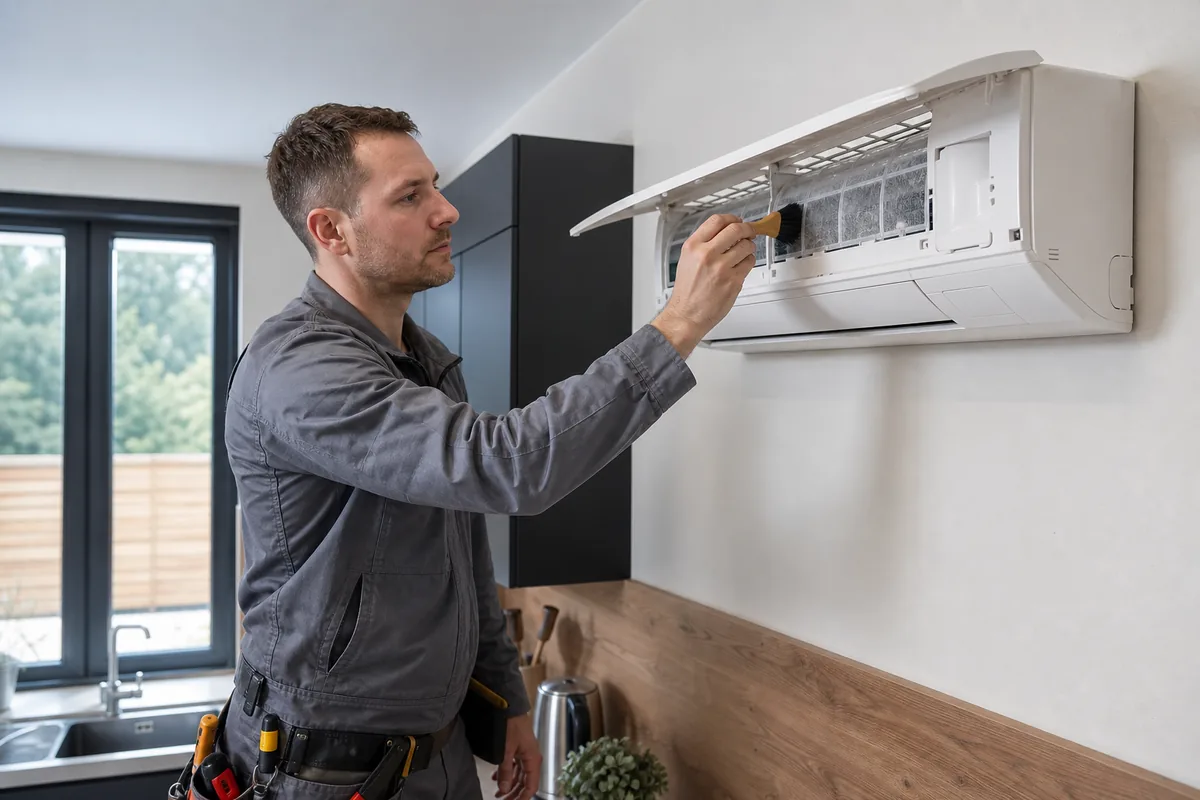
Wash and dry the filters. Move a lamp or television that sits under the indoor sensor. Energy Saving Trust describes these units as moving heat, so the glass and the open door decide how hard that job is.
- Close curtains or blinds on the sunny side before the wall heats.
- Shut the door of the room the unit serves.
- Set cool, not auto, with a setpoint around 23 to 25 degrees rather than 16.
Keep the outdoor coil clear of bins and shrubs
Keep the outdoor unit clear of bins and shrubs so it can reject heat. Do not spray it with a hose. Do not prop the filter door open. Mention loft rooms and kitchen diners honestly. Those are the UK spaces that punish a nominal 2.5 kW badge.
Supply air cool but the room still late
Say whether supply air is cool but the room is slow, or supply air never goes cool. Say whether doors stay open and which way the windows face. A survey should measure the room, the glass and how you use the door, then say whether the existing pair is ill or simply small.
When more patience is the wrong diagnosis
If supply air never goes cool, if the outdoor unit short cycles, if ice forms, or if a room that used to cool in reasonable time now does not, book an F-gas engineer. GOV.UK certification covers refrigerant work. A dirty coil, a failing fan, or a refrigerant fault can look like undersizing. Undersizing itself is real: the remedy is a surveyed capacity, sometimes a different indoor, not a top-up of gas into a unit that was already the wrong size. Do not open the gas circuit. A portable unit dumped in the same space with its hose poorly fitted adds heat. The unit usually runs at full cooling as soon as the room is well above setpoint. A very low setpoint does not multiply capacity.
Frequently asked questions
Should a bedroom split cool the whole floor if I leave the door open?
No. It is sized for one room. An open door shares a small capacity with a landing and the cooling feels late everywhere.
Core buying guides
Start with these high-intent guides, then dig into the rest of the library.
Related guides
Sources and further reading
How this guide was prepared
This guide was written by the Local AC Installers Editorial Team. We compare official guidance, legislation and established consumer information, separate general information from project-specific advice, and show publication dates and sources. We do not accept installer accreditation claims at face value.