
Anti-vibration feet are rubber pads or mounts between the outdoor unit and the slab, frame or wall bracket that holds it. They reduce some of the buzz that would otherwise travel into masonry or steel. They do not silence a worn compressor, a twisted bracket or a unit placed beside a neighbour's bedroom window. The survey should name the mount. Planning and nuisance sit in a separate column from the rubber.
Fan and compressor frequencies in the masonry
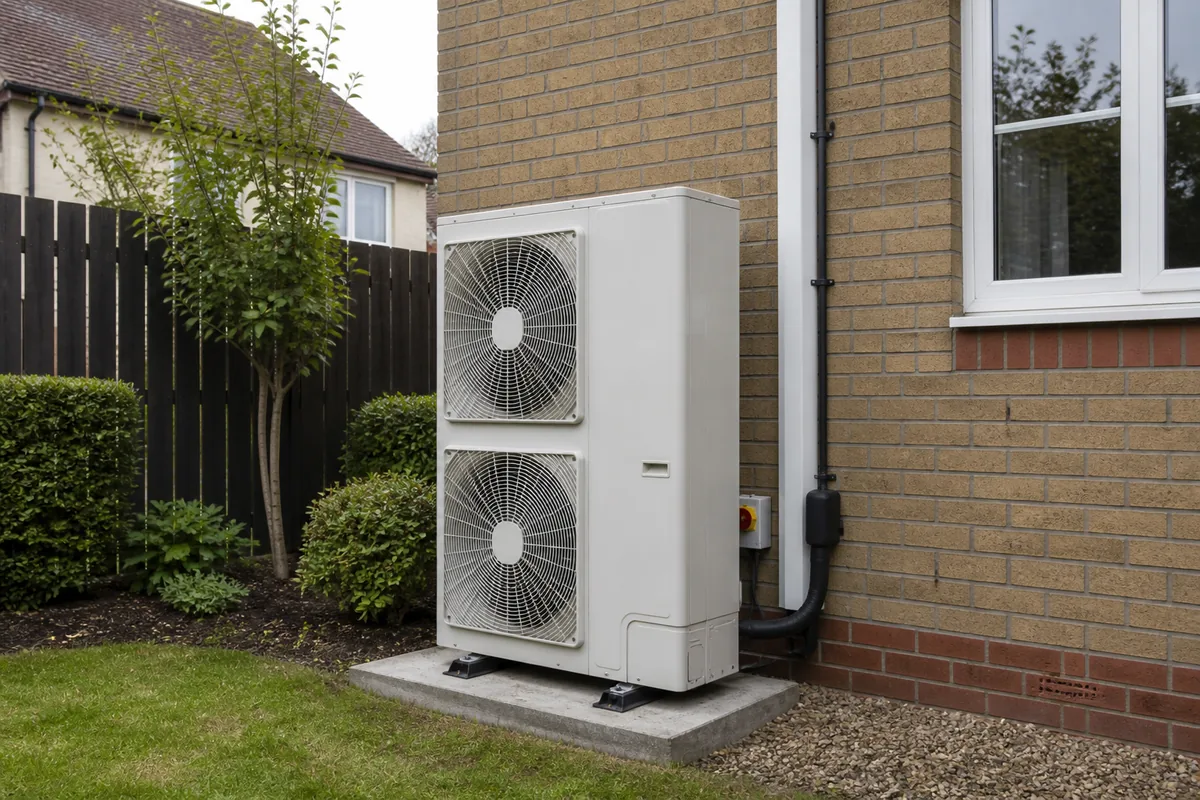
A condenser vibrates at fan and compressor frequencies. On a concrete slab in the garden that energy mostly stays put. On a wall bracket fixed to a cavity wall, or on a roof rail above a flat, the same energy can become a hum in a bedroom. Feet, pads or spring mounts break that path to a degree.
A level slab in the garden
Ground standing on a level slab with proper feet is the quietest domestic pattern when the garden allows it and the unit is clear of flooding. On a concrete base, normal practice is still to use feet so the case is level, drained and not sitting metal-to-stone. The installer selects mounts that suit the unit weight. The indoor unit can need isolation too if it is fixed to a lightweight stud, but the complaints that reach installers are usually about the outdoor machine.
Brackets, roofs and buried pads
Wall brackets need the right fixings for the wall and mounts that the bracket manufacturer actually rates. A roof needs a structure that can take the weight and the wind load. Feet are not that structure.
- Pads and feet suit slabs and many brackets.
- The bracket itself must be level and strong enough.
- Leaves and a sunken slab can bury the feet until the case touches hard ground again.
Grinding noises that feet will not cure
A compressor that has lost its own internal mounts, a fan blade catching the case, or a pipe touching the cover will still make noise. Those are service faults for the installer. An F-gas certified engineer looks at the refrigerant side if the fault points there. GOV.UK publishes company certification for that work. New feet are not the first response to a grinding sound. A unit sitting hard on one corner will rattle no matter which brochure the pad came from. A maintenance visit should glance at buried feet.
Neighbour windows and planning noise
Night-time nuisance at a neighbour's window is mostly about distance, barriers, fan speed and whether the unit should be on that wall at all. The Planning Portal guidance on air source heat pumps includes noise conditions for heating plant. A cooling condenser in a tight terrace still needs a frank conversation about where it can stand. Pads do not move a unit two metres further from a pillow. Feet do not replace a planning conversation about noise. Location, orientation and any permission conditions sit above the choice of pad.
Specify the mount after the location
Ask the quote to say slab, bracket or roof frame, plus the anti-vibration product. As a 2026 illustration, a set of decent feet is often tens of pounds of material, while rebuilding a resonant bracket or relocating the unit is a labour item in the hundreds. Buy the location first. If you already hear a hum, note the time of day and whether it is heating season, when defrost and higher compressor speed are normal. Send that note with a photo of the mounts. The surveyor can tell a buried pad from a unit that needs a new wall. They reduce structure-borne vibration. Air noise from the fan still exists. Energy Saving Trust's air-to-air pages describe the outdoor unit. A builder or an engineer speaks to the steel and the deck.
Frequently asked questions
Will anti-vibration feet make a condenser silent?
They reduce structure-borne vibration. Air noise from the fan still exists. A bad wall, a short distance to a neighbour, or a mechanical fault can still be loud.
Core buying guides
Start with these high-intent guides, then dig into the rest of the library.
Related guides
Sources and further reading
How this guide was prepared
This guide was written by the Local AC Installers Editorial Team. We compare official guidance, legislation and established consumer information, separate general information from project-specific advice, and show publication dates and sources. We do not accept installer accreditation claims at face value.