
Ventilation moves heat out with outdoor air; air conditioning removes heat regardless of what the weather is doing. A fan-only design works when the outdoor air is reliably cooler than your target intake temperature all year, the load is small, and dust and security allow wall openings. UK summers now break that assumption: on a 34 degree day a ventilated room runs hotter than 34 degrees. For most business server rooms the honest design is refrigeration sized for the load, with ventilation as a running-cost reducer or emergency backstop rather than the primary system.
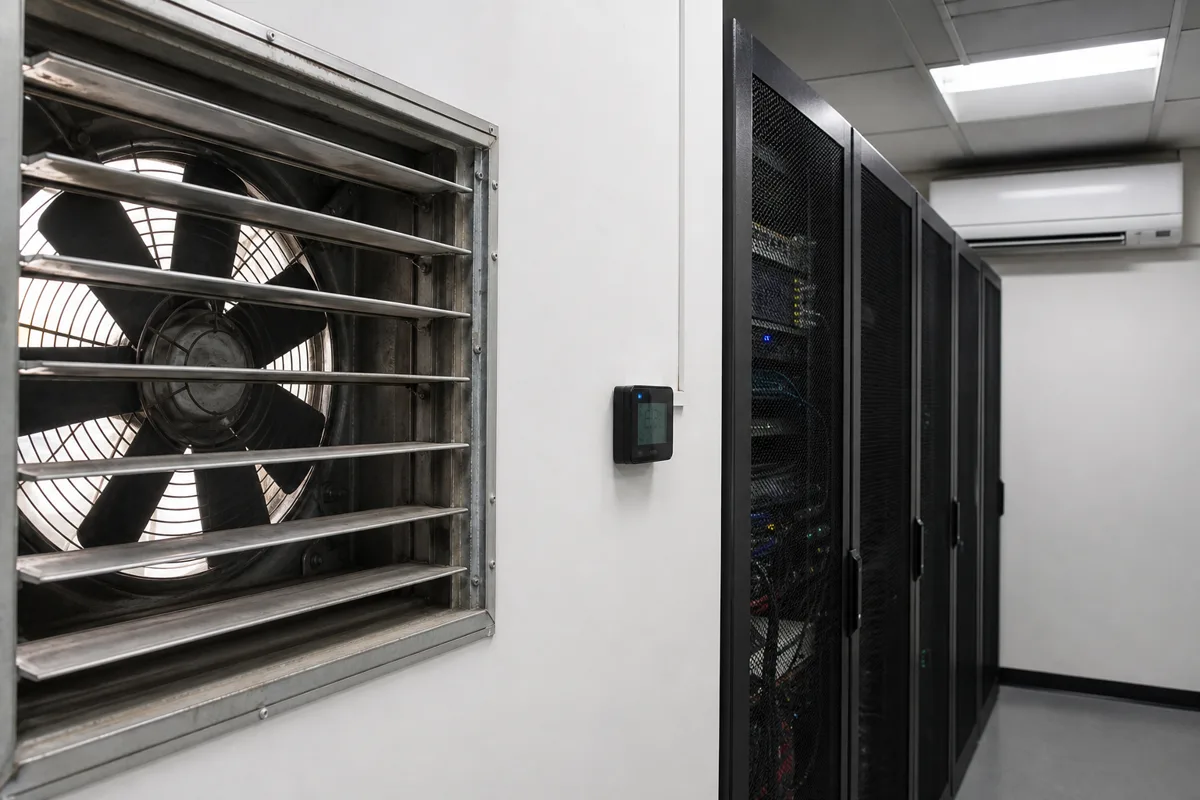
What each one can and cannot do
Extract fans and intake grilles can hold a room a few degrees above outdoor temperature at best. That is fine for a cupboard with a single switch in April. It is a failure mode in a heatwave, and heatwaves are exactly when hardware is already stressed.
Air conditioning holds a set point independent of the weather and dehumidifies as a side effect. It costs more to run per hour, but it is the only tool that works on the days that break things. The server room temperature guide covers the targets worth holding.
- Ventilated rooms track outdoor temperature plus a margin, always.
- Filtration matters: unfiltered intake air carries dust into equipment.
- Wall openings are a physical security and fire compartment question.
- Refrigeration is sized from IT load; fans are sized from airflow.
- Hybrid designs use free cooling in winter and refrigerant in summer.
The temperature maths that decides it
Pick your maximum allowable intake temperature, commonly around 27 degrees for modern kit following ASHRAE guidance. Ventilation can only meet that when outdoor air is comfortably below it after fan heat and mixing. UK design summer temperatures in the south now exceed it for days at a time.
So the question is not whether ventilation works in March; it is what happens in the worst week of July. If the answer is thermal shutdown, the design is refrigeration first.
Where ventilation still earns money
Winter free cooling: a controlled fresh-air mode can carry the load for much of the year and cut compressor hours dramatically, which is how larger rooms reduce energy bills. Emergency backstop: a fan that starts on high temperature buys time during a cooling failure, as the failure response guide describes.
Small network closets with tiny loads sometimes justify fan-only designs, covered honestly in the network closet guide, but the load ceiling is low.
Specifying the right mix
State the IT load, the worst acceptable intake temperature, and how long the room may exceed it per year. A good designer then prices refrigeration for the load, and adds free cooling only where running-hour savings repay the extra kit.
Use the quote form with the load and photos. Companies that install both will show the comparison rather than defending one product.
Frequently asked questions
Can I cool a server room with just extract fans?
Only if the outdoor air stays reliably below your maximum intake temperature all year and the load is small. UK heatwaves push ventilated rooms above safe intake temperatures, so fan-only designs fail exactly when equipment is most stressed. Most business rooms need refrigeration sized for the load.
What is free cooling in a server room?
Using filtered outdoor air to carry the heat load when the weather is cold enough, with the refrigeration system idle. It cuts compressor running hours and energy cost substantially in a UK winter and shoulder seasons, then hands over to air conditioning in summer.
Does a ventilated server room need planning permission?
External louvres and fans can need consent on some elevations, and always need fire compartmentation and security thought. The building side is usually the harder problem than the fan itself; a survey should address both.
Core buying guides
Start with these high-intent guides, then dig into the rest of the library.
Related guides
Sources and further reading
How this guide was prepared
This guide was written by the Local AC Installers Editorial Team. We compare official guidance, legislation and established consumer information, separate general information from project-specific advice, and show publication dates and sources. We do not accept installer accreditation claims at face value.