
A barber shop is a narrow room where people sit still while hairdryers and clippers add heat beside their heads. Cool the chairs and the short waiting line. Keep the discharge off the face in the cutting chair. A modest wall split, or a cassette only if the ceiling void is real, is the usual machine after a survey. HSE workplace temperature guidance is about reasonable comfort for staff. It sets no legal maximum. An F-gas certified company should install the refrigerant circuit.
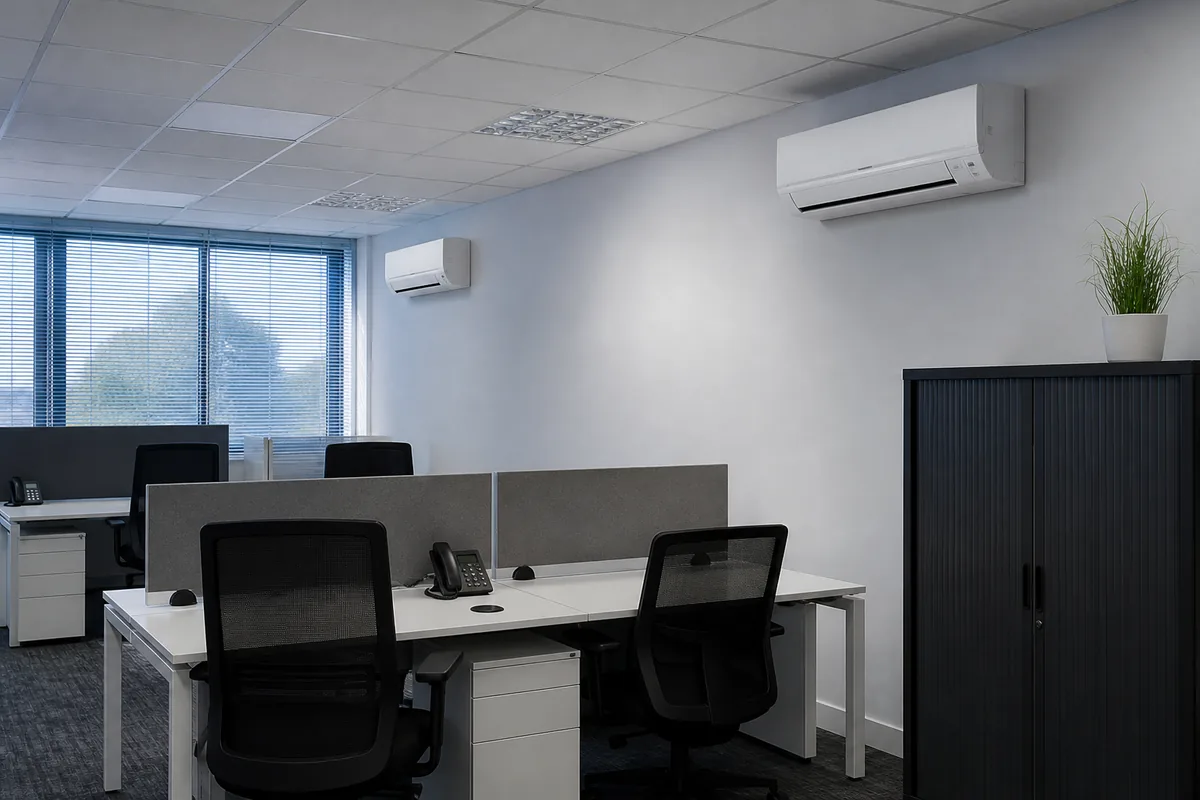
Heat beside the cutting chairs
The load is not the empty floor area. It is two or three dryers running, a glass shopfront, and a Saturday when every chair is full. A survey taken on a quiet Tuesday morning will undersize the afternoon the shop actually suffers.
Mirrors and a backwash basin break up the walls. The indoor unit needs a clear run above the chairs, not a slot between a neon sign and a shelf of product. Steam from hot towels belongs in the room moisture, and the condensate from the unit needs its own drain.
Throw along a narrow barber shop
A wall unit at one end of a long narrow shop can blast the first chair and leave the last chair warm. Ask the installer to stand in each chair and trace the air. A lower fan with a wider vane is kinder than a short blast on full.
The condenser wants a rear yard, a side wall or a flat roof that can take the weight and the vibration. Shops on a lease usually need landlord consent for the core, the outdoor unit and any tray on a rear elevation. Power is often a single-phase circuit from a board that is already busy with dryers. The electrician and the air conditioning company should see that board before the kit is ordered.
Frequently asked questions
Will the air blow on clients in the chair?
It should not. The survey should aim the discharge along the ceiling or down a clear side, away from the face at the cutting chair. A unit that only works on full fan is the wrong result.
Can one unit cool the shop and the flat above?
No. A shop split cools the shop. The flat is a separate home, with its own outdoor position, lease and noise limits.
Do hairdryers change the size of the unit?
Yes. Dryers are a real heat gain next to the chairs. Tell the survey how many run on a busy Saturday, and whether the street door stays open.
What if the ceiling is plaster under a flat?
A ceiling cassette may suit only where a void, a filter hatch and a drain exist. Many barber shops are a plaster ceiling on a flat above. Do not invent a void. If the only solid wall is behind the mirrors, that is a survey problem, not a reason to draw a cassette.
Will the flat upstairs hear the condenser?
A bracket on the party wall next to the flat upstairs will be heard in the evening. Anti-vibration mounts and a position away from bedroom windows matter as much as the indoor fascia.
Should a staff room or WC share the shop unit?
Treat a staff room or WC as its own zone. The shop unit is for the chairs and the short waiting line.
Core buying guides
Start with these high-intent guides, then dig into the rest of the library.
Related guides
Sources and further reading
How this guide was prepared
This guide was written by the Local AC Installers Editorial Team. We compare official guidance, legislation and established consumer information, separate general information from project-specific advice, and show publication dates and sources. We do not accept installer accreditation claims at face value.