
Survey the coach house as a dwelling over a garage, usually at the back of a plot and reached by a lane. The decision is where the indoor unit can fix, where the outdoor unit can stand without blocking access, and whether power is a real submain or a hope. Condensate has to get down to a gully. Planning and a narrow lane decide the outdoor spot before the fascia does. An F-gas certified company installs the pair once those routes exist.
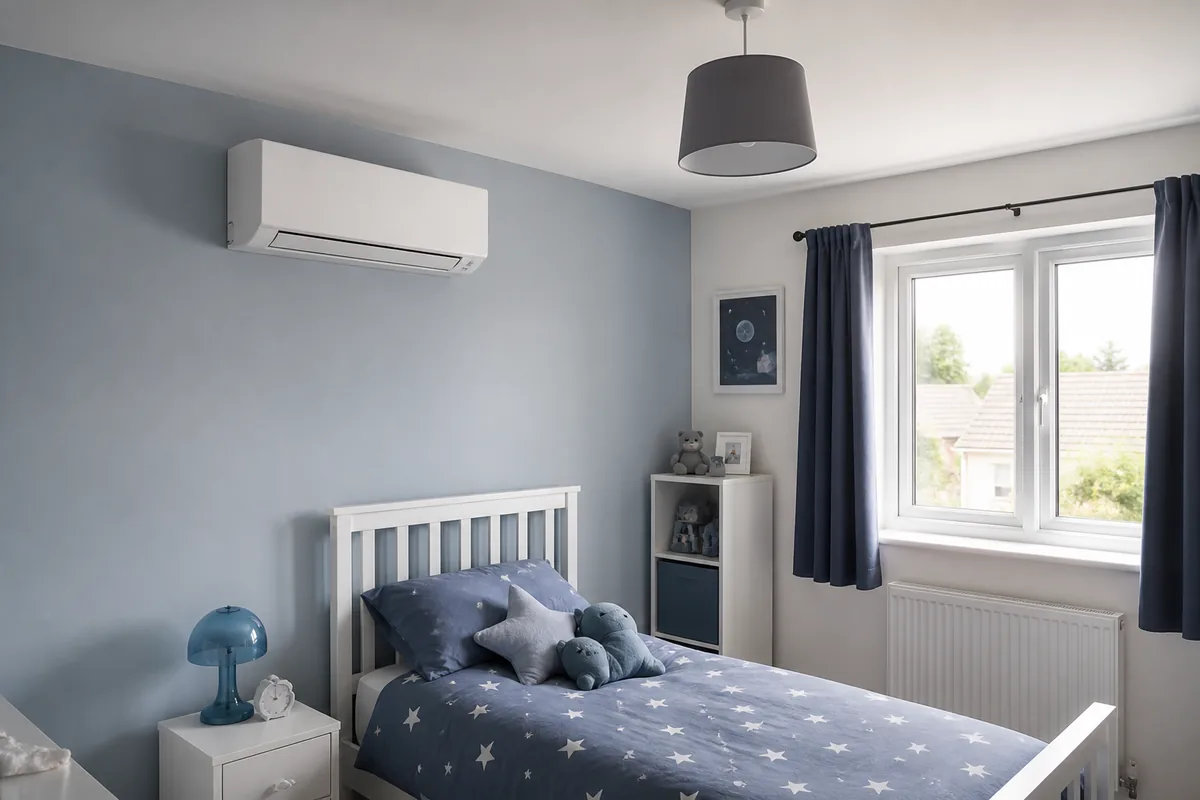
Fixings in a room over a garage
The floor is often timber over a parking bay, and the walls may be stud above brick piers. A wall unit needs a fixing that reaches structure, not plasterboard alone. A gable or a masonry flank is the usual place. The air should cross the room you live in, which may be one open space with a kitchenette, not a houseful of shut doors. Height from that indoor unit down to a condenser at lane level can use up the manufacturer's allowance. Measure it on the survey. Photos of the living-room wall, the lane frontage, the flank where a condenser might stand, and the consumer unit, plus how far the building is from the main house and whether a car parks against that wall, are what the measurement needs. Ask for model codes, the height difference, the condensate route and who is supplying the dedicated circuit.
The lane, the submain and the drop to a gully
Coach houses front a shared lane or a private drive. An outdoor unit that sticks into that lane will be hit, and it may not be yours to obstruct. The flank wall inside the plot, or a stand beside the garage, is the usual aim, with airflow clear of the parked car. In England, Planning Portal conditions cover noise and size. A conservation mews-like setting can need consent even when the building is not listed. Say if the lane is shared. Ask the firm to confirm the outdoor unit stays inside your plot and inside Planning Portal conditions.
Many coach houses are fed by a long submain from the main house. The electrician has to confirm that supply can take a dedicated circuit. A consumer unit in the coach house with a spare way is the simple version. A single socket on the landing is not. As a 2026 illustration, the split itself on a straightforward coach house is often in the low thousands including VAT, and the costly part is a supply upgrade or a lane closure for the lift. Those are illustrations, not a tariff. Keep the condenser off the vehicle door swing, and confirm the submain before you order the system.
Frequently asked questions
Can the outdoor unit go on the garage door wall?
Only if it clears the door, the car and the lane, and the wall can carry it. A flank or a ground stand beside the garage is often the workable spot.
Will one unit cover a studio coach house?
Often yes, if it is one open volume and the survey sizes the glass and the roof. A separate shut bedroom still needs its own indoor unit or an open door.
Can I run the system from the main house consumer unit?
Only if a proper circuit already reaches the coach house and has capacity. The survey should say so. A cable across the garden on the day is not a plan.
Does a mezzanine bed in the same volume need a second indoor unit?
If a mezzanine bed sits in the same volume, one well placed unit may cover it. A second indoor unit only helps if the space is genuinely divided and the pipes still work.
Why do anti-vibration mounts matter on a coach house?
The neighbour across the lane often has windows closer than a suburban garden fence. Anti-vibration mounts matter because the structure is light and the lane is quiet at night.
Where should condensate from a room over a garage go?
Condensate should drop to a gully at ground level, not into the garage and not onto the lane. A pump is for when the indoor unit cannot fall all the way.
Core buying guides
Start with these high-intent guides, then dig into the rest of the library.
Related guides
Sources and further reading
How this guide was prepared
This guide was written by the Local AC Installers Editorial Team. We compare official guidance, legislation and established consumer information, separate general information from project-specific advice, and show publication dates and sources. We do not accept installer accreditation claims at face value.