
Basement flats are cooler than top floors until a south lightwell, a crowded front area or a long heatwave proves otherwise. A split can serve the rooms that overheat if the outdoor unit has airflow in the lightwell or area, the lease allows it, and condensate is pumped to a real drain. Cooling is not a damp-proofing treatment. Sort water ingress with a damp survey. Use the air conditioner for temperature once the fabric is honest.
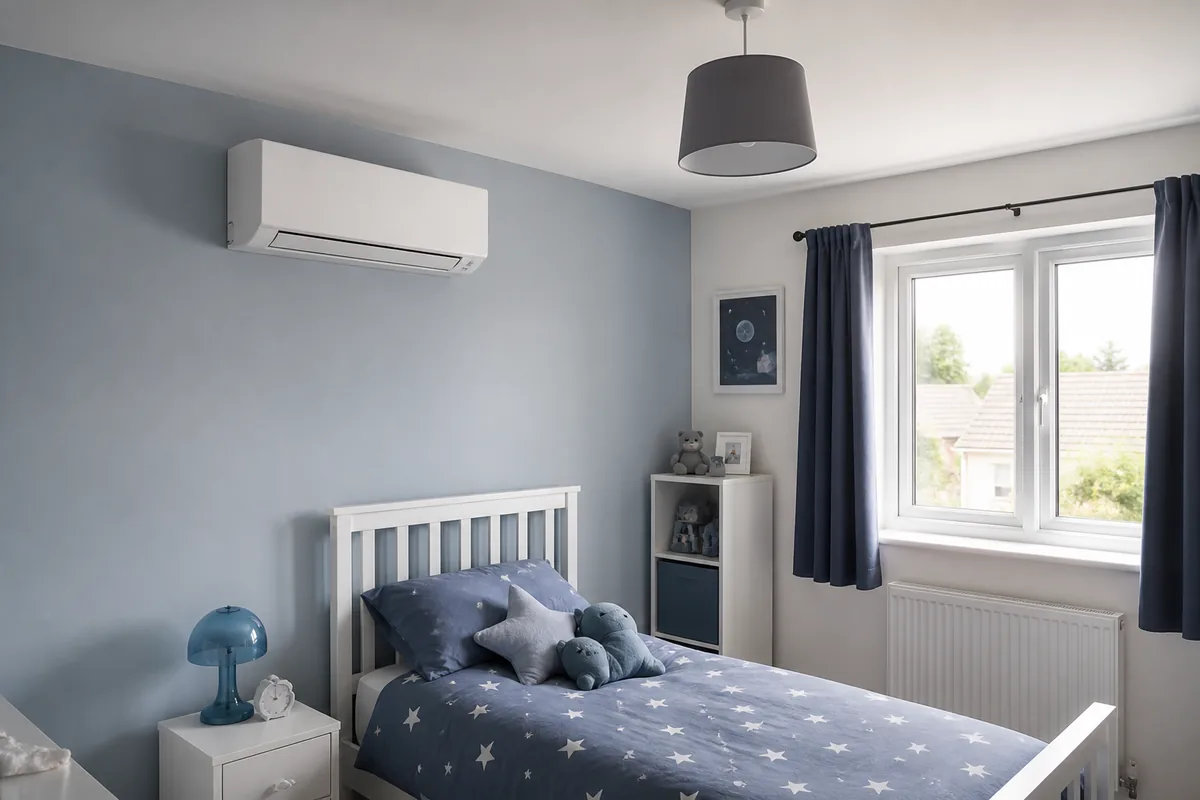
A lightwell that bakes, and a condenser that has to breathe in it
A north basement with small windows may never justify a split. A garden flat with full-height doors, or a front lightwell that bakes, can feel like any other glazed room by late afternoon. Survey the hot room. Do not buy because other flats in the block did, and do not refuse a survey because basements are supposed to be cold. Survey the lightwell and the rooms that face it.
People, cooking and a home office add the same internal gains as upstairs. The earth around the walls slows the peak. It does not remove a sunny bay. Lightwells are tight, damp and sometimes security-sensitive. The condenser needs the manufacturer's air gaps or it will recirculate and run hot. A grille at pavement level can be noisy for people walking past and for the hallway of the building above. Anti-theft fixing matters if the area is open to the street. Check the lease before any grille faces the pavement. Planning and the freeholder both apply. A basement is still a flat. Householder permitted development is the wrong assumption. In England, read Planning Portal heat pump notes and then the lease.
Pumped water, a damp cupboard, and cooling that is not tanking
Condensate must rise to a soil or a gulley that can take it, with a pump and a safe failure path. Gravity often has nowhere to go. Dumping water into a lightwell that already floods will stain the wall and annoy the freeholder. Insulate pipes so they do not sweat on a cold basement soffit. Treat damp first. Cooling will not tank a wall. Any moisture it pulls out while running is incidental, not a damp cure.
A dedicated 230 V circuit from the consumer unit, installed by a competent electrician, is the supply. Basement consumer units are often in damp cupboards. Say so before the quote assumes a clear board. F-gas rules apply to the refrigerant work. A reverse-cycle unit can warm a basement room that never sees sun. It will also pull some moisture out while cooling. That is incidental dehumidification, not a guarantee about mould or a substitute for ventilation and a damp specialist. Keep airflow out of a damp corner where you dry clothes. Fix the room's ventilation separately if condensation already beads on the lightwell glass.
Frequently asked questions
Do basement flats need air conditioning?
Many do not. South-facing garden flats and hot lightwells sometimes do. Survey the room that actually overheats.
Will air conditioning fix basement damp?
No. It can remove some moisture while cooling and it will not stop water coming through the structure. Deal with damp as its own survey.
Can the outdoor unit go in the front lightwell?
Only with enough airflow, lease consent, a noise check and a secure fixing. Many lightwells are too tight for the clearances.
Core buying guides
Start with these high-intent guides, then dig into the rest of the library.
Related guides
Sources and further reading
How this guide was prepared
This guide was written by the Local AC Installers Editorial Team. We compare official guidance, legislation and established consumer information, separate general information from project-specific advice, and show publication dates and sources. We do not accept installer accreditation claims at face value.