
A 2.5 kW Daikin Perfera and a 3.5 kW Perfera are the same indoor family and different jobs. The smaller pair suits many shut bedrooms after a proper heat-gain survey. The 3.5 kW pair suits larger bedrooms and modest living rooms. Buying 2.5 kW because the equipment line is cheaper is how August fails. Buying 3.5 kW for a tiny box room can short-cycle. Survey first. The outdoor model changes with capacity. An F-gas installer has to commission either.
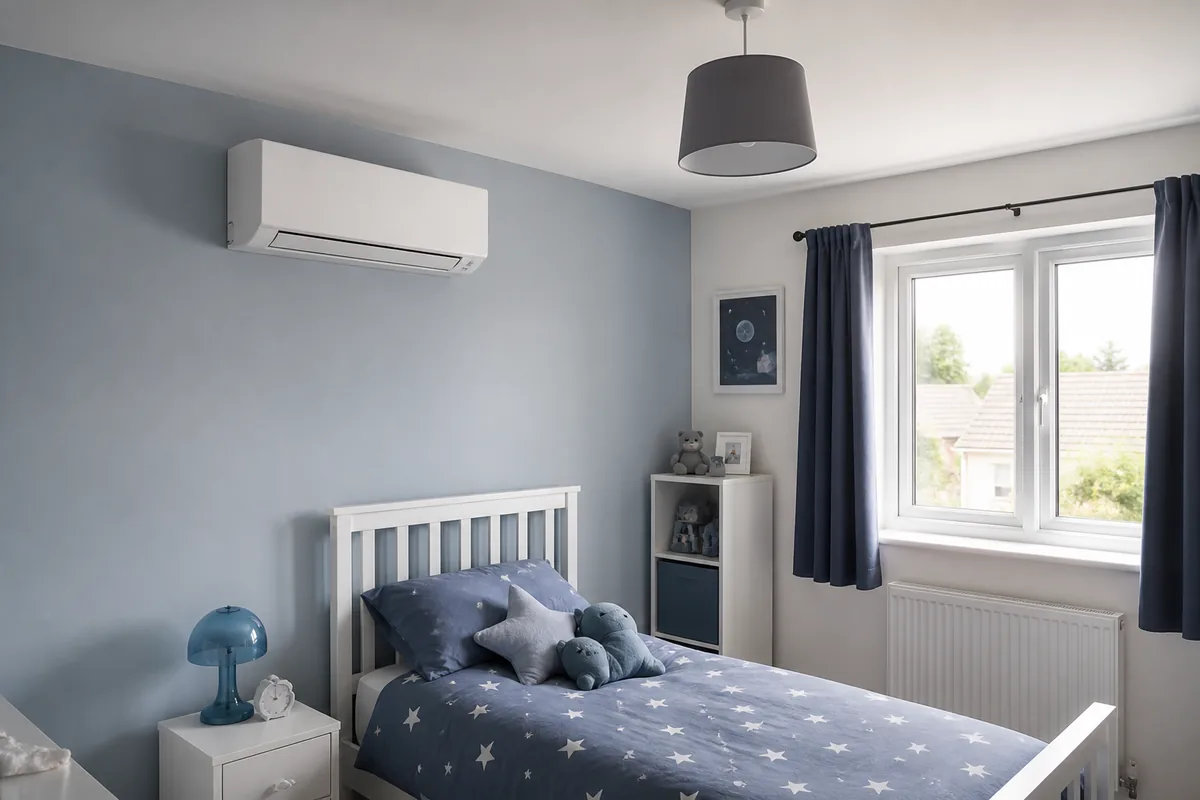
The same Perfera fascia, two outdoor matches
Nominal cooling kW is the starting label, not a floor-area chart from a forum. A west-facing bedroom with a large window can need 3.5 kW while a small north-facing spare room is honest at 2.5 kW or even less. The fascia can look identical. The matched outdoor unit is not. Daikin publishes those as different pairs.
Check the energy label on the exact size. Smaller Perfera capacities often sit in a higher label band than the larger size in the same family. That is not a reason to undersize. A higher label on a unit that runs flat out, or cannot hold the room, is not a bargain.
Short-cycling, a lost afternoon, and a modest 2026 gap
An undersized unit holds for an hour and then loses the room in a heatwave, especially with people, cooking or a door left open. You paid for Perfera features and still sit in a warm room. An oversized unit in a tiny room can reach setpoint, stop, and start again, which feels draughtier and less settled.
Heating use changes the choice again. If this Perfera is the winter heat for an extension, the survey has to look at heat loss, not only summer gain. Energy Saving Trust describes air-to-air heat pumps in that heating role. Say that before anyone orders the outdoor unit.
The 2.5 kW pair is the typical smaller bedroom once the survey agrees. The 3.5 kW pair is a larger bedroom or a modest living room, not a whole open-plan house. Do not treat the price gap as a discount on the same product. Ask for output figures for that size only.
As a 2026 illustration, the installed gap between these two sizes on the same wall is often a few hundred pounds, not a different project. Pipework, electrics and access are nearly the same. The equipment and the matched outdoor are what change. Spending the smaller sum and then adding a second unit next summer costs more than buying the right kW now. It can also mean a second outdoor unit, which is a planning conversation as well as a bill. GOV.UK F-gas rules apply to both sizes. Capacity does not create a DIY version.
Glass, shut doors and the code on the PDF
Give room sizes, window orientation, whether doors stay shut, and how many people use the space in the late afternoon. Ask the installer to write 2.5 or 3.5, the outdoor model, and why. If two firms disagree, the glass and the open-plan link are usually the reason, not the Perfera badge.
Photos of the windows matter as much as the wall where you want the indoor. Ask for the size to be justified, not the cheaper code by default. A 3.5 kW unit in a small shut bedroom can overshoot and cycle. Comfort there is often better on the smaller matched pair, run steadily.
Frequently asked questions
Is the 2.5 kW Perfera just the discounted 3.5 kW?
No. It is a lower nominal capacity with its own outdoor match. It is the right buy only when the survey says the room's gain fits. Cheaper is not the same duty.
Will a 3.5 kW unit cool better in a small bedroom?
It can overshoot and cycle. Comfort in a small shut room is often better on the smaller matched pair, run steadily. Let the survey say so, rather than buying headroom you will not use.
Do both sizes need the same F-gas installer?
Yes. Both are split systems with a refrigerant circuit. Capacity does not create a DIY version.
Is a higher energy label a reason to buy the smaller Perfera?
No. A higher label band on the smaller capacity is not a reason to undersize. A unit that cannot hold the room is not a bargain. Do not invent a SEER to fill the gap.
Core buying guides
Start with these high-intent guides, then dig into the rest of the library.
Related guides
Sources and further reading
How this guide was prepared
This guide was written by the Local AC Installers Editorial Team. We compare official guidance, legislation and established consumer information, separate general information from project-specific advice, and show publication dates and sources. We do not accept installer accreditation claims at face value.