
A delicatessen needs comfort for staff and customers at a glass counter, not a second fridge for the olives. Food temperatures stay inside the refrigerated displays and the rules that govern them. The split or cassette cools the room people stand in, under HSE temperature guidance, and there is no legal maximum. Heat from the cabinet motors, the window and the door is the load. Grease from any hot counter, and condensate from the room unit, must not drip onto food.
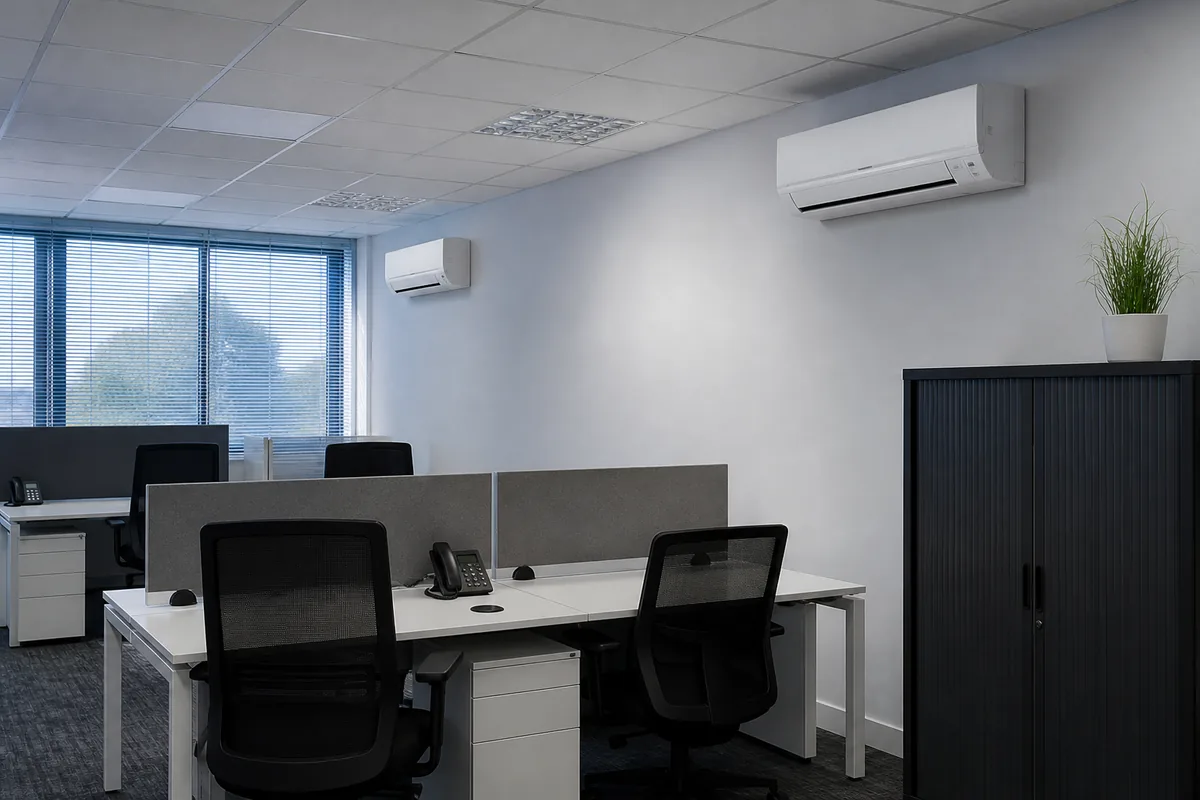
The Saturday queue with the door open
A Saturday queue with the door open is the design hour. A Monday photo with the door shut is not. Tell the truth about lunchtime. A small wall unit can be right for a narrow shop. A cassette suits a wider aisle if the ceiling void exists and it is not over the food. Staff numbers at the glass matter. Do not ask for a wine-cellar setpoint for cooked pies and cheese on display. That is the cabinet's job.
A draught on the neck behind the glass
Staff face the glass for hours. A draught on the back of the neck from a wall unit behind them is the complaint, even when the setpoint is sensible. Aim along the shop or use a cassette that throws into the aisle, not into the collar. Customers on the other side of the glass feel the window sun more than the ham. Do not set 16C to beat the window. The unit delivers its kilowatts. A lower target runs it harder and adds condensate near food. A mid 20s setpoint with the door managed is the workable habit. The room should be a comfortable place to stand. It does not need to be colder than a normal shop. Food coldness belongs in the cabinets. HSE temperature guidance applies, and there is no legal maximum.
Cabinet heat is a survey fact
Deli cabinets are often open or glazed and they reject heat into the room from their own condensers. That heat belongs in the survey. A butcher's rail is a different counter. Here the cabinet motors, the window and the door are the load. Tell the surveyor if fridge condensers dump heat in the shop. The comfort unit has to allow for that heat.
- Cool the standing zone, not the food.
- Include cabinet and glass heat.
- No condensate over the counter.
- Hot food, if you serve it, needs its own extract.
Panini grease and a drain off the food
If you also slice and panini-press, grease is local. Keep the comfort unit out of that plume and keep a proper extract over the hot work. A deli without cooking is a cleaner coil and a simpler job. Say which you are. Test the drain. F-gas certification applies to the install. One unit covers the shop and a kitchen only if there is no grease and no door between them. A greasy kitchen coil will drip dirty water. Keep zones apart.
Stop pointing the shop unit into the cabinet
Do not point the shop unit into the cabinet to help it. You will upset the cabinet and wet the room. Check GOV.UK air conditioning inspections only if the plant is big enough to qualify. The outdoor unit shares a yard with fridge plant. Leave intake air for both, and do not block the cellar hatch. Condensate from the room unit must not drip onto food.
Frequently asked questions
Should the deli be colder than a normal shop?
Not as a room. Food coldness belongs in the cabinets. The room should be a comfortable place to stand, without drips on the counter.
Our fridge condensers dump heat in the shop. Does that matter?
Yes. Tell the surveyor. The comfort unit has to allow for that heat. Do not aim the shop unit back into the cabinet.
Core buying guides
Start with these high-intent guides, then dig into the rest of the library.
Related guides
Sources and further reading
How this guide was prepared
This guide was written by the Local AC Installers Editorial Team. We compare official guidance, legislation and established consumer information, separate general information from project-specific advice, and show publication dates and sources. We do not accept installer accreditation claims at face value.