
A GP waiting room needs a tolerable temperature for people sitting between appointments, and for reception staff who are there all session. A split can provide that comfort. It does not provide infection control. Fresh air is a separate ventilation system. A cassette filter is not a clinical device, and it will not make the room safe in infection-control terms. Cool the waiting room as an occupied space, keep clinical rooms with shut doors as their own zones, and use an F-gas certified company for the refrigerant work.
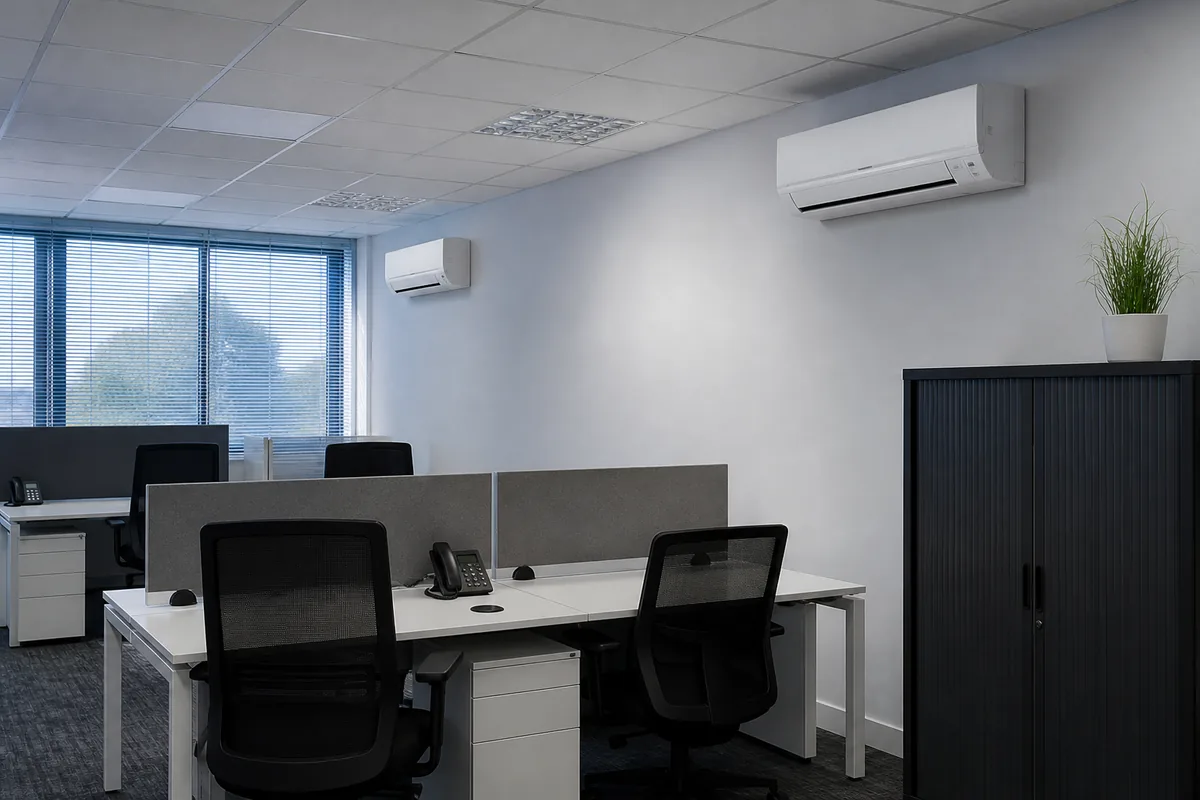
A full waiting room between overlapping clinics
The load is a full waiting room, reception screens, lighting and often a glazed street front, peaking when clinics overlap. People are seated and cannot move away from a draught. Aim air above head height on a fan speed that allows a conversation at the desk. A unit that only works when it is loud will be switched off.
Fresh air that must not become a rogue return
Fresh air, extract and any pressure regime between rooms belong to the ventilation design and to the building's existing plant. A new split must not be piped or ducted so that it becomes a rogue return from a clinical room. HSE workplace temperature guidance covers staff comfort: reasonable conditions, no legal maximum. It is not an infection standard.
Ladders, clinics and a board that is already full
Work has to happen around clinics, with safeguarding and confidentiality. Ceiling access, a ladder in a waiting room and a power shutdown need a slot the practice can actually give. Landlord, NHS property or owner consent may all sit on the core and the outdoor unit.
- Cool the waiting room for comfort.
- Keep fresh air as a separate ventilation system.
- Give closed consulting rooms their own units if they are included.
A drip in the waiting room and a crowded surgery board
Condensate must not drip into the waiting room. A pump needs an alarm reception will notice. The electrical board in a surgery is often full. An electrician should see it before the kit is chosen. An F-gas certified company does the refrigerant work. Session times, including the overlap when the seats are full, are the hours that matter. Low-fan noise and a draught path that misses the seats belong in the selection.
Stop if the filter is written up as infection control
The indoor filter protects the coil and catches ordinary dust. Cleaning it is maintenance. It is not an infection-control measure, and swapping it for a finer mesh does not turn the unit into one. Changing the filter, including to a HEPA mesh, does not make the unit an infection-control system. It still recirculates. If the practice has an infection-control lead, they should hear that plainly before anyone writes a clinical claim into the selection. Ventilation and the practice's infection-control arrangements stay outside this machine. The selection is comfort only, with fresh air excluded or designed separately, and with no infection-control claim.
Frequently asked questions
Can one unit cool the GP waiting room and the consulting rooms?
Not once the consulting-room doors are shut. Consulting rooms with doors are not cooled by the waiting-room unit. If they are in scope, they need their own indoor units, chosen to stay quiet. Do not average them into one waiting-room kilowatt. The waiting room can have its own indoor unit. Each closed room you want cooled needs its own.
Where should the surgery condenser sit?
The condenser should not hum through a consulting-room window or sit where patients gather outside.
Core buying guides
Start with these high-intent guides, then dig into the rest of the library.
Related guides
Sources and further reading
How this guide was prepared
This guide was written by the Local AC Installers Editorial Team. We compare official guidance, legislation and established consumer information, separate general information from project-specific advice, and show publication dates and sources. We do not accept installer accreditation claims at face value.