
An ice cream parlour needs cooling most on the days the door barely shuts. Queues stand in the opening, display freezers reject heat into a small room, and the street air walks in with every customer. A split can improve the seating and the serving side. It will not hold a cold setpoint in the doorway, and chasing one will only raise the running hours. Survey those door openings and the cabinet heat. An F-gas certified company should install the comfort unit.
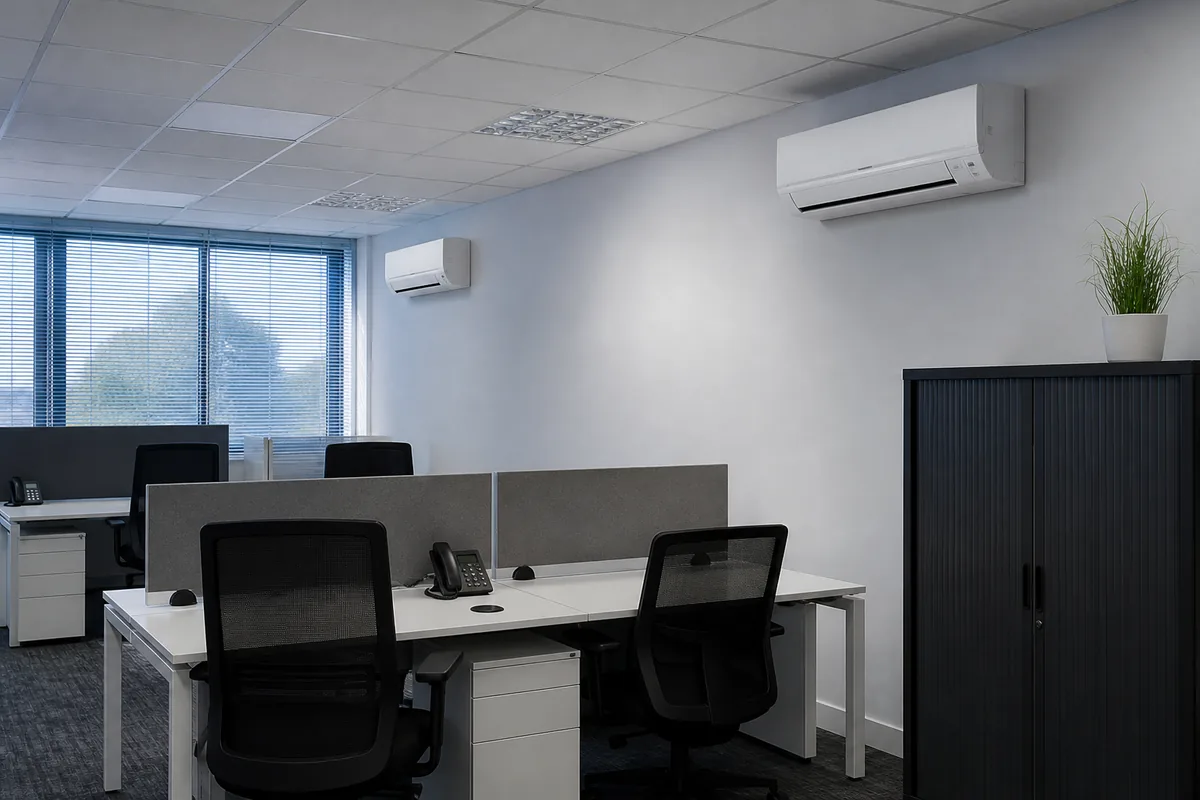
A sunny Saturday with the parlour door held open
Trade and heat arrive together. A closed-door calculation taken in April will not describe a sunny Saturday with the door held open. Tell the survey how long the door stays open and how deep the queue stands. The seats further in may be holdable. The threshold will track the pavement.
Staff at the scoops are in a warm spot for a long hot shift. HSE workplace temperature guidance asks for reasonable comfort and sets no legal maximum. A livable mid 20s in the seat zone is a better target than 16C with the door open. The hot-weekend hours matter more than a winter opening time.
A shallow room, a sticky filter and a tight yard
Parlours are often shallow. Walk both the first table and the rear booth. The outdoor unit in a tight rear yard has to stay clear of bins and the cabinet plant's own condensers. Landlord consent is a usual limit. Filter cleaning has to suit a sticky shop, on a short interval.
Cooling a humid shop full of door air makes a lot of condensate. The drain has to keep up. A pump needs an alarm that someone hears during service. An F-gas certified company should install the comfort unit. Cabinet refrigeration stays excluded. Use the open-door condition, and size the drain for a humid, busy hour.
Frequently asked questions
Why can the parlour not reach a cold setpoint in summer?
Because the door is open in those hours and the cabinets are rejecting heat. Hold the seating zone you can. The doorway will stay close to the street.
Should we point the unit at the display freezers?
No. That fights the cabinet plant. Do not aim the comfort unit into an open freezer. Aim comfort cooling at staff and seats. Leave product temperature to the refrigeration contractor.
Does a bigger unit fix an open parlour door?
It uses more electricity and may still lose at the threshold. Change the door assumption before you only change the kilowatts.
Do the display cabinets add heat even when the seats are the target?
Yes. Display cabinets and a storage freezer in the room reject heat all day. That gain remains when you are trying to feel cool. Product temperature still belongs to the cabinet plant.
What if the parlour has no ceiling void?
A cassette only works with a real void and a filter you can reach after close. One wall unit can draught the first table and miss the rear booth, or the reverse. Walk both.
Can the comfort circuit share a freezer isolator?
No. The circuit should not be borrowed from a freezer isolator. The drain also must not drip where customers queue.
Core buying guides
Start with these high-intent guides, then dig into the rest of the library.
Related guides
Sources and further reading
How this guide was prepared
This guide was written by the Local AC Installers Editorial Team. We compare official guidance, legislation and established consumer information, separate general information from project-specific advice, and show publication dates and sources. We do not accept installer accreditation claims at face value.