
Setpoint is the temperature the unit is aiming at. Fan speed is how hard that air moves across the room. If you feel stuffy or you want less throw onto the sofa, change the fan before you change the setpoint. A lower setpoint does not add kilowatts and it does not cool faster in any useful way. It keeps the compressor working and can ice the coil if you park the remote at 16C. Doors shut and windows closed still apply, or neither control will make sense.
The target and the breeze
The setpoint tells the system when the room air, as the sensor reads it, is close enough. The fan decides the breeze and the noise. High fan can feel cooler on skin because moving air strips heat from you, even when the number on the remote has not changed. Low fan is the quiet night setting, with a shorter throw.
People treat the down arrow as the only comfort control. The room then overshoots, the coil gets very cold, and someone wakes up at 3am to switch it off. Teach the fan buttons in the same minute as the temperature, or the household will never use them. Doors shut and windows closed still apply, or neither control will make sense.
Auto fan, vanes and a blast at the chair
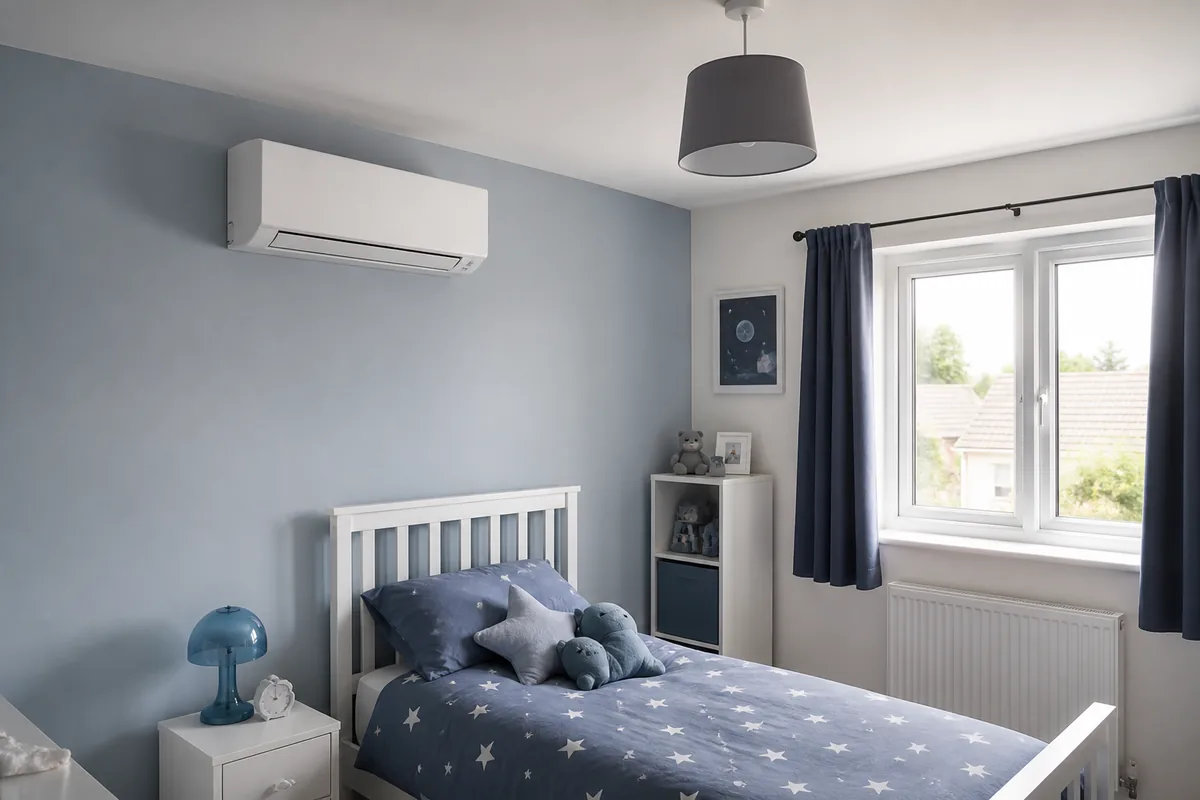
Auto fan often starts high while the room is far from the setpoint, then drops. That can be right in a living room and too gusty over a bed. If auto keeps waking you, pick a fixed low or medium speed and leave the setpoint alone. If someone sleeps under the indoor unit, do not leave the handover on auto fan.
Vane direction sits beside fan speed. Aim the air along the ceiling if it is hitting faces. A vane pointed at the chair, plus high fan, feels like a blast. The cure is aim and speed. It is not a colder target that makes the same blast colder. Many draught complaints are a button and a vane, not a bracket that needs moving.
When the room itself is too warm
Use the setpoint when the room is genuinely too warm or too cool at the number you chose, with doors and windows in the state the unit expects. Move it by a degree and wait. The capacity is still the kilowatt rating. If a one-degree change never arrives, you are short of capacity, losing air through a door, or looking at a fault.
Heating mode follows the same split of jobs. A reverse-cycle unit, as Energy Saving Trust describes, heats with a target and a fan. Turning the target to the maximum does not make a cold morning instant. It makes the run longer.
Frequently asked questions
I feel warm. Should I drop the setpoint or raise the fan?
If the room is near the target and you want more air movement, raise the fan. Drop the setpoint by a degree only if the room itself is too warm once the air is moving.
Why does high fan feel colder?
Moving air takes heat off your skin. The setpoint has not changed. That is why fan speed is the comfort control and 16C is a misuse of the target.
Is the lowest fan always best in a bedroom?
It is the quietest and the least draughty. If the room then stays too warm, the unit may be short of capacity or the door may be open. Do not answer that by leaving 16C on a low fan all night without checking those.
What if the air hits the sofa or the bed?
Aim the vane along the ceiling and lower the fan before you move the setpoint. A handover should set a livable setpoint and show fan speeds in the room you will sit in.
Is 16C a stand-in for a higher fan?
No. Avoid 16C as a substitute for a higher fan. A lower setpoint does not add kilowatts. It keeps the compressor working and can ice the coil.
Core buying guides
Start with these high-intent guides, then dig into the rest of the library.
Related guides
Sources and further reading
How this guide was prepared
This guide was written by the Local AC Installers Editorial Team. We compare official guidance, legislation and established consumer information, separate general information from project-specific advice, and show publication dates and sources. We do not accept installer accreditation claims at face value.