
Shut the internal doors of the room the split is serving. The indoor unit cools the air that passes through it, and an open door invites the landing, the stair and the next bedroom into that load. The survey almost certainly sized a closed room. Leaving the door open and then dropping the remote to 16C does not add kilowatts. It makes one coil work on a volume it was not given. Fan speed can spread air further. It does not turn one head into a whole-house system.
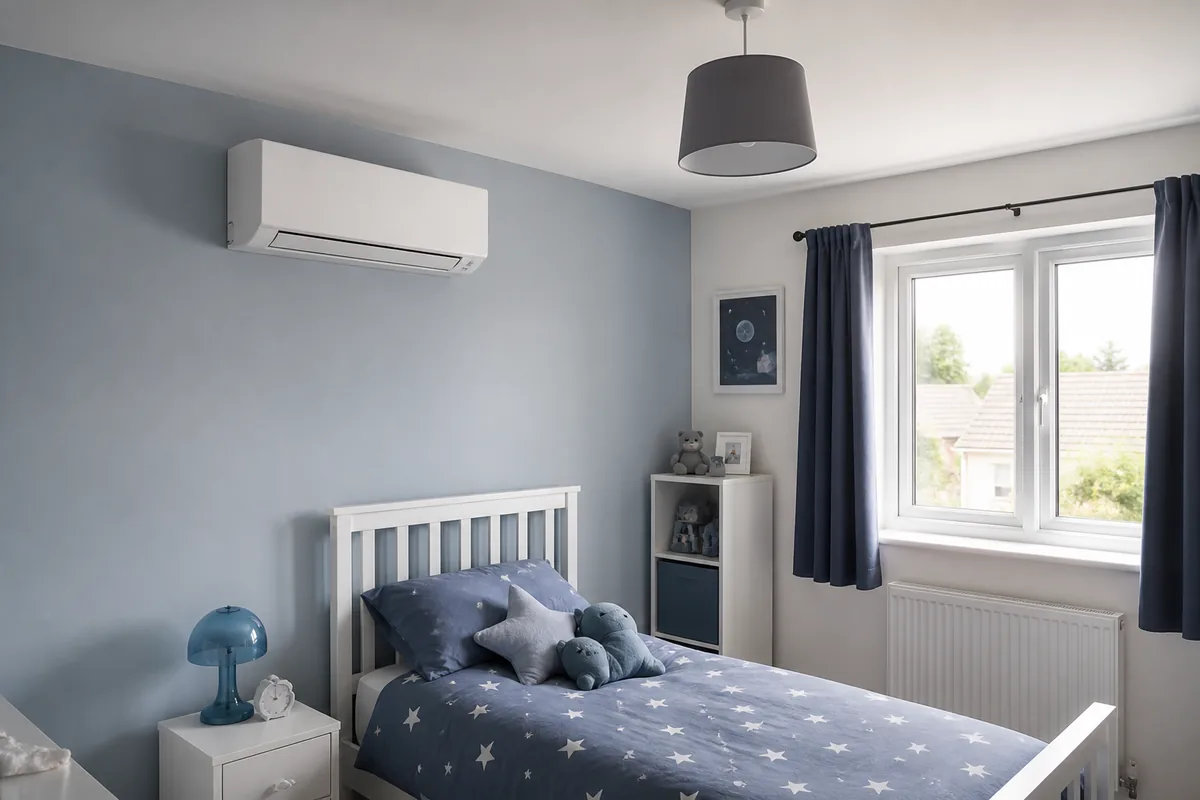
The closed room the survey priced
A single wall split is a room unit. With the door shut it recirculates that room, pulls the temperature toward the setpoint, and then eases off if the capacity was honest. With the door open it leaks cool air out and takes warm air in from the rest of the house. The thermostat, wherever it sits, gets a muddled picture. A little air will spill into the next room, and the served room will struggle. That spill is not a design. Shut the door or add an indoor unit for the second room. Size the indoor unit for the volume you will actually enclose, including rooms you always leave open onto a kitchen or a stair.
Open-plan spaces are different only because there is no door. They have to be sized for the whole volume, including the kitchen if it shares the air. If your quote was for a lounge and you now cool the lounge plus the hall plus the kitchen, you have changed the job. There is no door to shut in a true open-plan room. Use doors where they exist, such as a kitchen that can close off.
Landings, kitchens and a second indoor unit
People open the bedroom door for pets, children or a breeze. The bedroom indoor then spends the night on the stair. If the landing must be tolerable, it needs its own plan, not a door wedge. For the first week, keep the door shut so you learn the unit. After that, opening it is a choice about comfort upstairs, made with the cost in view. Fan speed throws air further and can feel breezier. The landing is still outside the closed-room load. Fan speed does not increase the unit's kilowatts. A colder setpoint does not replace the missing indoor unit. Noise travels through an open door as well. A quiet low fan with the door shut is the bedroom pattern. The outdoor unit's hum is a separate path through the wall, solved by siting, not by the remote.
Cooking heat through an open door swamps a living-room split that was never given the hob. Shut the door while the unit runs, and use the kitchen extract for steam. The split is not that extract. Condensate from the split must still go to its drain, not into a habit of propping doors to share the cool. If you want two rooms on one outdoor unit, that is a multi-split with two indoors, discussed at survey. If the landing must be cool as well, say so, so the reply includes another indoor or an honest limit. Planning Portal rules still apply to the outdoor unit. F-gas installation applies either way. Door discipline is free. A second indoor is not, and it is the honest fix.
Core buying guides
Start with these high-intent guides, then dig into the rest of the library.
Related guides
Sources and further reading
How this guide was prepared
This guide was written by the Local AC Installers Editorial Team. We compare official guidance, legislation and established consumer information, separate general information from project-specific advice, and show publication dates and sources. We do not accept installer accreditation claims at face value.