
A garden office is a light building used all day, so it overheats in July and can be miserable in January. A reverse-cycle split is often the right machine once the shell is insulated, the power supply is a real circuit from the house, and the outdoor unit has a legal place to sit. Outbuilding rules and air source heat pump rules are separate questions. Survey the pod, the cable route and the boundary before you order. An F-gas certified company should install the refrigerant side. A tidy badge on a unit fed by a DIY socket lead is not an install.
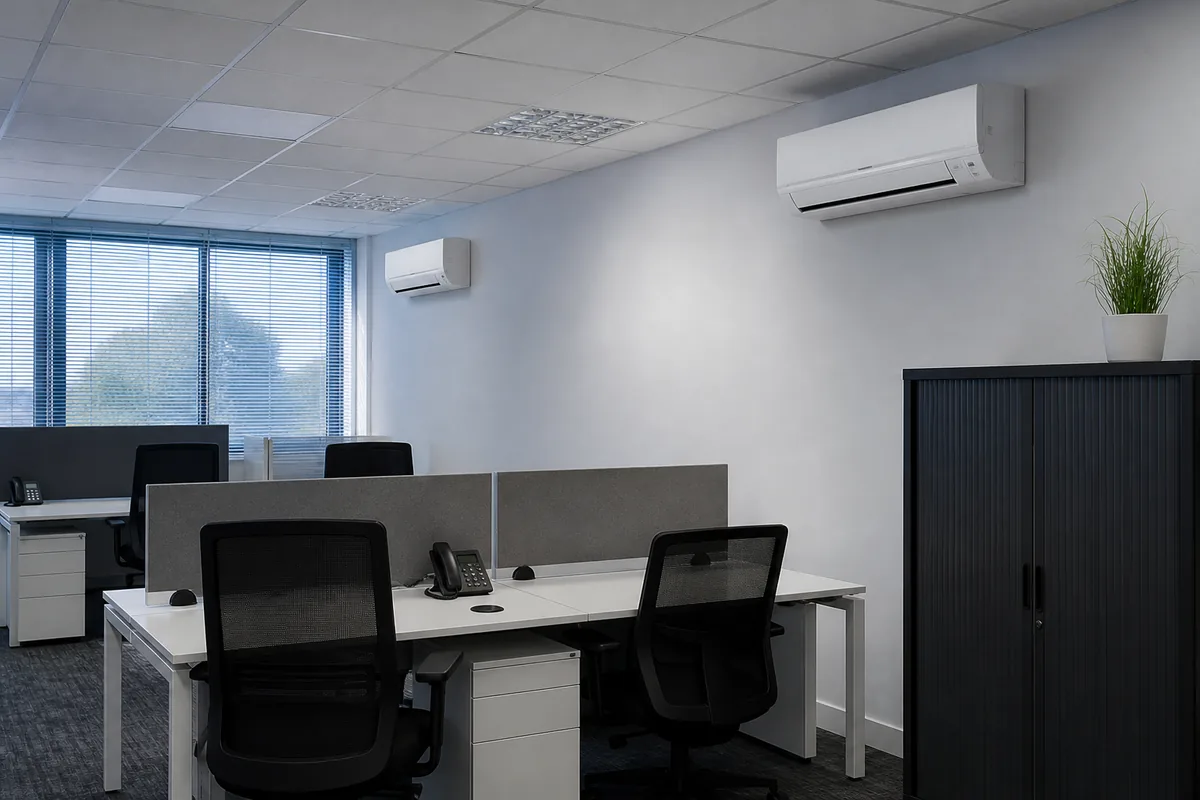
A timber office with the door shut at three
Timber and composite garden rooms move in temperature faster than a brick house. By mid-afternoon the roof panels, a skylight and a west window dominate, and the computers have been on since morning with the door shut for calls. The indoor unit has to throw off the desk and the microphone, or the call is the first thing that fails.
Daytime screens and a thin roof
Insulation and external shade cut the kilowatts you need and the hours you run. Size for that daytime peak. Energy Saving Trust describes these reverse-cycle machines as air-to-air heat pumps. A cooling-only unit leaves you with a fan heater in February, which is a poor pairing in an outbuilding.
- Measure internal floor area and note roof windows.
- Say how many people and screens are in at once.
- Ask what insulation is in the walls and roof, not the sales name of the pod.
- Keep airflow off the desk and the microphone.
Power from the house consumer unit
Many garden offices arrive with a lighting circuit or a single socket fed by a garden cable that was never meant for a heat pump. The split needs a dedicated supply matched to the manufacturer, protected and certified properly. In a dwelling supply that often means notifiable electrical work by a Part P competent person. This article will not tell you how to wire it. The route of that cable, the spare ways in the house consumer unit, and whether the garden building has its own small board are price and safety items. GOV.UK Approved Document P is the building regulations guidance for that electrical work. Refrigerant joints, vacuum and charge stay with the F-gas certified installer, who may be a different firm from the electrician. They still need one coordinated plan.
The pod and the heat pump are separate planning tests
A garden room can be permitted development or it can need planning permission depending on height, location and how much of the plot it covers. That decision is separate from whether an air source heat pump on or beside it is permitted. Listed houses, conservation areas and flats over gardens add more constraints. The Planning Portal pages on outbuildings and on air source heat pumps are the place to start, then your local authority if the plot is awkward. Put the outdoor unit where it can breathe, where condensate will not ice a path, and where it is not humming on the boundary under a neighbour's window. Security matters: a condenser in an open side passage is easier to damage. Warranty registration and a filter you can wash without crawling through shrubs matter more than the indoor colour.
Stop if the supply is still a socket lead
A garden office usually cannot run a heat pump off a normal outdoor socket or a pond-pump spur. Stop and have a competent electrician assess the supply before anyone orders a head. A tidy badge on a DIY lead is not an install, and a cooling-only unit in an uninsulated shell is a poor winter pairing.
Frequently asked questions
Does a garden office need planning permission for air conditioning?
The office and the heat pump are separate tests. Some sites pass both under permitted development, and some need an application. Check the Planning Portal notes and the constraints on your house before you order.
Will it heat the office in winter?
A reverse-cycle unit can, if it is sized for the heat loss of a thin building and you have insulation rather than a bare shed. Ask for heating capacity at a low outdoor temperature.
Core buying guides
Start with these high-intent guides, then dig into the rest of the library.
Related guides
Sources and further reading
How this guide was prepared
This guide was written by the Local AC Installers Editorial Team. We compare official guidance, legislation and established consumer information, separate general information from project-specific advice, and show publication dates and sources. We do not accept installer accreditation claims at face value.