
Trafford Council's householder design guide says air conditioning units should be discreetly located at low level to the rear or side of a property to minimise their visual effect on the building and street scene. Noise is also a material concern. This is design guidance, not an automatic grant of planning permission. Check the planning status of the particular cooling system, maintain adequate airflow and service access, and apply stricter heritage care in places such as the Bowdon Conservation Area.
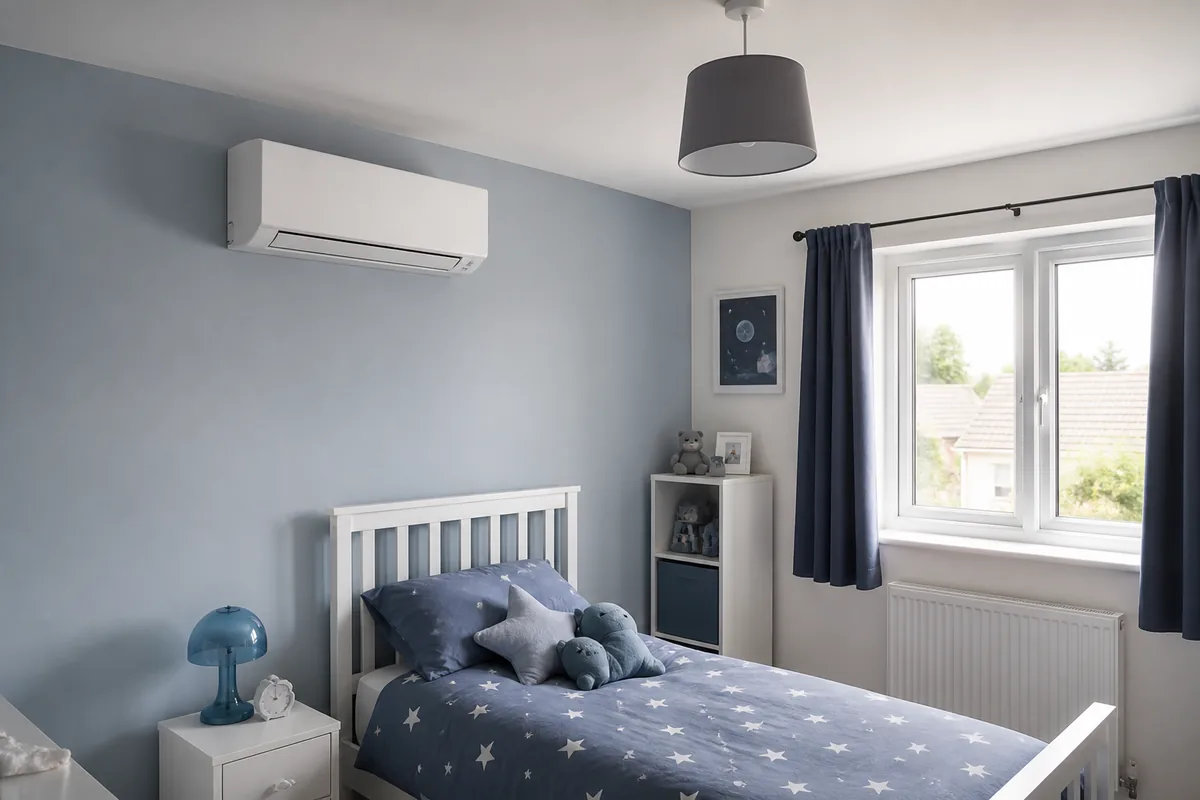
Start with Trafford's siting principles
Trafford's Guide for Designing House Extensions has a specific section on air conditioning units. It says prominent elevations can look out of character in a residential setting and identifies visual impact and potential noise pollution as important considerations. Its preferred approach is a discreet, low-level position to the rear or side.
Treat that as the start of option selection, not the whole design. A visually hidden position can still be unsuitable if it traps discharge air, blocks access, sits beneath a neighbour's bedroom or requires intrusive pipework. Compare several locations on a drawing before equipment is ordered.
- Keep equipment away from prominent street-facing elevations where practicable.
- Check distances to neighbouring windows, patios and boundaries.
- Preserve manufacturer airflow and maintenance clearances.
- Show pipework, cable, drainage and any screen as part of the visual assessment.
Check planning rather than assuming permission
A domestic unit used solely for cooling should not be assumed to qualify under air source heat pump permitted development rules. Planning Portal states that the heat pump rights are conditional and that the equipment must not be used solely for cooling. It also notes that permitted development rights differ for flats, maisonettes and other buildings.
Ask Trafford Council whether an application is needed for the exact unit and location, particularly where there is more than one unit, a flat roof, a prominent elevation, a flat or a restriction from an earlier permission. A lawful location from a lease or title perspective does not determine the planning question.
Design for neighbours and maintenance
Trafford's guide warns that noise from badly considered or maintained air conditioning can be intrusive and that excessive noise can be investigated as a statutory nuisance. Manufacturer data should be evaluated for the proposed arrangement and operating periods, including low-frequency or tonal character and reflections from walls.
Use stable supports and suitable vibration isolation, and avoid placing the unit where service access depends on entering neighbouring land. Screens must not cause recirculation or invalidate acoustic assumptions. Agree a condensate route that does not discharge onto paving, boundaries or façades, then retain access for cleaning and fault repair.
Apply extra care in Bowdon and other heritage areas
Trafford's guide says proposals affecting conservation areas, listed buildings and other heritage assets must be carefully designed to complement their distinctive qualities, with higher standards applied. It recommends seeking early advice. The Bowdon Conservation Area appraisal records the area's special character and supports its management through development control.
Do not infer from the Bowdon appraisal that one standard unit location will be acceptable everywhere. Check whether the property lies within the designated boundary, whether it is listed and whether an Article 4 direction or planning condition affects it. A rear or side location may reduce visual impact but can still affect historic fabric or important views.
Frequently asked questions
Where does Trafford guidance suggest putting an air conditioning unit?
The householder design guide recommends a discreet low-level position to the rear or side to reduce visual impact, but the chosen position must also address noise, airflow, access, drainage and planning.
Does following the Trafford design guide guarantee planning permission?
No. Guidance informs design, while the need for permission and the decision on an application depend on the particular property and proposal.
Can a screen hide the unit?
A screen may reduce visual or acoustic impact, but it must be included in the design assessment. It cannot obstruct airflow, create recirculation or prevent safe maintenance.
Are the rules different in Bowdon Conservation Area?
Heritage impact receives added scrutiny. Confirm the boundary, listing status and any additional controls, then seek early advice on the specific location and effect on historic fabric and character.
Core buying guides
Start with these high-intent guides, then dig into the rest of the library.
Related guides
Sources and further reading
How this guide was prepared
This guide was written by the Local AC Installers Editorial Team. We compare official guidance, legislation and established consumer information, separate general information from project-specific advice, and show publication dates and sources. We do not accept installer accreditation claims at face value.