
A hotel guest room needs quiet cooling that does not blow on the bed, stops when the room is empty, and can be serviced without a ladder in the corridor at 9pm. Key card or occupancy interlocks and window contacts are normal controls, not gadgets. Plant should live where an engineer can reach condensers without entering every room. Survey one typical room, the worst solar room, and the roof or yard before you multiply a domestic quote by your key count. Refrigerant work needs an F-gas certified company. Above 12 kW of effective rated cooling output, which a hotel wing usually reaches, inspection duties can apply.
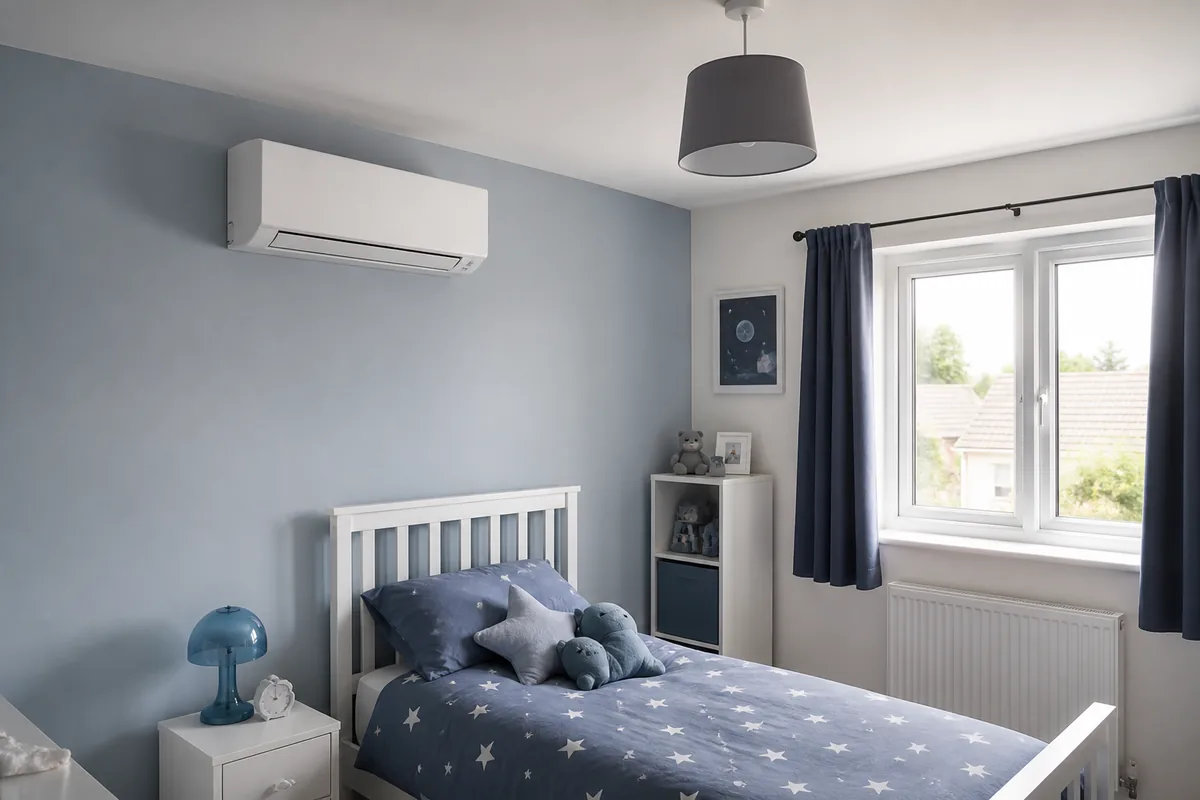
Night noise and the pillow
Guests notice indoor fan noise, outdoor compressor noise through a window, and a vane aimed at the pillow. Commission a night speed that holds a small room, and mount the indoor unit so the bed is outside the jet. A unit above the headboard is a complaint generator. Test that night fan speed in a furnished room. The outdoor unit for that room, or the branch that serves it, must not sit on a lightweight panel beside the glazing.
Empty rooms, filters and a route to the plant
An unoccupied room that cools all afternoon is how hotel electricity bills swell. Interlocking the indoor unit with the key card, a room sensor, or the building system is a design choice to make at survey. Set a sensible occupied setpoint and a setback. Staff need a way to pre-cool a room before arrival without leaving it at a deep chill all day. Controls that only the installing engineer understands will be bypassed by week two. Write the operating rules down.
Indoor filters need a housekeeping or maintenance routine that respects occupied rooms. Outdoor coils need a route that does not depend on a guest checking out. Put isolators, pumps and valves where night staff can reach them. A condensate leak into the room below is a bigger cost than a pump alarm you skipped. Roof plant and rear podiums are easier to isolate than a box on every balcony.
Outdoor plant can be arranged so engineers reach condensers without entering every room. Filters and some drains still need room access. Plan that access in the maintenance routine and the plant layout. Hire a contractor with a spares habit and a response time, not a domestic team that fitted one flat last summer.
Survey one typical room, the worst solar room, and the roof or yard before you multiply a domestic price by the key count. Say whether rooms can come out of service. Empty-room control and service access belong in the first design, not as an afterthought.
Balcony boxes and a wing over 12 kW
Balcony units clash with planning, the lease and the guest who wants the door open. The Planning Portal air source heat pump notes still apply to hotel plant. Count cooling output across the building. GOV.UK inspection guidance applies over 12 kW effective rated output, and hotels usually get there. A handful of small rooms might sit under the line. Most hotels do not. F-gas certification applies to refrigerant work on each system.
Frequently asked questions
Should guest room units run when the room is empty?
Prefer a key card, sensor or building control that setbacks or stops the unit. Pre-cool before arrival if you need to, on a timer staff control.
Can engineers service the system without entering the room?
Outdoor plant can be arranged that way. Filters and some drains still need room access. Plan that access in the maintenance routine and the plant layout.
Does a hotel need TM44 inspections?
If effective rated cooling output is over 12 kW, yes, the inspection duty can apply. A handful of small rooms might sit under the line. Most hotels do not.
What if guests open the window?
Assume they will. A window contact that pauses the unit is a normal control, not a gadget. Cooling the street through an open sash is wasted plant.
Core buying guides
Start with these high-intent guides, then dig into the rest of the library.
Related guides
Sources and further reading
How this guide was prepared
This guide was written by the Local AC Installers Editorial Team. We compare official guidance, legislation and established consumer information, separate general information from project-specific advice, and show publication dates and sources. We do not accept installer accreditation claims at face value.