
Indoor-unit water leaks are commonly linked to a blocked, disconnected or poorly graded condensate drain, a dirty or failed pump, a displaced drain tray, dirty filters, coil icing or condensation on inadequately insulated pipework. Turn the system off if water could reach electrics, ceilings or furnishings, contain water only where it is safe and follow the manufacturer's isolation instructions. Do not keep running the unit or open refrigerant and electrical compartments. Arrange competent inspection and test the full drain route after repair.
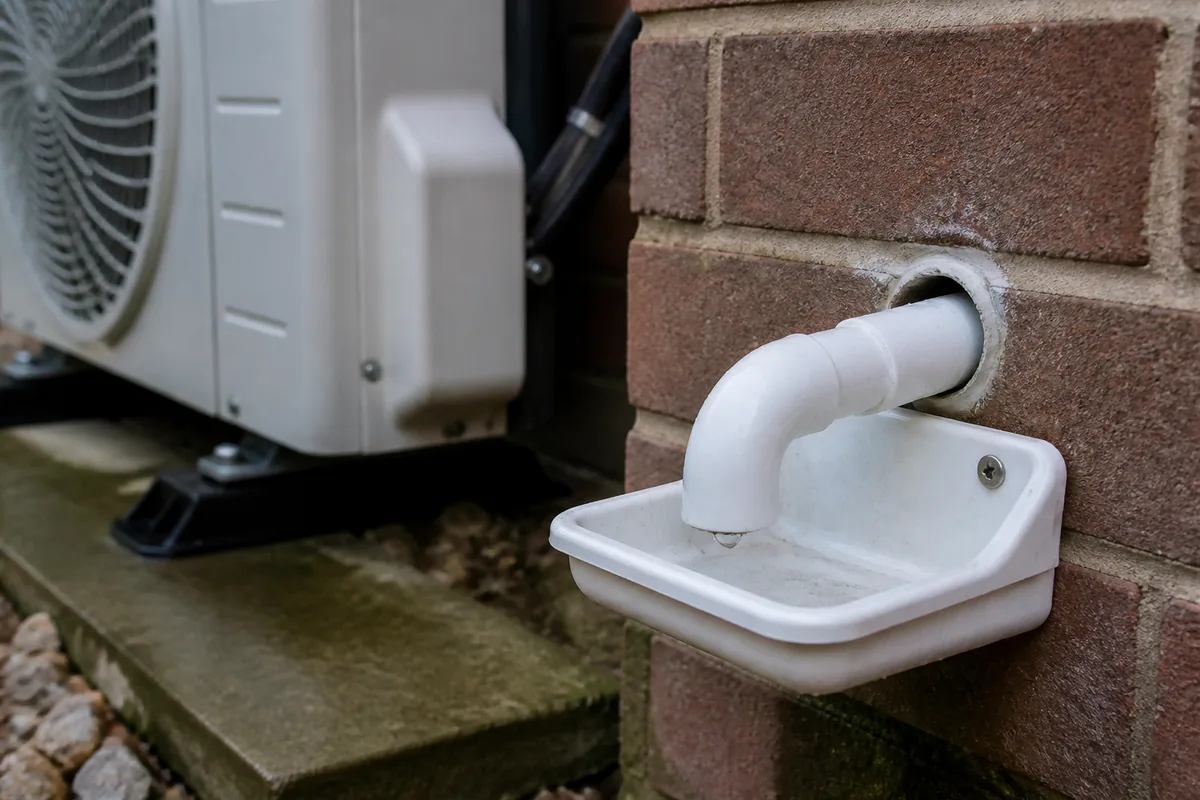
Act safely and limit damage
If water is near sockets, wiring or the consumer unit, avoid contact and isolate power only if this can be done safely. A competent electrician may be needed where electrical equipment has become wet.
Protect floors and possessions without standing beneath a loose ceiling or opening the air conditioner. Photograph the leak, note whether cooling was running and record recent maintenance or building work for the technician.
Drain and pump causes
Dust and biological material can obstruct a drain tray outlet or pipe. Backfall, sagging pipe, a loose joint or an unsuitable termination can also return water towards the indoor unit. These defects may appear only during humid weather when condensate volume rises.
A pump can fail because of contamination, float problems, power loss, poor mounting or a blocked discharge. Replacing a pump without cleaning and testing the whole route may leave the original cause unresolved.
- Check whether the leak starts immediately or after prolonged cooling.
- Note pump noises or alarms.
- Look for water marks along concealed routes.
- Ask for a witnessed drain test after repair.
Airflow, ice and insulation causes
Restricted filters or fan problems can reduce airflow and contribute to a cold coil icing. When that ice melts, the tray and drain may be overwhelmed. Refrigerant or control faults can also contribute to icing and require qualified diagnosis.
Cold pipework or fittings can sweat if vapour-resistant insulation is missing, damaged or poorly sealed. This water may resemble a drain leak but needs the insulation defect and any underlying operating condition corrected.
Preventing another leak
Keep filters and drains maintained according to the manufacturer and service plan. Pumps, concealed trays and drain access points should remain reachable rather than being sealed behind finishes.
After work, test the system long enough to produce condensate and check the tray, pump, pipe route and discharge. Repair water-damaged finishes only after the source is corrected and the construction has been assessed and dried appropriately.
Frequently asked questions
Can I keep using the unit if it only drips slightly?
It is unwise. A small visible drip can indicate a larger concealed problem and may reach electrics or building fabric. Switch off and investigate.
Does a water leak mean refrigerant is escaping?
Usually the visible liquid is condensate water, but icing caused by a refrigerant fault can contribute. Refrigerant diagnosis requires qualified personnel.
Can a dirty filter cause a leak?
It can contribute by restricting airflow and encouraging icing, but the drain and other operating conditions still need checking.
Why does the leak happen only on humid days?
The unit removes more moisture when indoor air is humid, exposing a partly blocked drain, marginal fall or weak pump that copes under lighter conditions.
Core buying guides
Start with these high-intent guides, then dig into the rest of the library.
Related guides
Sources and further reading
How this guide was prepared
This guide was written by the Local AC Installers Editorial Team. We compare official guidance, legislation and established consumer information, separate general information from project-specific advice, and show publication dates and sources. We do not accept installer accreditation claims at face value.