
An air conditioner may fail to cool because of an incorrect mode or set point, dirty filters, blocked airflow, open windows, extreme room heat gain, ice, a drainage safety switch, sensor or electrical faults, or a refrigerant-system problem. Start with safe user checks in the manual. Clean only accessible filters, clear external airflow without opening equipment and note any fault code. If cooling remains poor, ice forms, breakers trip or refrigerant failure is suspected, stop resetting the system and arrange competent diagnosis.
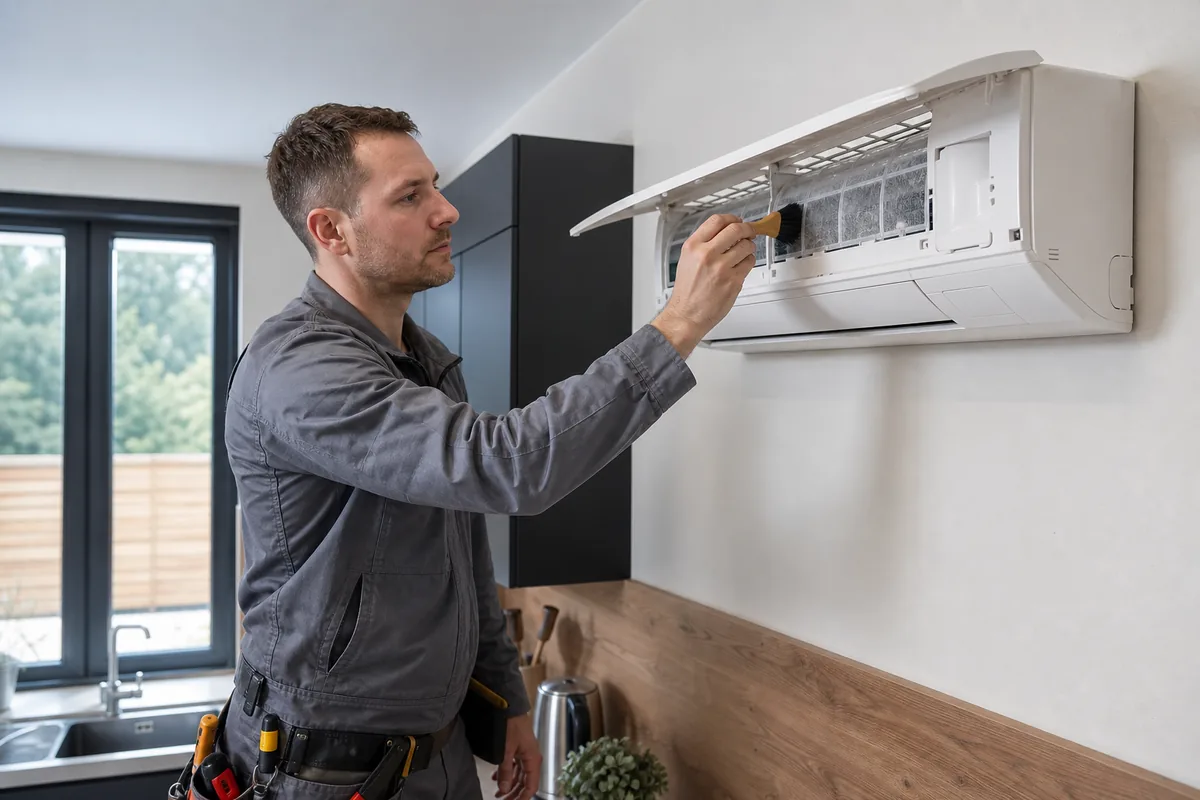
Check controls and room conditions
Confirm cooling mode rather than fan, dry, heating or automatic mode, and set a temperature below the room temperature. Allow the delay described in the manual because compressors may not restart immediately after being switched off.
Close windows and external doors while cooling. Strong sun, cooking, many occupants or hot loft fabric can exceed the expected load. If the unit once coped with the same conditions but no longer does, a maintenance or fault issue is more likely.
Check airflow safely
A dirty filter or blocked indoor air path reduces output and can contribute to coil icing. Clean accessible filters only as instructed. Do not insert tools into the fan or dismantle the casing.
Check that the outdoor unit is not covered by stored objects, vegetation or loose debris. Do not wash or open electrical equipment unless the manufacturer gives a safe user procedure. A condenser in a hot enclosed space may recirculate its own discharge air.
- Record indoor and outdoor conditions.
- Photograph or write down fault codes.
- Check whether one or all indoor units are affected.
- Note ice, water, noise and when the fault began.
When ice or water appears
Ice can be associated with restricted airflow, control faults or refrigerant-side problems. Continuing to run a frozen unit can lead to water leakage when the ice melts. Follow the manual's shutdown guidance and arrange inspection if icing recurs.
Water leakage can trigger a pump or float safety device on some installations. A blocked drain may therefore stop cooling as well as produce visible water. Do not bypass a safety switch to keep the system running.
Faults that need a professional
Compressor, fan, sensor, control-board and electrical-supply faults need competent testing. Repeated breaker operation, burning smells or damaged cables require prompt isolation if safe and electrical attention.
Low refrigerant is not a consumable condition. If a leak is suspected, qualified personnel should locate and repair it, pressure test as appropriate and restore the system in accordance with legal and manufacturer requirements.
Frequently asked questions
Why is the air conditioner blowing air but not cold air?
It may be in fan mode, delaying compressor restart, affected by poor airflow or have a control, electrical or refrigerant fault. Follow the manual's basic checks before arranging diagnosis.
Should I set the temperature as low as possible?
No. A very low set point does not make an ordinary system cool faster and may increase running time. Use a reasonable setting and address the underlying fault.
Can I refill the refrigerant myself?
No. Refrigerant work can be legally controlled and requires appropriate competence. A loss of charge also needs leak investigation rather than blind refilling.
Why does cooling stop after a few minutes?
Possible causes include normal control cycling, a safety device, drainage issue, icing, overheating or another fault. Record the sequence and any code for a competent technician.
Core buying guides
Start with these high-intent guides, then dig into the rest of the library.
Related guides
Sources and further reading
How this guide was prepared
This guide was written by the Local AC Installers Editorial Team. We compare official guidance, legislation and established consumer information, separate general information from project-specific advice, and show publication dates and sources. We do not accept installer accreditation claims at face value.