
Mini-split air conditioning can suit many small UK server rooms if the unit is selected for continuous process duty, correct capacity, airflow and year-round operation. It is not automatically equivalent to close-control data centre plant, so verify resilience, monitoring, condensate and maintenance access before relying on it.
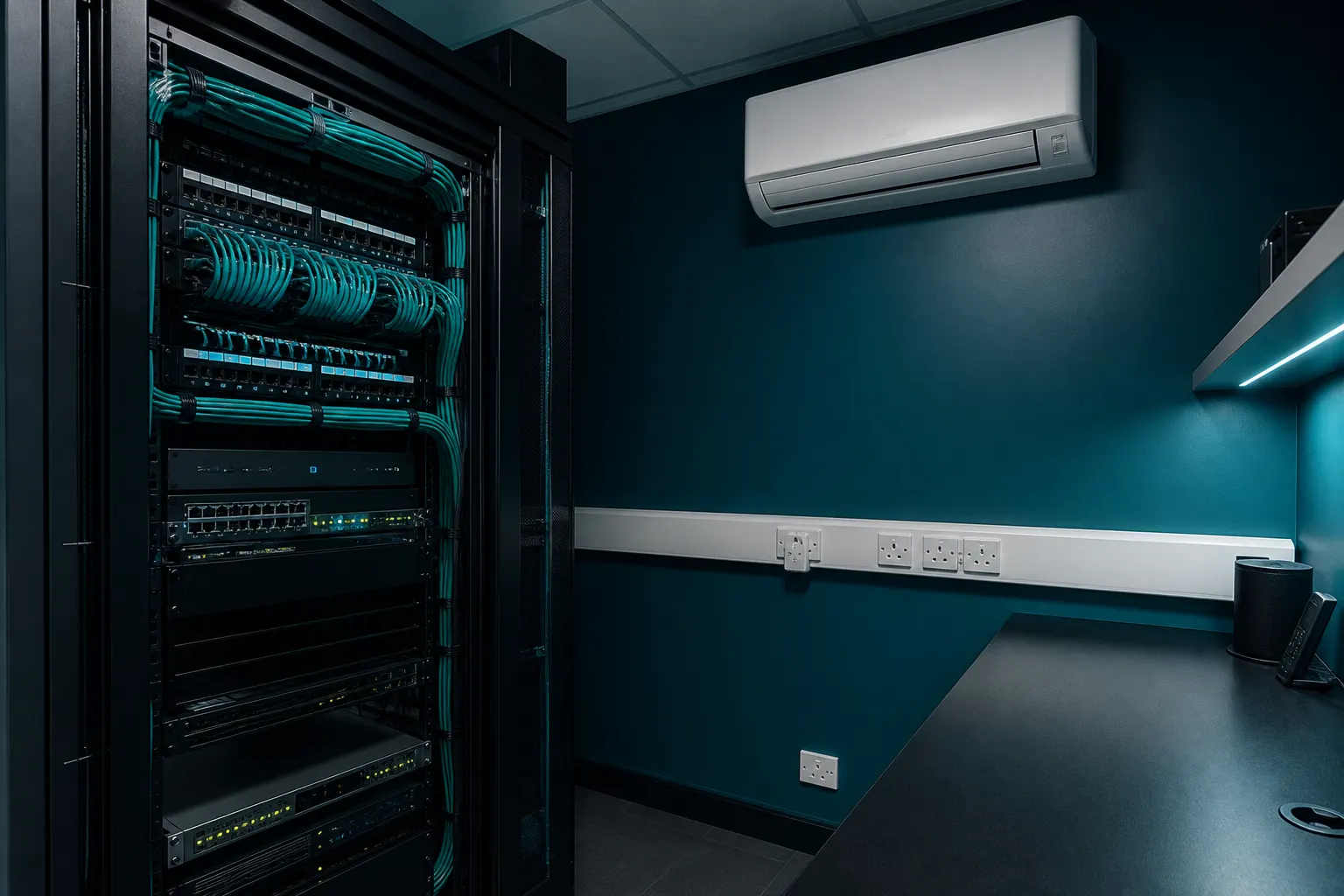
Where mini-splits are a practical fit
Small IT cupboards and modest server rooms often use a wall-mounted or ceiling mini-split connected to an outdoor condenser. Compared with portable units, a correctly installed split usually offers better efficiency, quieter indoor delivery and a proper refrigerant circuit installed by qualified engineers.
Energy Saving Trust guidance on air-to-air heat pumps is useful context for efficiency and operation of split-type systems generally, but IT rooms still need process-specific design for continuous heat loads.
Check continuous and low-ambient capability
Comfort-focused products may assume intermittent use or limited winter cooling demand. Server rooms can need cooling while outdoor temperatures are low, especially in sealed rooms with steady electrical load.
Ask the supplier to confirm operating limits, any low-ambient kit required, and whether the control logic is suitable for stable process temperatures rather than wide comfort bands.
- Size from measured IT load plus justified growth.
- Place supply air to serve rack inlets where practical.
- Use independent inlet temperature monitoring.
- Plan what happens if the single system fails.
Airflow and controls still decide success
A mini-split that bathes its own return sensor in cold air can satisfy the thermostat while racks overheat. Unit position, fan speed, louvre direction and blanking panels matter.
Keep server room controls independent from office timers. Remote alarms or an external monitoring sensor are advisable for unmanned spaces.
Installation quality and compliance
F-gas qualified installation, sound electrical provision, tested condensate drainage and documented handover remain essential. Reversible mini-splits can heat as well as cool, but heating mode is usually undesirable in an IT room and should be locked out or carefully controlled.
For higher criticality, consider a second mini-split or another backup method rather than assuming one efficient comfort product provides data centre-style redundancy.
Frequently asked questions
Is a mini-split the same as close-control air conditioning?
No. Close-control systems are typically designed for tight environmental control in IT spaces. A mini-split can work in smaller rooms but should be judged against process requirements, not assumed equivalent.
Can I use a reversible mini-split in a server room?
Cooling duty may be suitable if capacity and controls are right, but unintended heating can harm IT equipment. Configure controls to prevent heating unless a specialist design requires it.
Are portable air conditioners a good alternative?
They can be temporary measures, but ducting, efficiency, noise and condensate handling often make them weaker long-term solutions than a properly installed split.
Do mini-splits need F-gas qualified installers?
Yes for relevant installation and refrigerant work on systems containing fluorinated greenhouse gases. Use currently certified companies and technicians.
Core buying guides
Start with these high-intent guides, then dig into the rest of the library.
Related guides
Sources and further reading
How this guide was prepared
This guide was written by the Local AC Installers Editorial Team. We compare official guidance, legislation and established consumer information, separate general information from project-specific advice, and show publication dates and sources. We do not accept installer accreditation claims at face value.