
Portable air conditioning can provide short-term relief during a cooling outage, installation works or unexpected IT growth, but it is rarely a sound permanent design for continuous server room cooling. Exhaust heat must leave the room, condensate must be managed, electrical capacity must be adequate, and airflow is often poorly matched to rack inlets. Use portables as a controlled contingency with clear limits, not as a silent substitute for maintained process cooling.
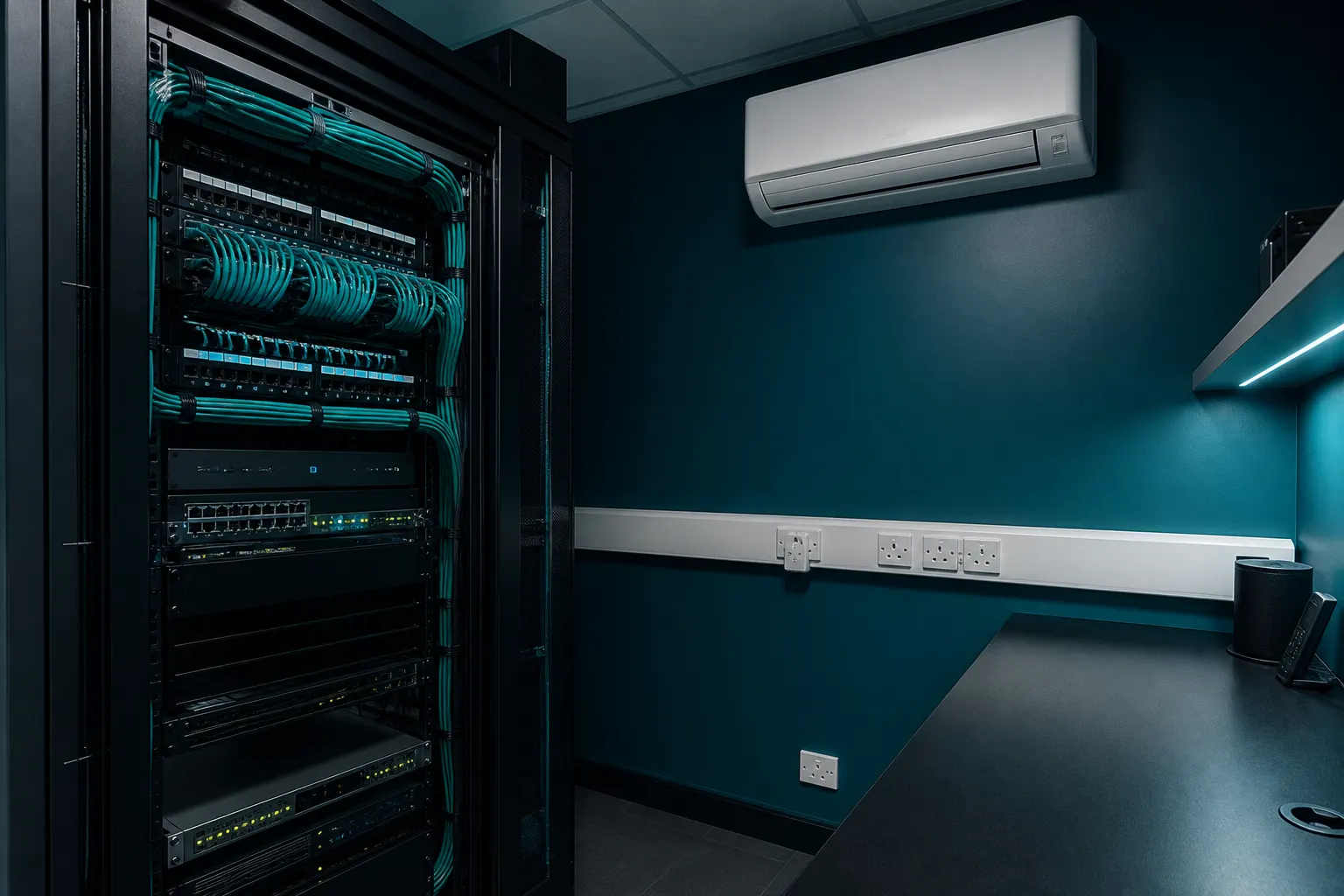
Understand where the heat actually goes
Most portable units cool by rejecting heat through an exhaust hose. If that heat is dumped into an adjacent office, ceiling void or poorly vented corridor, the building still carries the load and neighbouring spaces can overheat. The exhaust path needs a suitable discharge location that does not create a fire, security or water ingress problem.
Single-hose designs can also draw replacement air into the room in ways that reduce net cooling effectiveness. Treat manufacturer capacity claims cautiously for sealed IT cupboards and verify performance with inlet temperature measurements.
- Plan a safe, approved exhaust route before hiring equipment.
- Check plug load against available circuits and UPS bypass arrangements.
- Provide a condensate plan that does not rely on unnoticed full tanks.
- Keep temporary hoses clear of escape routes and cable trays.
Recognise operational limits
Portable units are often noisier, less efficient and less controllable than fixed process plant. Filters clog, hoses detach, and tanks overflow. In a continuous IT environment those failure modes can appear outside normal working hours.
They also rarely integrate cleanly with building management alarms. Without separate temperature monitoring at rack inlets, staff may discover a problem only after equipment thermal protection has already triggered.
Use portables inside a temporary cooling plan
A useful contingency plan names where units are sourced, who can authorise hire, which circuits they may use, how condensate is handled, and which IT loads can be shed if temporary capacity is insufficient. Test the plan before an emergency if the business impact is high.
During fixed-plant maintenance, temporary cooling should be commissioned early enough to prove stable inlet temperatures. Do not wait until the primary system is already isolated.
Return to a permanent process-cooling design
If a portable unit has become semi-permanent, treat that as evidence the primary design is inadequate. Survey the IT load, airflow and resilience needs, then install dedicated cooling with monitoring and maintenance access.
Energy Saving Trust guidance on air-to-air heat pumps is aimed mainly at comfort applications, but it underlines that correctly specified fixed systems and competent installation matter for performance. Server rooms still need the extra process-cooling checks described elsewhere in this series.
Frequently asked questions
Can a portable air conditioner protect servers overnight?
It may help briefly if exhaust, power and condensate are properly arranged and someone is alerted to faults. It is not a reliable long-term overnight strategy for critical IT.
Why did temperatures stay high after we wheeled a portable unit in?
Common causes include exhaust heat returning to the room, undersized capacity, blocked airflow to rack inlets, or a full condensate tank stopping cooling.
Is spot cooling enough for one hot rack?
Directed portable airflow can reduce a local hot spot temporarily, but it does not replace room heat rejection or address shared power and drain risks.
Should portable cooling be left unattended?
Only with appropriate leak, temperature and equipment-fault alarms, and after risk assessment. Unattended tankful condensate and tripped plugs are frequent failure modes.
Core buying guides
Start with these high-intent guides, then dig into the rest of the library.
Related guides
Sources and further reading
How this guide was prepared
This guide was written by the Local AC Installers Editorial Team. We compare official guidance, legislation and established consumer information, separate general information from project-specific advice, and show publication dates and sources. We do not accept installer accreditation claims at face value.