
Mitsubishi Electric and Mitsubishi Heavy Industries are separate companies that both sell air conditioning in the UK under the Mitsubishi name. Electric is the bigger UK presence with the Living Environment Systems operation, Ecodan heat pumps, Mr Slim and City Multi ranges and a deep dealer network. Heavy Industries builds well-regarded, often keenly priced splits and VRF sold through its own distribution. Neither is the fake; both are first-tier Japanese engineering. When quotes name Mitsubishi, make the installer state which company, the exact model, and the warranty terms, because the price lists and support networks are entirely different.
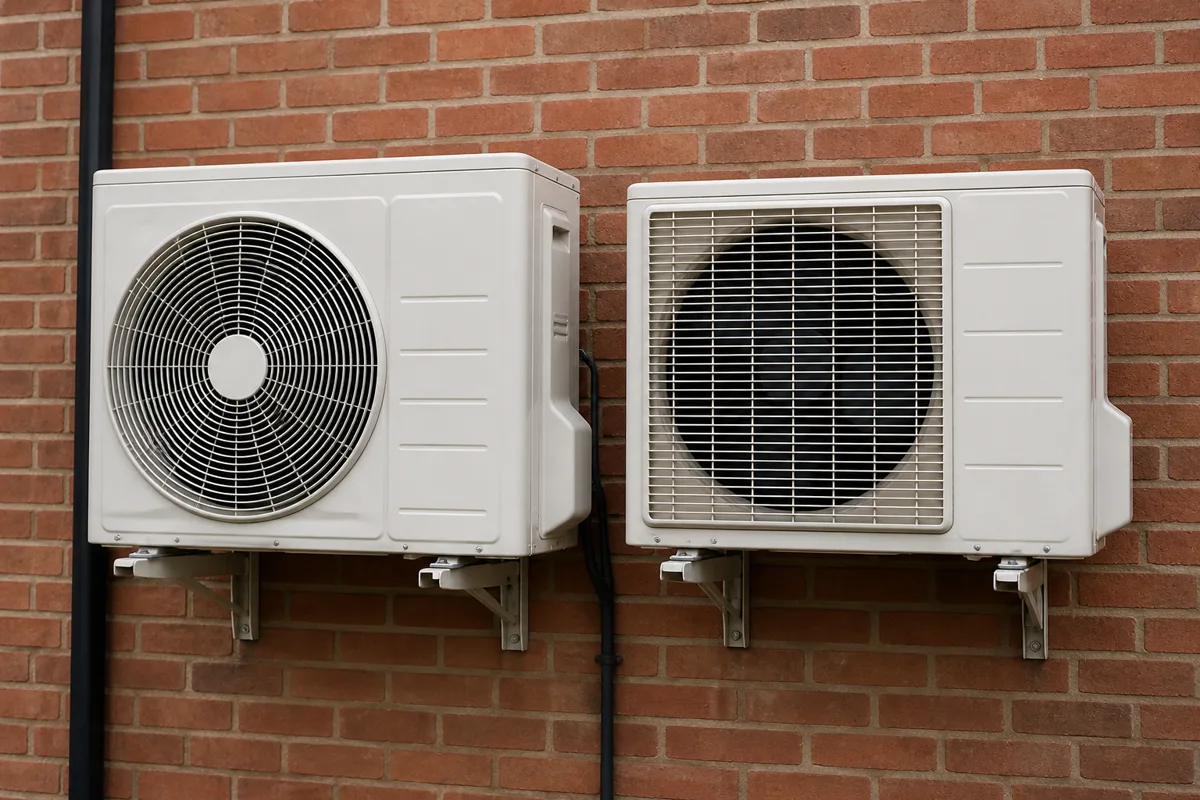
Two companies, one badge confusion
The Mitsubishi group split into independent companies long ago. Mitsubishi Electric makes electronics and HVAC, with a large UK subsidiary, training academy and accredited installer schemes. Mitsubishi Heavy Industries is a heavy engineering group whose air conditioning arm competes across the same categories with separate factories and distribution.
Price comparison sites and installer quotes frequently blur them into one Mitsubishi price list. That produces mismatched comparisons where a Heavy Industries split undercuts an Electric one and buyers assume it is the same product line discounted.
- Mitsubishi Electric: Mr Slim, City Multi VRF, the M series wall units.
- Mitsubishi Heavy Industries: SRK wall splits, FD commercial, KX VRF.
- Separate warranties, spares chains and technical support lines.
- Both are reliable first-tier equipment when installed well.
- The installer's accreditation applies to one company, not both.
Where each tends to win
Electric usually wins on UK dealer depth, controls ecosystem, heating-optimised units for British winters and commercial specification familiarity. Consultants specify City Multi by habit, and parts are everywhere.
Heavy Industries frequently wins on price for comparable capacity and on strong basic wall splits, which is why value-focused installers carry it. Its VRF is credible in mid-size commercial projects where the Electric premium is hard to justify.
Reading a quote that says Mitsubishi
Require the full model number. SRK prefixes are Heavy Industries; MSZ and similar M series prefixes are Electric. Then check who backs the warranty and for how long under which installer scheme, because accredited installations often carry longer cover.
The Mitsubishi prices guide covers Electric's UK ranges in detail. If two quotes name different companies, treat them as different brands, because they are.
Choosing without overthinking
Both companies build equipment that outlasts bad installation by decades. Pick the installer with the better survey and the stated warranty route, and let their preferred brand carry the day unless a specific model feature matters to you.
Use the quote form and ask responding companies which Mitsubishi they carry and why. The answer tells you plenty about their supply chain.
Frequently asked questions
Are Mitsubishi Electric and Mitsubishi Heavy Industries the same company?
No. They are independent companies that share heritage and the Mitsubishi name. Both sell air conditioning in the UK through separate ranges, distribution and warranties. Quotes should state which company's model is being offered.
Which is better, Mitsubishi Electric or Mitsubishi Heavy Industries?
Neither is categorically better. Electric offers the deeper UK network and controls ecosystem; Heavy Industries often prices more keenly for comparable quality. Installation quality decides more of your outcome than the choice between them.
Why is one Mitsubishi quote much cheaper than the other?
Often because one names Mitsubishi Heavy Industries equipment and the other Mitsubishi Electric, or because equipment tiers within a range differ. Compare full model numbers, capacities and warranty terms before concluding anyone is discounting.
Core buying guides
Start with these high-intent guides, then dig into the rest of the library.
Related guides
Sources and further reading
How this guide was prepared
This guide was written by the Local AC Installers Editorial Team. We compare official guidance, legislation and established consumer information, separate general information from project-specific advice, and show publication dates and sources. We do not accept installer accreditation claims at face value.